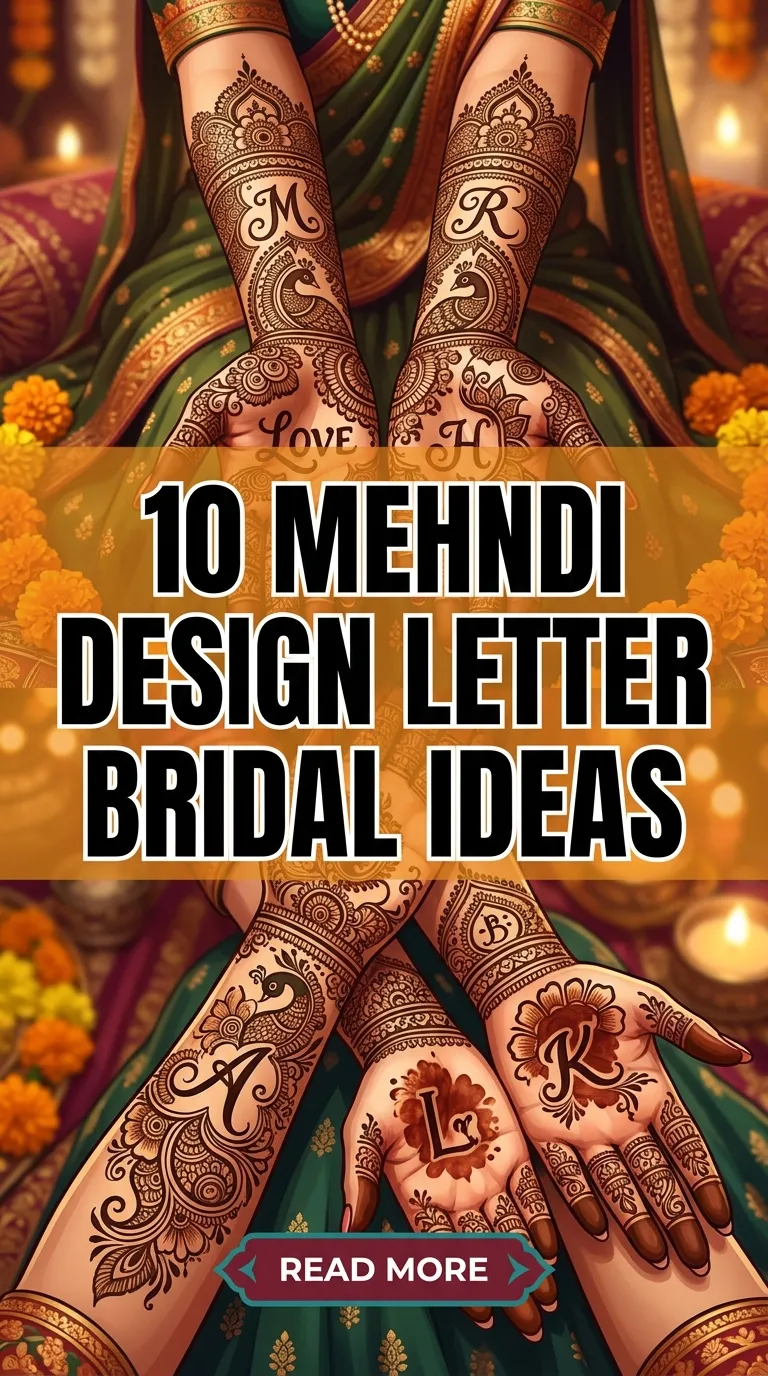
The bridal mehndi ceremony is a vibrant tapestry of tradition, celebration, and deeply personal storytelling. For centuries, brides have used henna as a canvas to express their joy, hopes, and the beginning of a new chapter. Among the many cherished traditions woven into this art form, the practice of hiding the groom’s or couple’s initials within the intricate swirls of henna is perhaps the most romantic.
What began as a playful wedding-night icebreaker has evolved into a highly sophisticated design trend. Modern brides are no longer simply scribbling letters on their palms; they are seamlessly integrating initials, monograms, and calligraphic lettering into complex geometric patterns, architectural motifs, and delicate florals.
Whether you are seeking a minimalist hidden monogram or a bold, royal calligraphic statement, this comprehensive guide explores ten curated bridal mehndi design ideas centered around personalized lettering. Complete with design blueprints, styling techniques, and professional application tips, this article will help you turn your bridal henna into a masterpiece of personalized art.
The Philosophy of Modern Bridal Lettering: Techniques for a Flawless Finish
Integrating letters into a dense bridal mehndi design requires a balance between legibility and concealment. To ensure your custom lettering looks intentional, elegant, and perfectly integrated rather than awkwardly added at the end, consider the following master techniques:
- Font Harmony: Match the style of your lettering to the overall aesthetic of your mehndi. If you are opting for a delicate Arabic design, use fluid, cursive, or Arabic-style calligraphy. For heavy, traditional Rajasthani designs, bold Devanagari script or structured English block letters work beautifully.
- Negative Space Placement: To make letters stand out without disrupting a dense pattern, place them within circular mandalas, teardrop frames, or blank spaces surrounded by thick, shaded borders.
- The Hidden “Search” Factor: If you want to keep the traditional game alive, use highly intricate filler patterns—such as fine mesh, cross-hatch lines, or delicate leafy vines—to camouflage the contours of the letters.
- Stain Optimization: Letters applied with thick, bold lines hold more henna paste, resulting in a deeper, richer mahogany stain that stands out beautifully against lighter, shaded backgrounds.
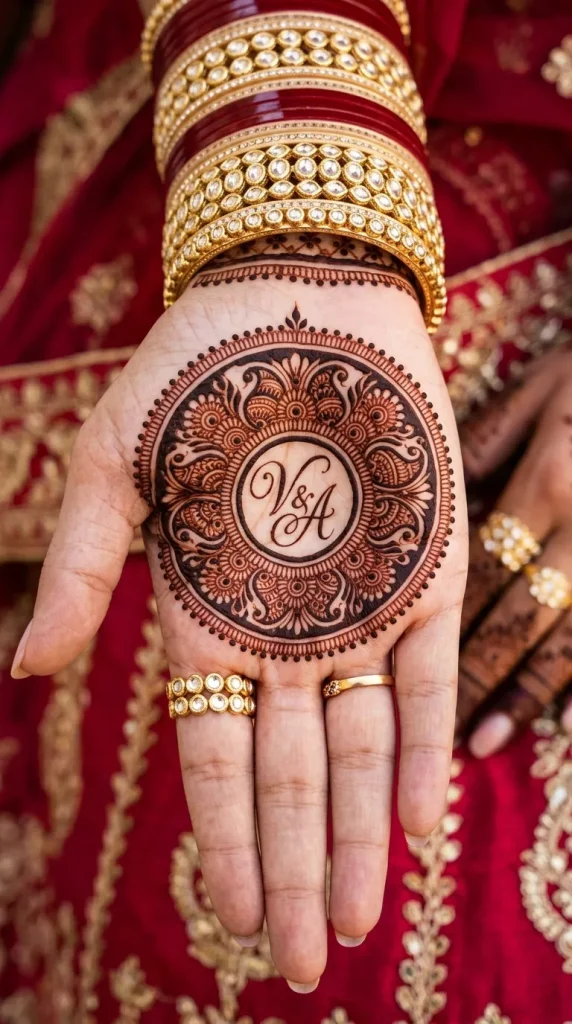
1. The Royal Rajasthani Mandala Centerpiece
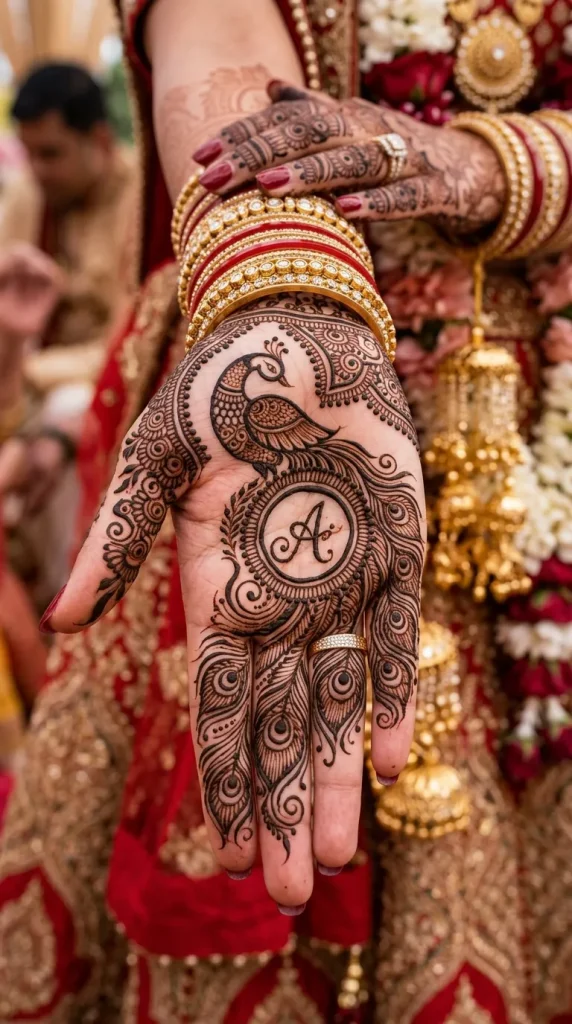
The mandala is a timeless symbol of unity and eternity. By placing a beautifully stylized, interlocking couple monogram directly at the center of a circular mandala, you create a focal point that is both majestic and deeply personal.
Aesthetic Blueprint
- Placement: The exact center of the palm.
- Style: Traditional, intricate, and symmetrical.
- Best For: Royal, classic brides who love symmetrical hand compositions.
Design Execution
The artist begins by drawing a small, clean circle in the center of the palm. Within this circle, the initials of the bride and groom are rendered in elegant, overlapping calligraphy. Once the letters are dry-drawn, the artist builds outward, layering concentric circles of tiny scallops, delicate dots, and intricate teardrop petals. The rest of the hand is filled with finer, softer lines, ensuring the bold, monogrammed center remains the star of the design.
Styling Tip
Pair this design with classic red bridal bangles and a large, statement kundan ring on the middle finger to frame the central mandala perfectly.
2. The Minimalist Wrist-Cuff Calligraphy
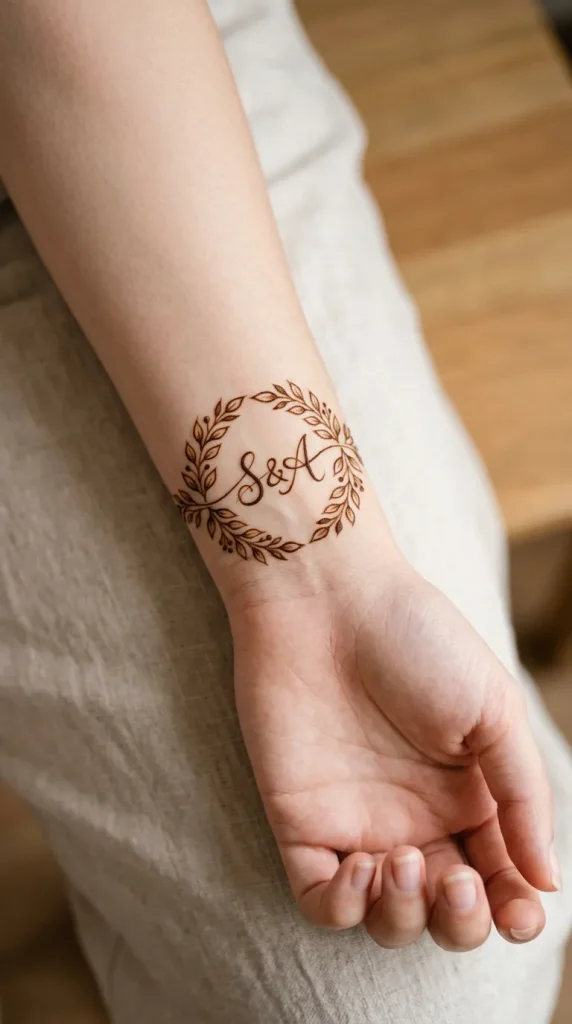
For the modern, minimalist bride who prefers clean spaces over heavy, full-hand patterns, a delicate wrist-cuff design offers an incredibly chic, contemporary alternative.
Aesthetic Blueprint
- Placement: The inner wrist, mimicking a delicate bracelet or cuff.
- Style: Minimalist, linear, and modern.
- Best For: Contemporary brides, civil ceremonies, or pre-wedding events.
Design Execution
Instead of filling the palm, the palm is left completely bare. The focus shifts entirely to the wrist, where a thin, elegant band of botanical leaves, fine lines, or geometric patterns is drawn. Integrated into the center of this band, right over the pulse point, are the couple’s initials. The letters are rendered in a continuous, flowing script that mimics the delicate chain of a bracelet.
Styling Tip
This style looks exceptionally sophisticated when photographed holding a minimalist white floral bouquet, drawing all attention to the clean lines of the wrist.
3. The Negative-Space Foliage Frame
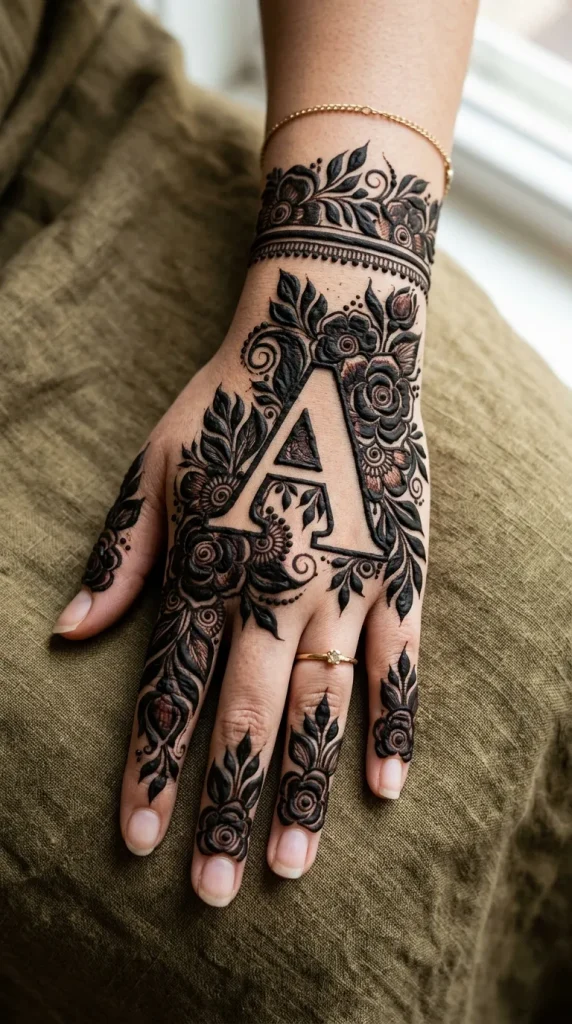
Negative-space mehndi (often referred to as Gulf or bold-outline mehndi) uses thick, darkened borders to contrast against bare skin. Creating a clean, skin-toned silhouette of your partner’s initial surrounded by dark, shaded leaves makes for a striking, high-contrast visual.
Aesthetic Blueprint
- Placement: The back of the hand or the fleshy part of the thumb.
- Style: High-contrast, bold, and modern.
- Best For: Brides who want their lettering to be instantly visible and photogenic.
Design Execution
The artist traces the outline of the letter directly onto bare skin. Instead of filling the letter with henna, they leave the inside of the letter completely empty (skin-toned). They then draw dense, bold leaves, blooming roses, and thick vines tightly around the outer border of the letter, filling in all the surrounding space with solid black henna. When washed off, the bright orange-red skin silhouette of the letter pops dramatically against the dark, stained background.
Styling Tip
Because this design relies on contrast, ensure you keep the henna paste on this specific area for at least 8 to 12 hours to achieve the deepest possible stain.
4. The Intricate Mesh (Jaali) Camouflage
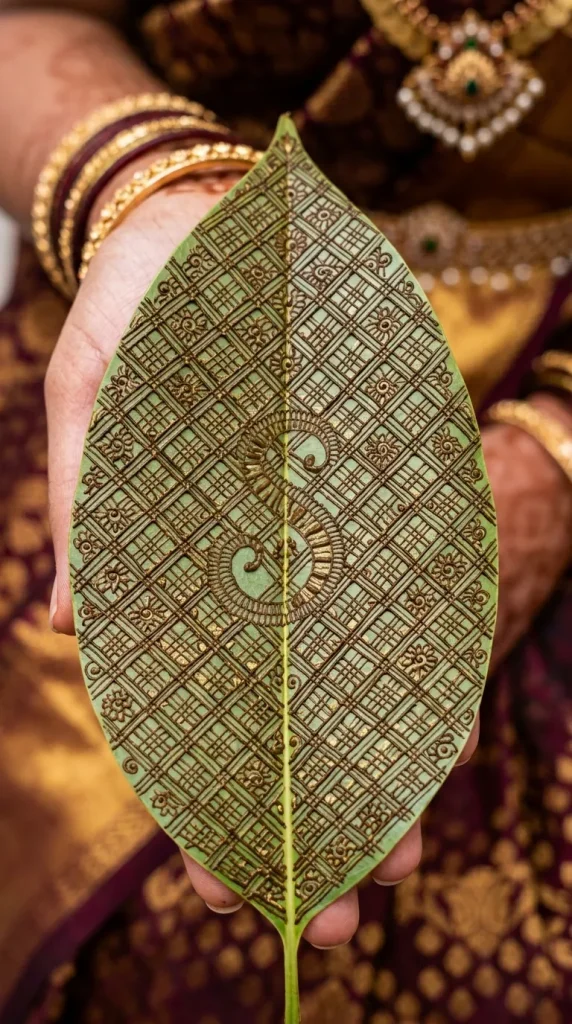
This is the ultimate execution of the classic “find the hidden name” game. By weaving the letters directly into a uniform, highly detailed lace or mesh pattern, the initials become virtually invisible to the untrained eye.
Aesthetic Blueprint
- Placement: The center of the palm or extending down the forearm.
- Style: Delicate, complex, and traditional.
- Best For: Brides who love traditional customs and playful wedding-night games.
Design Execution
The artist creates a flawless, diagonal jaali (grid or lattice) pattern across the palm. Within the tiny intersecting squares of the grid, the artist subtly curves the lines of the mesh to form the shapes of the letters. The thickness of the lines forming the letters is kept identical to the rest of the grid, ensuring they blend in perfectly. Small floral buds or dots are placed at the intersections to further distract the eye.
Styling Tip
During your post-wedding photoshoot, have your photographer capture a close-up macro shot of your groom trying to locate his initial within your palm.
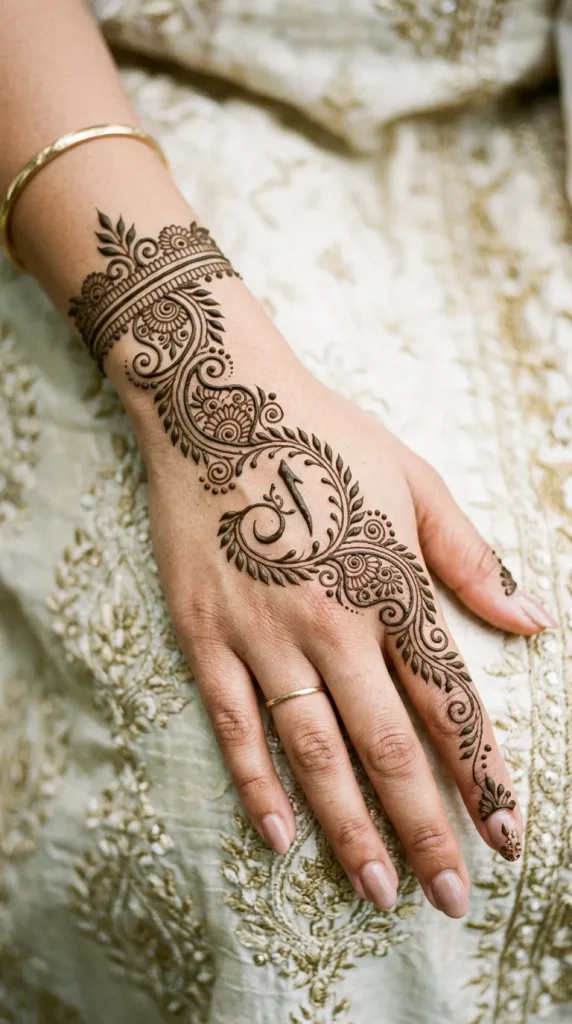
5. The Elegant Arabic Vine trailing to the Index Finger
Arabic mehndi is celebrated for its flowing, diagonal paths, open spaces, and bold floral trails. This design incorporates a custom letter directly into the heart of a sweeping vine that gracefully travels from the wrist, across the palm, and up to the tip of the index finger.
Aesthetic Blueprint
- Placement: Diagonal across the palm, ending at the index finger.
- Style: Flowing, floral, and romantic.
- Best For: Brides looking for a balance between traditional elegance and modern spacing.
Design Execution
The artist drafts a sweeping, S-shaped vine decorated with blooming paisley motifs, leafy swirls, and open shaded flowers. Right at the center of the palm, where the vine naturally curves, the artist integrates the initial as a stylized leaf or a calligraphic flourish. The letter flows continuously into the stem of the next flower, making it look like an organic part of the vine’s growth.
Styling Tip
Complement this diagonal flow by wearing a delicate hand-chain (haathphool) that follows the same path across the back of your hand.
6. The Royal Courtly Elephant Silhouette
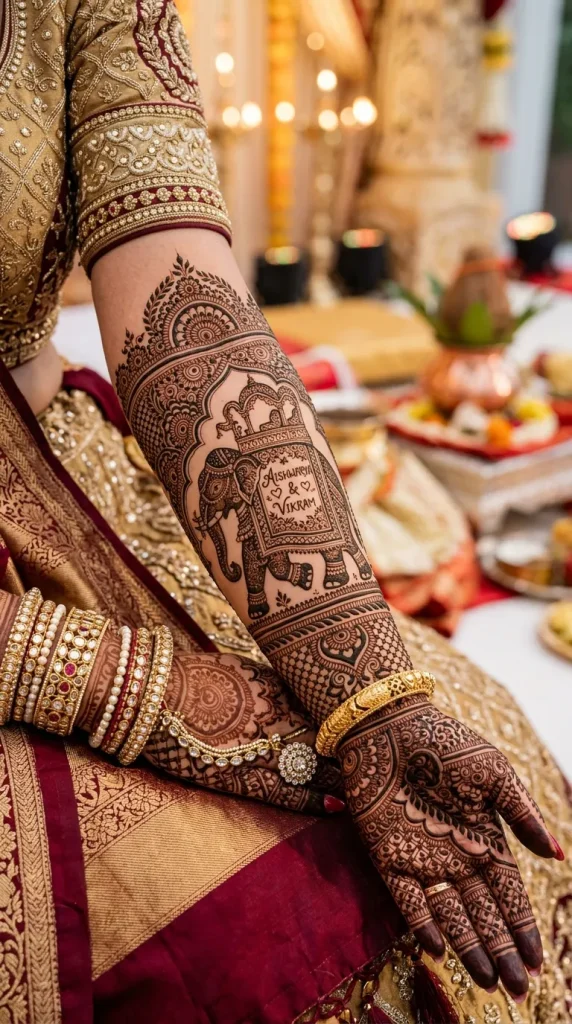
For brides opting for a grand, majestic, and story-driven bridal look, incorporating royal motifs like elephants, peacocks, or palanquins is a must. This design hides the couple’s monogram within a beautifully detailed silhouette of a royal wedding elephant.
Aesthetic Blueprint
- Placement: The center of the forearm or upper arm.
- Style: Royal, grand, and highly detailed.
- Best For: Full-arm bridal packages and traditional royal themes.
Design Execution
The artist draws a detailed silhouette of a majestic royal elephant, complete with an ornate ceremonial canopy (howdah). The blanket draped over the elephant’s back is decorated with micro-details, and embedded directly into the center of this blanket pattern is the calligraphic monogram of the couple. The rest of the arm is filled with matching palace-arch motifs and floral waves.
Styling Tip
Ensure your bridal blouse has short or sheer sleeves so this magnificent forearm masterpiece remains fully visible during your ceremony.
7. The Delicate Fingertip Crown Initials
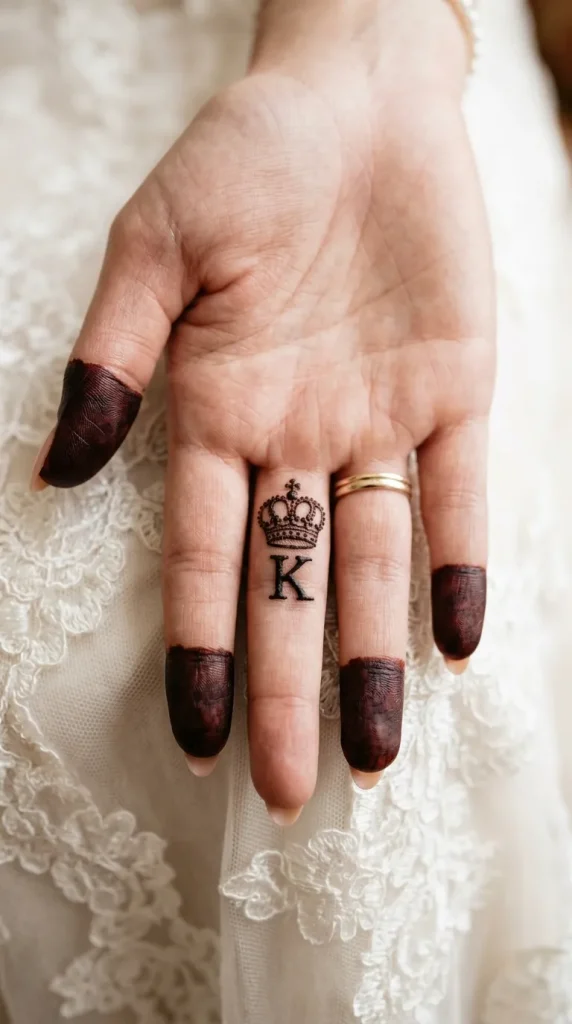
If you want to keep the palms reserved for heavy, uninterrupted floral mandalas, the fingertips offer a surprising, charming, and highly visible canvas for personalized lettering.
Aesthetic Blueprint
- Placement: The inner pads of the thumbs or ring fingers.
- Style: Petite, neat, and highly focused.
- Best For: Brides who want a subtle nod to personalization without altering their main palm design.
Design Execution
While four of the fingers are decorated with traditional capped tips (solid henna fill with delicate lace borders), the ring finger or thumb is left open. On the inner pad of this finger, the artist draws a tiny, crisp, royal crown. Suspended directly below the crown is a neatly rendered initial of your partner. Because the fingertips have thick skin, this area stains incredibly dark, making the small letter look exceptionally sharp.
Styling Tip
This placement is incredibly photogenic for shots of the couple holding hands, as the ring finger initial sits right next to your sparkling new wedding ring.
8. The Architectural Mughal Archway Framed Monogram
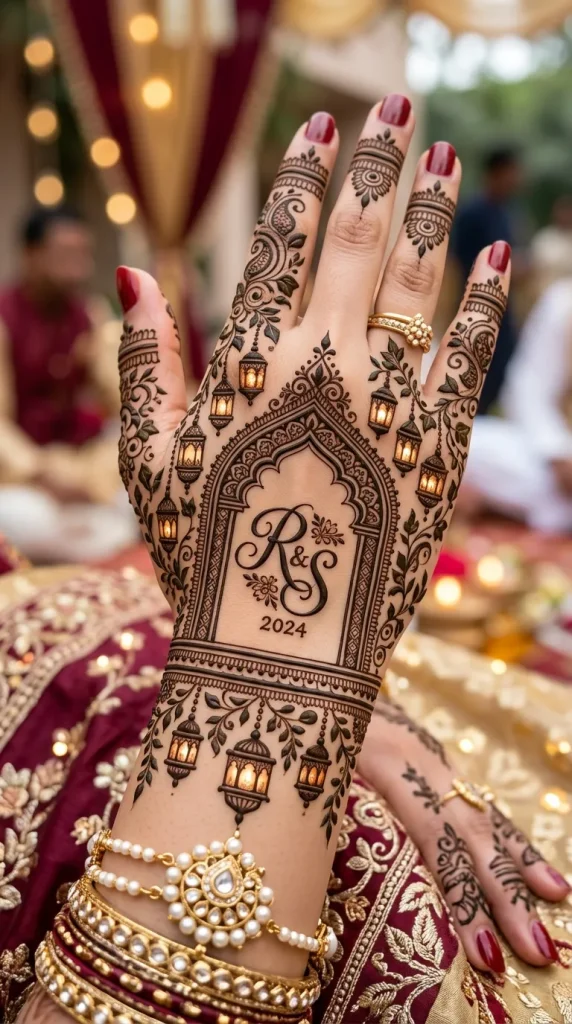
Inspired by the breathtaking arches, domes, and screens of Mughal architecture, this design frames the couple’s letters within a majestic, structural palace window silhouette.
Aesthetic Blueprint
- Placement: The back of the hand or center of the forearm.
- Style: Structural, geometric, and regal.
- Best For: Brides who love architectural symmetry and clean, bold outlines.
Design Execution
The artist drafts a perfect Mughal-style pointed arch (mihrab) on the back of the hand. The interior of the arch is kept relatively clean, containing only a beautifully rendered, flowing calligraphic couple monogram. The exterior of the archway is heavily decorated with climbing ivy, hanging lanterns, and dense floral borders, creating a striking contrast that makes the framed letters look like a royal seal.
Styling Tip
This design looks stunning when paired with heavy, antique polki jewelry and intricate sleeve embroidery on your bridal outfit.
9. The Heartbeat Connection Line
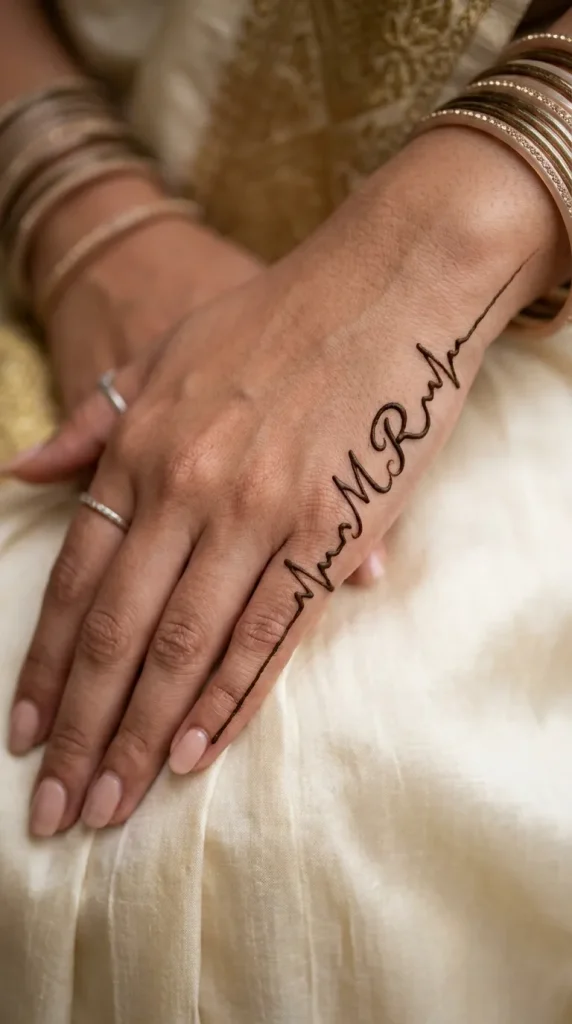
A beautiful option for modern, romantic couples, this design connects the initials of both partners through a stylized, continuous line that wraps around the side of the hand, mimicking a soft heartbeat wave.
Aesthetic Blueprint
- Placement: The outer side of the palm (along the pinky finger edge).
- Style: Minimalist, symbolic, and deeply romantic.
- Best For: Modern couples who love symbolic, non-traditional designs.
Design Execution
Starting from the base of the pinky finger and traveling down the side of the hand, the artist draws a single, continuous, elegant line. The line mimics the gentle rises and falls of a heartbeat. Intertwined into the peaks of the wave are the initials of the couple. The rest of the hand can be decorated with simple trailing leaf vines or left entirely bare.
Styling Tip
This side-of-the-hand placement is perfect for candid photos of you tucking your hair behind your ear or holding a cup of ceremonial tea.
10. The Majestic Peacock Tail Monogram
Peacocks are symbols of grace, beauty, and eternal love in bridal folklore. This design cleverly integrates the couple’s lettering into the swirling, majestic feathers of a peacock’s tail.
Aesthetic Blueprint
- Placement: The palm, curving elegantly around the wrist.
- Style: Intricate, flowing, and classic.
- Best For: Traditional brides who want a timeless, symbolic motif.
Design Execution
The artist draws a graceful peacock at the side of the palm, with its massive, sweeping tail feathers fanning out to cover the entire center of the hand. Within the concentric circles of the primary feather eyes, the artist carefully shapes the lines to form the letters of the groom’s name. The natural, circular flow of the feathers perfectly masks the letters, making them a seamless extension of the bird’s majestic beauty.
Styling Tip
Ask your artist to use a mix of thin lines and bold shading to give the peacock feathers dimension, ensuring the hidden letters stain with beautiful tonal variation