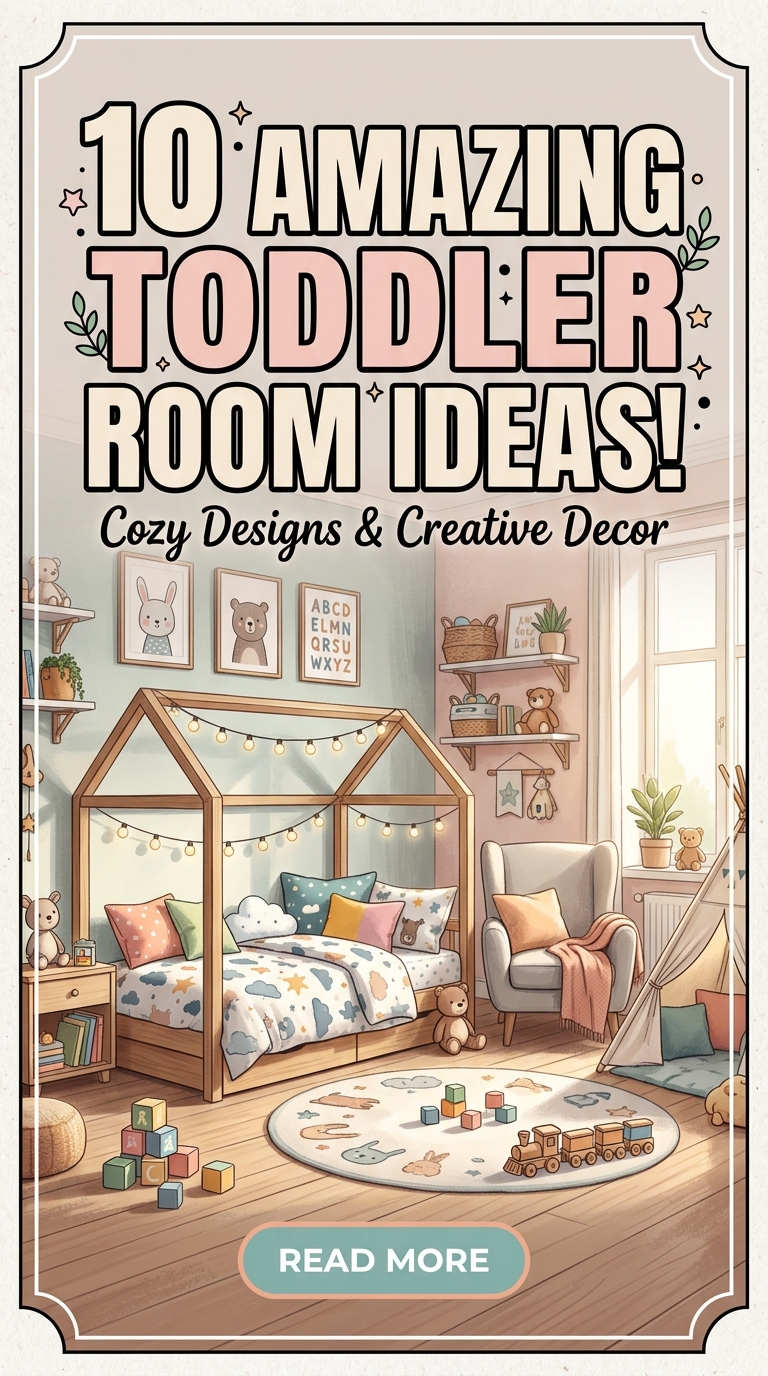
Designing a room for a toddler requires a thoughtful balance between safety, playfulness, and independence. The transition from a nursery to a toddler room marks a significant developmental milestone. At this stage, children begin exploring their environment autonomously, developing motor skills, and asserting their personal preferences.
A well-planned toddler bedroom should serve as a safe sanctuary for sleep, an inspiring venue for unstructured play, and an accessible space that encourages self-reliance. By prioritizing low-profile furniture, non-toxic materials, modular storage, and adaptable design themes, you can create a room that seamlessly evolves alongside your child.
Here is a comprehensive guide to ten toddler room ideas, complete with spatial dimensions, safety standards, ergonomic guidelines, and detailed design breakdowns.
Spatial Planning, Ergonomics & Toddler Safety Standards
Before selecting color palettes or decorative accents, it is crucial to establish foundational safety and spatial parameters tailored to toddler development.
1. Ergonomic Heights & Accessible Zones
- The Independence Reach Rule: Keep daily items—such as clothing drawers, toy bins, and book ledges—at or below 30 inches from the floor. This allows toddlers to pick up and put away their belongings without adult assistance.
- Eye-Level Artwork: Hang framed prints, mirrors, and decorative displays lower than standard adult placement, centering them between 36 and 42 inches from the floor to align with a toddler’s natural field of vision.
2. Mandatory Toddler Safety Protocols
- Wall Anchorage: All heavy furniture pieces—including dressers, bookcases, and wardrobes—must be anchored directly to wall studs using anti-tip restraint kits.
- Non-Toxic Materials: Select Zero-VOC (Volatile Organic Compounds) paints, water-based finishes, and GREENGUARD Gold certified mattresses to ensure healthy indoor air quality.
- Soft Proportions & Curved Edges: Choose furniture featuring rounded corners, or install discrete rubber edge protectors to cushion inevitable bumps during active play.
1. Montessori Floor Bed House Frame Setup
Floor beds form the cornerstone of Montessori-inspired room design. By removing elevated bed frames, toddlers can get in and out of bed independently, fostering self-regulation and spatial awareness.
Technical Specs & Layout
- Dimensions & Materials: Twin-size low-profile mattress resting on a ventilated wooden slat base (1-2 inches off the floor to prevent moisture buildup), enclosed by a natural pine house-shaped frame.
- Safety Clearance: Maintain a minimum 36-inch clear radius around all sides of the bed, ensuring the surrounding floor area is padded with a soft wool or cotton rug.
- Developmental Benefits: Promotes independent sleep habits while eliminating the risk of dangerous falls associated with traditional elevated toddler beds.
- Styling Integration: Pair with soft cotton bed linens, muted pastel duvets, and light neutral wall paint to maintain a soothing bedtime atmosphere.

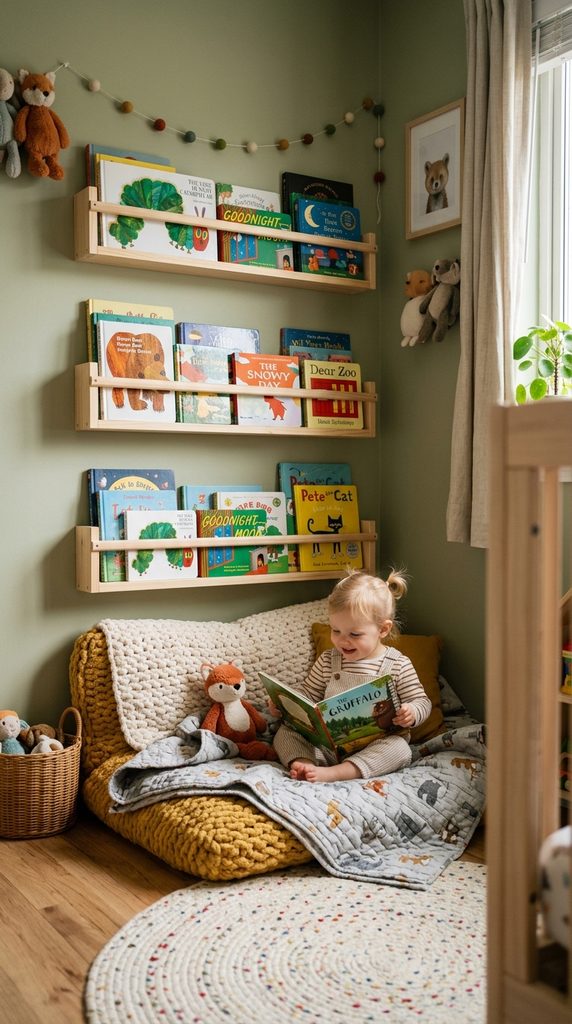
2. Low-Level Accessible Book Nook with Forward-Facing Ledges
Encouraging early literacy begins with making books easily accessible. Forward-facing wall ledges allow toddlers to select stories by recognizing colorful cover illustrations rather than thin book spines.
Technical Specs & Layout
- Shelf Specifications: Three to four parallel wooden floating ledges, measuring 36 to 48 inches wide, mounted at heights of 12, 24, and 36 inches from the floor.
- Seating Ergonomics: Position a soft floor cushion, oversized plush pouf, or padded play mat directly underneath the book ledges.
- Lighting Setup: Install a warm (2700K) wall-mounted task light positioned well out of reach, or use battery-powered touch puck lights mounted under the lower ledge.
- Visual Appeal: Rotates books seasonally to keep reading selections fresh without overwhelming the child with excessive clutter.
3. Sensory Wall Activity Boards & Tactile Stations
Incorporating interactive sensory elements directly onto room walls provides dedicated zones for fine motor skill development and creative exploration.
Technical Specs & Layout
- Component Palette: Wall-mounted wooden backing panels fitted with tactile elements such as wooden gears, fabric swatches (velvet, burlap, fleece), latches, chalkboards, and magnetic strips.
- Mounting Standards: Securely screw backing panels into wall studs at a center height of 28 to 32 inches from the floor.
- Safety Engineering: Ensure all attached objects are large enough to eliminate choking hazards and feature no small detachable parts.
- Aesthetic Balance: Frame the activity panel in natural light wood to integrate the sensory station cleanly into the room’s broader decor theme.

4. Nature-Inspired Woodland Mural Accent Wall
Biophilic design elements—such as forest landscapes, gentle mountain silhouettes, and animal motifs—create a grounding, serene environment that stimulates imaginative play.
Technical Specs & Layout
- Material Selection: Non-toxic, peel-and-stick fabric wallpaper or hand-painted wall murals using zero-VOC latex paints.
- Color Palette: Muted sage greens, warm terracotta, soft oat, and slate blue to prevent overstimulation.
- Spatial Placement: Apply the mural onto the main focal wall behind the bed or reading corner, leaving adjacent walls painted in soft neutral off-white tones.
- Furniture Pairing: Pairs beautifully with unpainted natural timber furniture, rattan storage baskets, and soft linen textiles.

5. Open Toy Rotation Shelving System
Too many options can cause choice fatigue and visual clutter. A low-profile, open shelving system designed for toy rotation encourages focused play and simple cleanup routines.
Technical Specs & Layout
- Shelving Unit Specs: Horizontal two-tier wooden cabinet or cubby unit measuring no more than 24 to 30 inches in height.
- Organization Logic: Display a curated selection of 6 to 8 toys on open shelves, placing each item in its own dedicated wooden tray or fabric basket.
- Storage Bins: Use soft felt or woven cotton rope baskets on lower shelves for loose items like wooden blocks or plush toys.
- Routine Management: Store out-of-rotation toys in closet bins, swapping items every two to three weeks to maintain engagement.

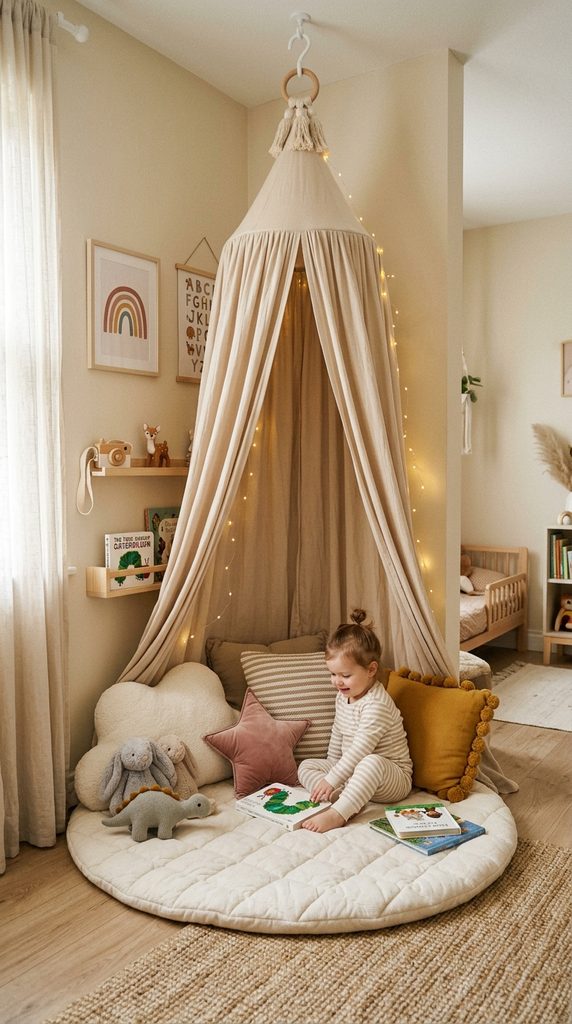
6. Indoor Play Canopy & Cozy Quiet Corner
Toddlers occasionally need a quiet, enclosed refuge away from bright lights and busy household activity to rest, self-regulate, or decompress.
Technical Specs & Layout
- Canopy Construction: Lightweight organic cotton or linen canopy suspended securely from a ceiling hook using an anchor bolt rated for at least 50 lbs.
- Floor Base Padding: A thick circular play mat (48-inch diameter) topped with washable floor pillows and plush animal companions.
- Lighting Detail: Weave warm, battery-operated micro LED wire lights safely through the exterior canopy fabric out of reach of small hands.
- Psychological Value: Provides a comforting sensory retreat that supports emotional regulation and restful downtime.
7. Creative Chalkboard & Magnetic Wall Zone
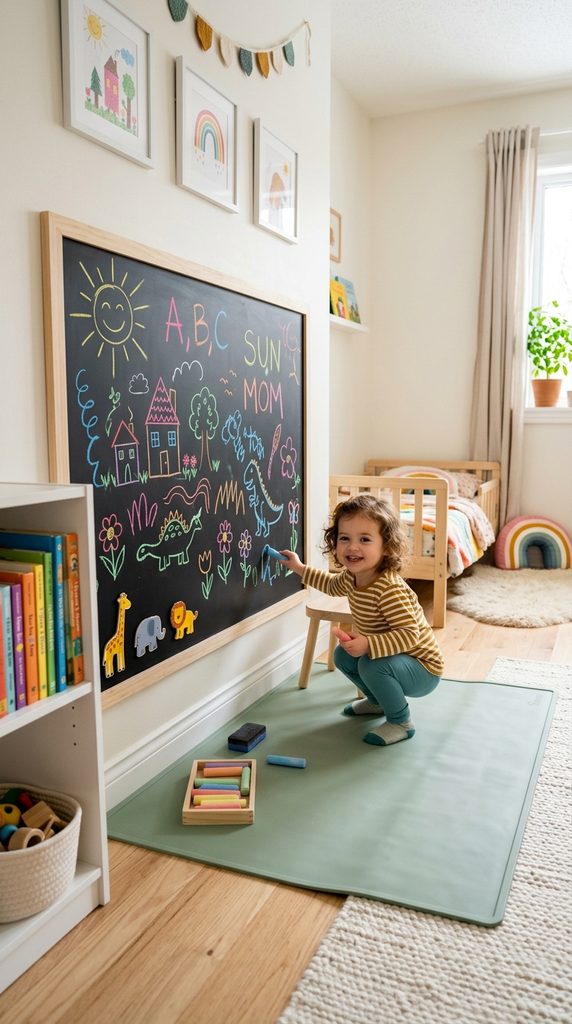
Dedicated drawing surfaces protect general wall finishes while offering toddlers a large canvas to practice gross motor arm movements, shapes, and early writing.
Technical Specs & Layout
- Surface Materials: Magnetic chalkboard paint applied directly to a smooth wall section, or a framed magnetic whiteboard mounted flush to the wall.
- Clearance Area: Position the bottom of the drawing board 10 to 12 inches off the floor, extending upward to a height of 42 inches.
- Dust Control: Use dustless chalk or liquid chalk markers, keeping supplies organized in a wall-mounted magnetic pencil cup.
- Floor Protection: Place a cleanable silicone mat or washable runner rug underneath the drawing zone to catch chalk dust or accidental stray marks.
8. Scaled Down Mini Activity Table & Chair Set
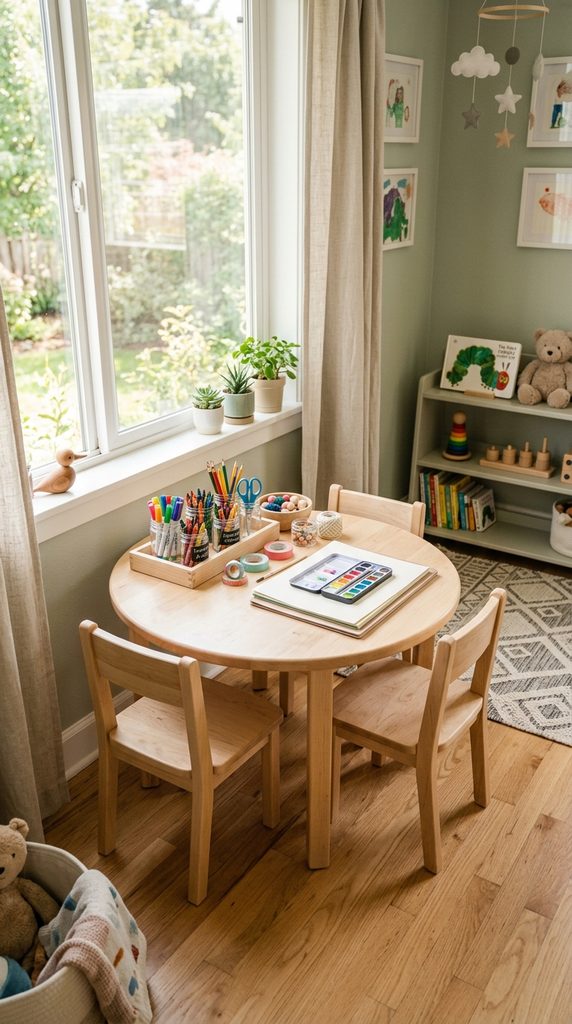
Sized-down furniture supports proper sitting posture during crafts, puzzles, tea parties, and snack times, empowering toddlers to work independently.
Technical Specs & Layout
- Ergonomic Dimensions: Table height measuring 18 to 20 inches paired with chairs featuring a seat height of 10 to 12 inches (allowing feet to rest flat on the floor).
- Material Build: Solid beechwood, rubberwood, or molded non-toxic bentwood with smooth, rounded edges and wipeable surfaces.
- Placement Strategy: Position the table set near a window to utilize natural daylight, keeping at least 30 inches of walking clearance around the table perimeter.
- Multi-Functional Use: Works double-duty for artistic creation, sensory bin activities, and independent tabletop play.
9. Soft Modular Foam Play Sofa Corner
Modular play sofas consist of foam cushions covered in washable fabric that children can reconfigure into forts, slides, loungers, or obstacles safely.
Technical Specs & Layout
- Component Structure: High-density foam bases, supportive cushions, and wedge pieces encased in removable, machine-washable velvet or microsuede covers.
- Spatial Footprint: Requires a clear floor footprint measuring approximately 33 x 66 inches when folded into a standard sofa configuration.
- Safety Value: Provides a soft landing zone for tumbling and climbing, reducing the risk of injuries compared to hard play furniture.
- Versatility: Replaces rigid armchairs with a dynamic piece of play equipment that adapts to your child’s physical growth.

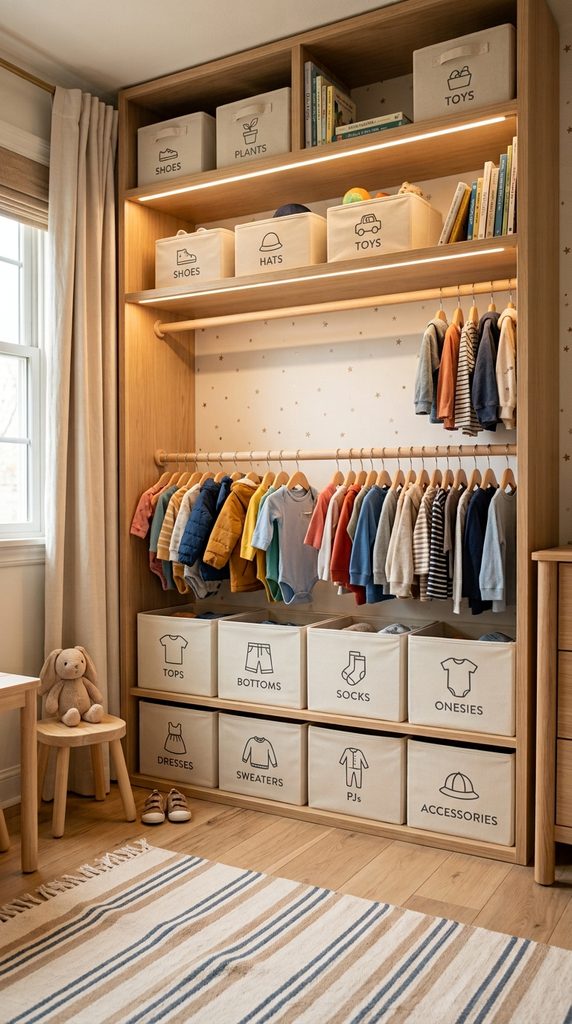
10. Modular Closet System with Low Hanging Rods
Designing an accessible wardrobe system allows toddlers to participate in daily dressing routines, building confidence and self-care skills.
Technical Specs & Layout
- Rod & Shelf Heights: Install primary hanging rods at a height of 30 to 36 inches from the floor, with accessible shoe shelves positioned below 18 inches.
- Bins & Labeling: Use soft cloth storage bins labeled with simple visual picture icons (e.g., socks, shirts, pants) on lower shelves.
- Door Solutions: Replace heavy closet doors with lightweight fabric curtain panels or soft sliding panels that eliminate pinched fingers.
- Routine Empowerment: Lay out two pre-selected outfit options at toddler height each morning, letting your child make simple choices independently.