Handmade fashion is experiencing a massive renaissance. As fast fashion loses its grip to intentional, sustainable wardrobe choices, makers around the world are turning to their yarn stashes to craft bespoke garments. Among all the wearable projects a yarn enthusiast can choose, nothing matches the utility, style, and comfort of a beautifully constructed cardigan.
Whether you are a complete beginner who has just mastered the single crochet or an advanced stitcher looking for intricate cable textures, finding the perfect layout shouldn’t cost a fortune. The maker community is incredibly generous, offering countless high-quality, free design instructions online that rival commercial boutique clothing.
This comprehensive guide breaks down ten distinctive, free crochet cardigan concepts. We will explore their unique constructions, material selections, and specific stitching styles to help you curate your dream handmade collection.
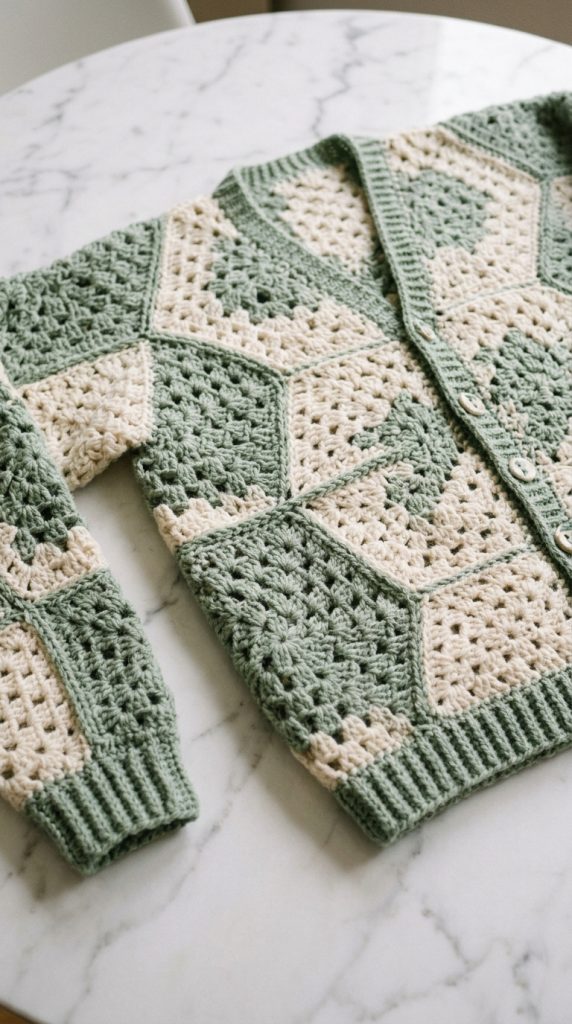
1. The Geometric Hexagon Fold-Up Cardigan
The hexagon cardigan is a marvel of modern construction. If you dread sewing separate back panels, front panels, and sleeves together, this method will change your crafting journey forever. Instead of straight rows, you work two large, L-shaped hexagons from the inside out using a variation of the classic granny cluster stitch.
Style Profile and Construction
When you fold these hexagons in a specific geometric sequence, they magically transform into two identical L-shapes that form the left and right halves of your sweater. The sleeve and the body are built simultaneously. You simply join the center back seam and the top shoulder seams, leaving you with an instant, perfectly proportioned jacket.
- Difficulty Level: Advanced Beginner
- Optimal Fiber Choice: Medium weight (Category 4) acrylic-wool blends for warmth and structural memory.
- Core Technique: Working in corners to expand a geometric polygon into a drapeable garment half.
Design Twist: Add a wide, contrasting ribbed border around the bottom hem and sleeve cuffs to give this playful vintage shape a clean, high-end retail finish.
2. The Weekend Chunky Blanket Cardigan
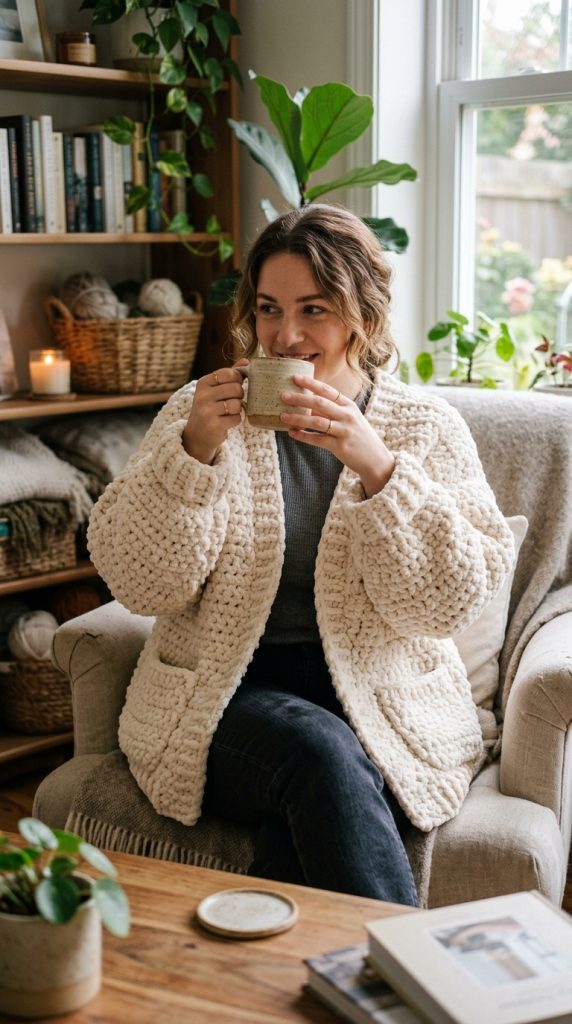
For those who crave instant gratification, the chunky blanket cardigan is the ultimate cozy project. It relies on massive hooks and ultra-thick fibers to build a plush, protective layer that feels like wearing a cloud. This layout is entirely silhouette-focused, prioritizing a relaxed drop-shoulder shape over intricate detail.
Style Profile and Construction
This design typically uses an oversized rectangle for the back panel and two narrower matching rectangles for the fronts. Because the fabric is so thick, you don’t need complex shoulder slopes or armhole cutouts. The sleeves are worked directly into the arm openings in flat rows or spiral rounds.
- Difficulty Level: Absolute Beginner
- Optimal Fiber Choice: Super Bulky (Category 6) roving yarn or chenille textures.
- Core Technique: Simple, loose half-double crochets that preserve the softness of the thick fiber.
3. The Reimagined Vintage Granny Square Jacket
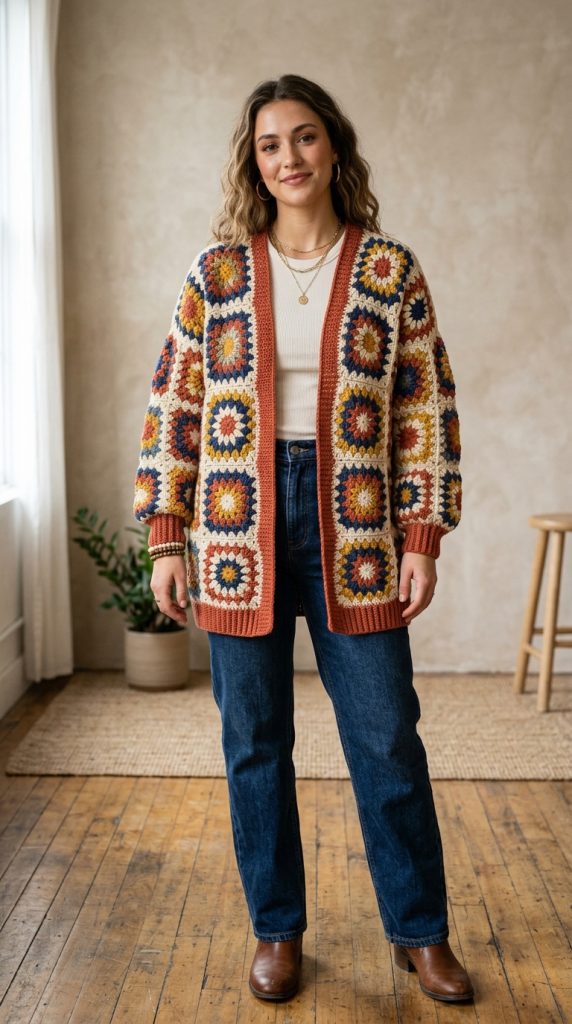
Paying homage to retro 1970s fashion, the granny square jacket remains an iconic wardrobe staple. Instead of working rows back and forth, you create a beautiful collection of independent square motifs. It is the ultimate “on-the-go” project, allowing you to carry small motifs in your bag and join them together later at home.
Style Profile and Construction
The layout is limited only by your imagination. You can build a monochromatic jacket where all squares match perfectly, or treat it as a stash-buster, combining dozens of vibrant scrap colors. Once your grid of squares matches your body measurements, you stitch them together using a flat join method.
- Difficulty Level: Easy to Intermediate
- Optimal Fiber Choice: Sport weight (Category 2) or DK weight (Category 3) cotton for a lightweight drape that doesn’t feel overly heavy.
- Core Technique: Invisible mattress-stitch seaming or decorative slip-stitch joining.
4. The Runway-Inspired Color-Blocked Patchwork Cardigan
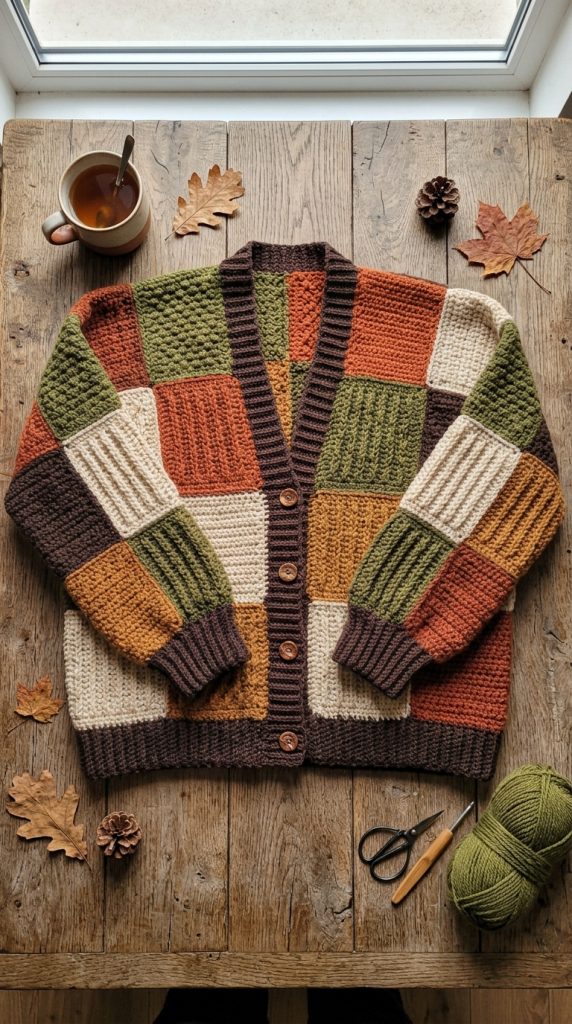
Inspired by high-fashion knitwear trends, the patchwork cardigan uses blocks of color and texture to make a bold, graphic statement. Unlike granny squares, which feature open spaces, a patchwork sweater utilizes dense, opaque fabric textures that keep cold wind completely out.
Style Profile and Construction
To make this look professional rather than chaotic, select a unified color story—such as a warm autumn palette of terracottas, olives, mustards, and creams. Work separate solid panels in different stitches, alternating between seed stitch, moss stitch, and basic single rows to give every square an individual texture profile.
- Difficulty Level: Beginner
- Optimal Fiber Choice: Worsted weight (Category 4) premium acrylic for easy washing and durability.
- Core Technique: Changing yarn skeins cleanly at row edges and maintaining consistent tension across different stitch types.
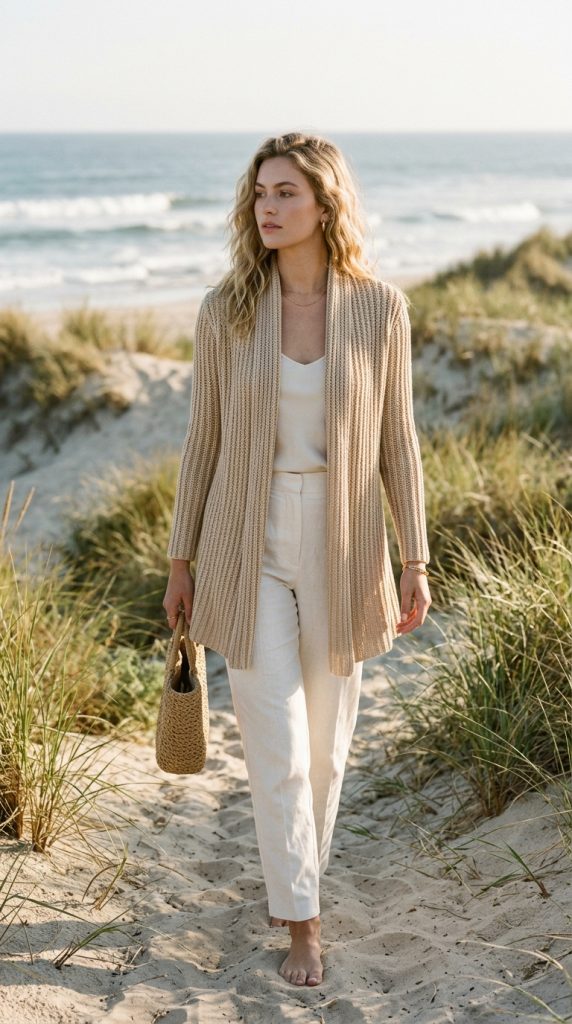
5. The Modern Ribbed Drop-Shoulder Everyday Cardigan
If your personal style leans toward minimal, clean closet staples, the ribbed drop-shoulder cardigan is your perfect match. When completed, this design mimics the look of high-end knit ribbing so closely that people will struggle to believe you made it with a simple crochet hook.
Style Profile and Construction
The secret to this sleek drape lies in working into a specific part of the stitch loop. By executing rows of half-double or slip stitches into the back loops only, the fabric compresses and expands vertically, creating a highly elastic, vertical ribbed line that lengthens your silhouette.
- Difficulty Level: Advanced Beginner
- Optimal Fiber Choice: Lightweight DK (Category 3) bamboo, tencel, or fine merino wool blends for maximum fluid movement.
- Core Technique: Consistent Back Loop Only (BLO) tracking throughout the entire body of the garment.
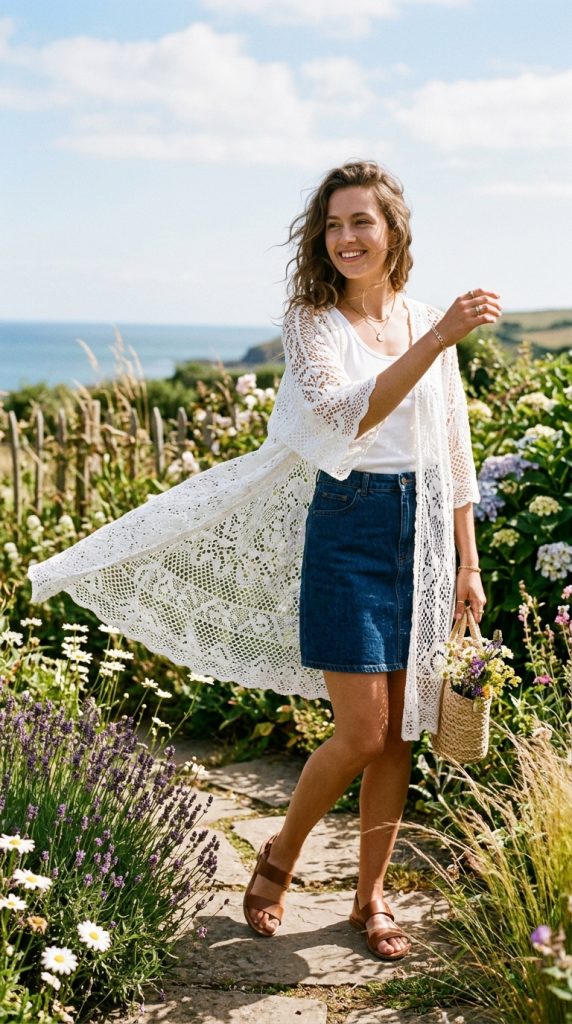
6. The Bohemian Open-Wave Summer Lace Cover-Up
Cardigans aren’t reserved solely for the depths of winter. An open-wave summer lace design acts as a breezy, artistic top layer for warm spring days, beach trips, or outdoor music festivals. It focuses on negative space, using mesh lines to add visual texture to an outfit without trapping any heat.
Style Profile and Construction
Built with thin yarn and a larger-than-recommended hook, this design uses long chain spaces and tall stitches (like double or treble crochets) to build a lattice effect. It features a wide, dramatic kimono sleeve and an open front that flows loosely as you walk.
- Difficulty Level: Intermediate
- Optimal Fiber Choice: Fingering or Linen-blend yarns (Category 1 or 2) that soften significantly with every wash.
- Core Technique: Mastering stitch-skipping counts and maintaining loose, even row heights.
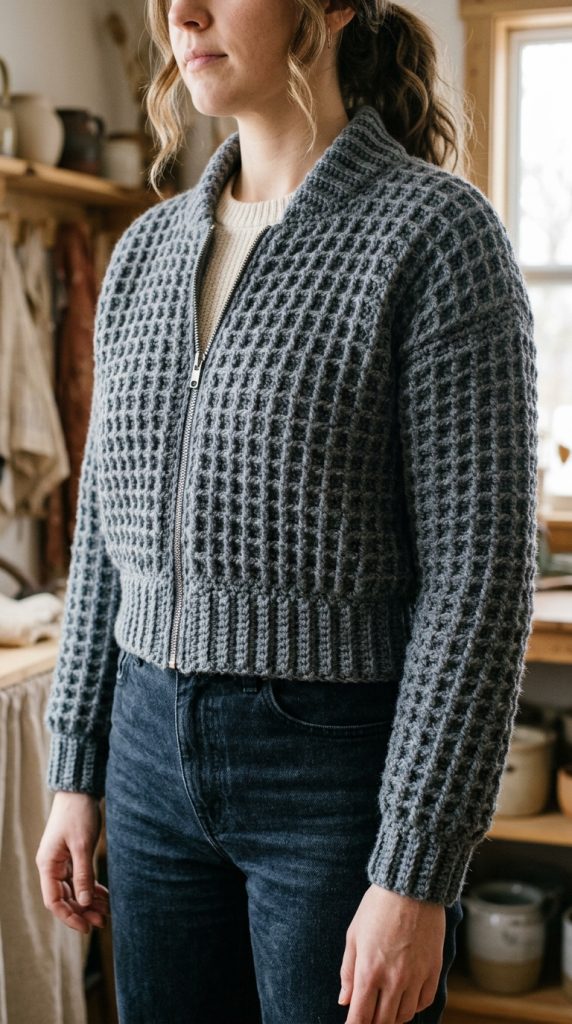
7. The Structural Waffle Stitch Bomber Jacket
For makers who love texture you can physically feel, the waffle stitch is a phenomenal option. It builds a beautiful, deeply recessed grid design resembling a classic thermal texture. This heavy fabric gives a cardigan excellent structural integrity, making it perform more like an outdoor utility jacket.
Style Profile and Construction
This design typically utilizes a cropped, bomber-style length with a thick, snug waistband. The texture is created by alternating standard stitches with raised post stitches. Because the fabric is inherently dense, it holds its shape beautifully without sagging or losing its form over time.
- Difficulty Level: Intermediate
- Optimal Fiber Choice: Crisp, high-definition 100% acrylic or superwash wool that accentuates sharp geometric shadow lines.
- Core Technique: Front Post Double Crochets ($fpdc$) worked around the stems of the previous row’s stitches.
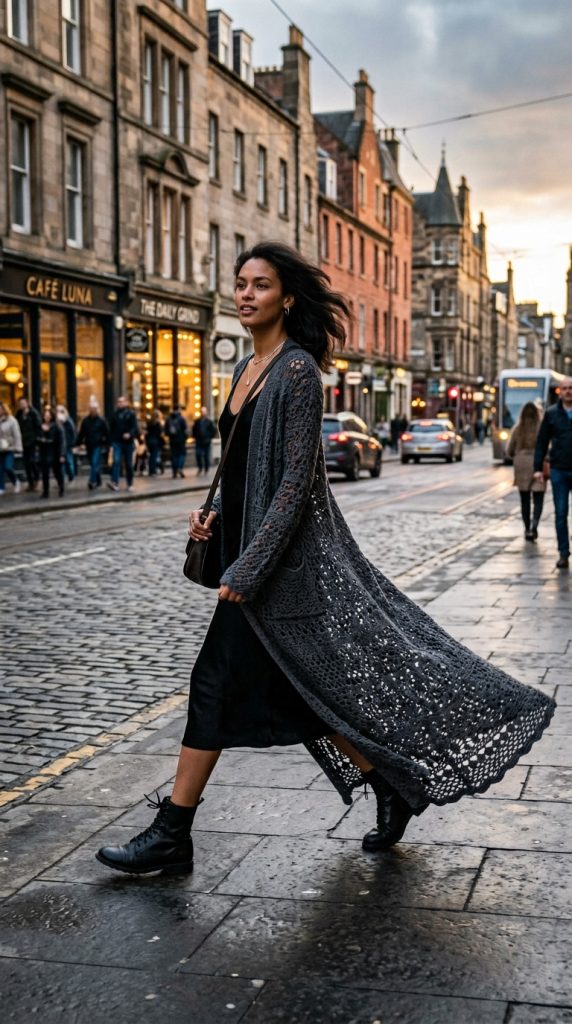
8. The Dramatic Pocketed Floor-Length Duster
Make a grand entrance with a sweeping, floor-length duster cardigan. This dramatic silhouette bridges the gap between casual loungewear and elegant statement dressing. It is the ultimate piece to layer over a simple t-shirt and jeans to instantly elevate your look.
Style Profile and Construction
Because of the sheer length of a duster, the pattern must account for the weight of the yarn pulling the garment downward. It is worked from the top down or bottom up in long, continuous vertical columns. Deep, functional patch pockets are added seamlessly to the front panels, reinforced with double stitching to prevent stretching.
- Difficulty Level: Advanced Beginner to Intermediate
- Optimal Fiber Choice: Lightweight acrylic or nylon blends that offer maximum warmth with minimal physical weight.
- Core Technique: Vertical row expansion and secure pocket panel integration.
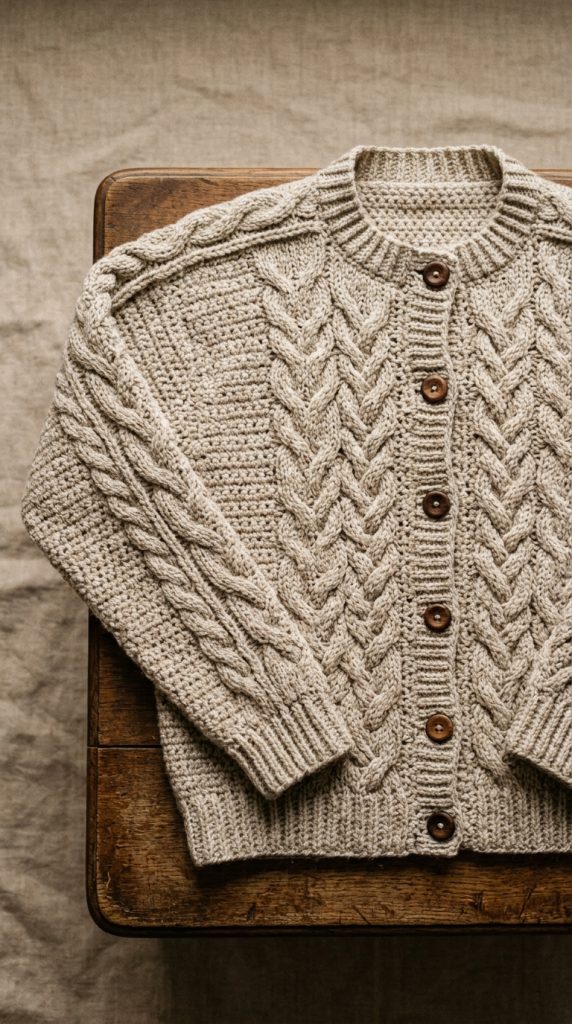
9. The Heirloom Cable-Stitch Heritage Cardigan
If you want to create a true family heirloom that showcases master-level needlecraft, look for a free cable-stitch layout. This technique mirrors the intricate, braided rope designs found in traditional Aran Island fisherman sweaters, bringing rich historical luxury into modern DIY fashion.
Style Profile and Construction
Crochet cabling is achieved by skipping stitches and working tall treble crochets ahead or behind your row sequence, crossing them over one another. This creates a raised, three-dimensional braid that sits proudly on top of a background of denser, flatter stitches.
- Difficulty Level: Advanced
- Optimal Fiber Choice: Solid, light-colored yarns (cream, heather grey, or soft beige). Avoid variegated or dark yarns, as they completely hide the shadows of your beautiful cable work.
- Core Technique: Front Post Treble Crochets ($fptr$) and complex multi-row cross patterns.
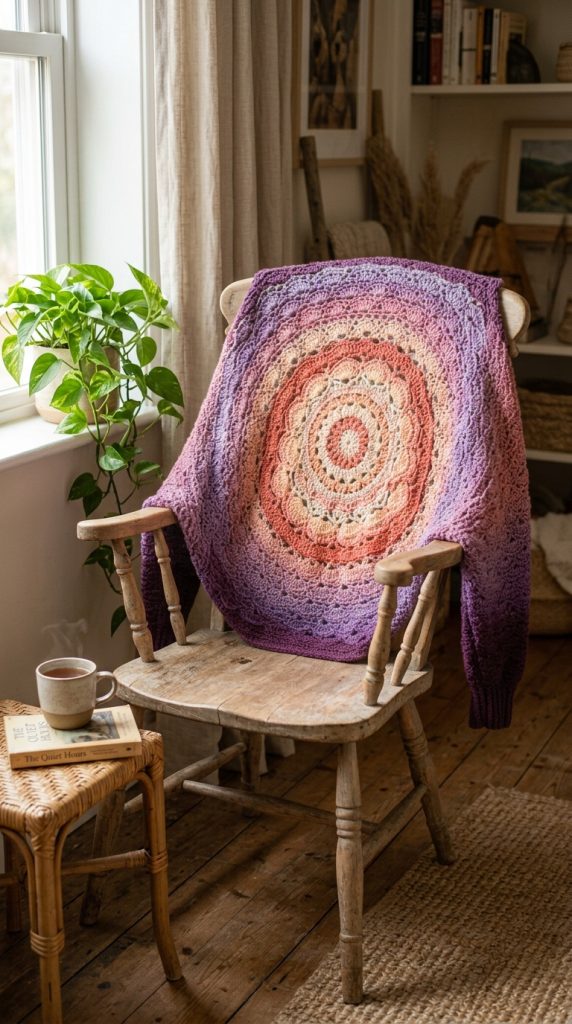
10. The Cocoon Mandala Shrug
The cocoon shrug is a geometric marvel that turns a flat circle or square into a beautifully draped, slouchy sweater with almost zero seaming. It is highly forgiving in its sizing, making it a fantastic gift project when you don’t know the recipient’s exact measurements.
Style Profile and Construction
You begin by crocheting a large circle or square motif, working outward in rounds like a giant decorative blanket. Once the piece is wide enough to reach from shoulder to shoulder, you fold the top and bottom edges inward and stitch a small section together on each side. The unstitched openings automatically form your armholes, while the rest of the circle naturally drapes into a cascading, elegant shawl collar.
- Difficulty Level: Easy
- Optimal Fiber Choice: Long-gradient cake yarns that transition smoothly from one color to another as you work outward.
- Core Technique: Continuous round increases and casual side seaming.
Essential Sizing and Gauge Strategies for Perfect Garments
To ensure your chosen free layout results in a piece that fits your body exactly the way you want, always keep these three golden rules of sweater construction in mind:
The Golden Rule of Gauge Swatching
Never skip the gauge check. Every maker holds their hook with a unique level of tension. Before diving into the full body of a cardigan, spend fifteen minutes crocheting a small $4 \times 4 \text{ inch}$ sample square using the stitch pattern indicated. Measure your stitches across the center. If your square has too many stitches compared to the design instructions, your tension is too tight—switch to a larger hook. If it has too few, your tension is loose—drop down a hook size.
Choosing the Right Fiber Architecture
The fiber you select dictates how your sweater behaves over time:
- Cotton and Bamboo: These plants have zero natural elasticity. They pull straight down, creating beautiful, fluid vertical drapes, but they will stretch permanently out of shape if your garment is overly heavy.
- Acrylic and Wool: These fibers possess excellent crimp and memory. They bounce back when stretched, making them perfect for structural cardigans, ribbed cuffs, and cable details.
Blocking Your Finished Panels
Before sewing your pieces together, block them. Lay your unjoined panels flat on a foam mat, mist them lightly with water (or use a garment steamer for wool), and pin them down to their exact target dimensions. This flattens curled edges, opens up your stitchwork, and ensures all your seams line up perfectly for a clean, professional finish.