The modern home is no longer just a place of shelter; it is a canvas for self-expression and an oasis for entertaining. As open-plan living continues to dominate architectural trends, the lines between cooking, dining, and socializing have blurred. This shift has elevated two essential furniture pieces from mere storage solutions to captivating focal points: the crockery cabinet and the home bar unit.
Whether you are an avid collector of vintage porcelain, a passionate mixologist, or a design enthusiast who loves hosting weekend soirées, your storage choices speak volumes about your aesthetic. Integrating functional storage with high-end aesthetics requires a thoughtful balance of materials, lighting, and spatial awareness.
Here is an inspiration guide featuring ten sophisticated crockery and bar unit design ideas, curated to bring a high-end, visual-forward aesthetic into your living space.
1. The Seamless Floor-to-Ceiling Built-In Architectural Unit
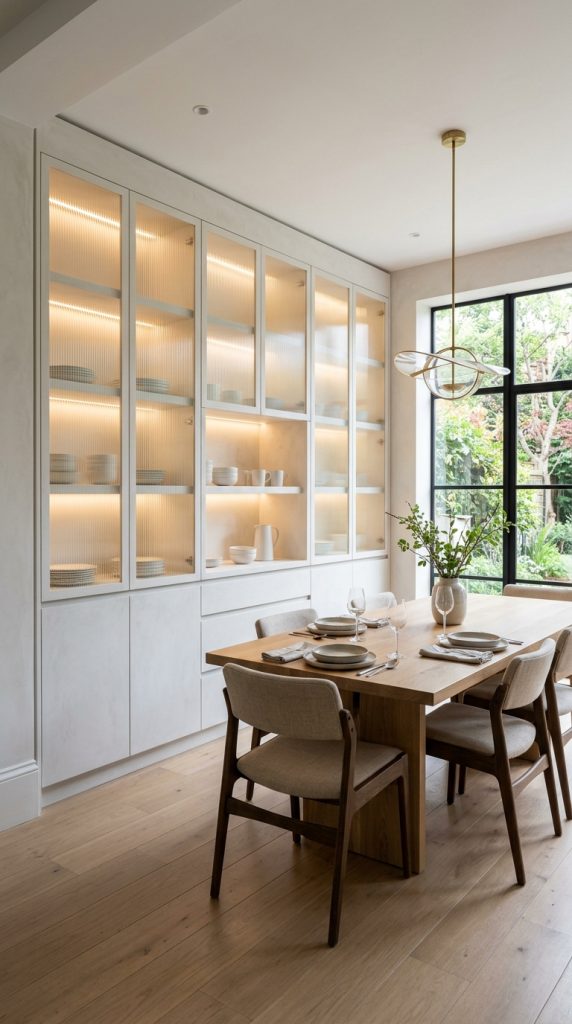
For a sleek, high-end look that maximizes every square inch of your dining room, a floor-to-ceiling built-in unit is unmatched. This design flushes completely with your wall, mimicking the architecture of the room rather than looking like an afterthought.
Design Elements
Monochromatic Sophistication: Paint the unit the exact same shade as your walls (such as a deep charcoal, muted olive, or chalky plaster white) to create a seamless, integrated appearance.
Fluted Glass Doors: Utilize fluted or ribbed glass on the upper cabinetry. This obscures clutter while allowing the warm glow of internal lighting to filter through beautifully.
Minimalist Hardware: Opt for touch-latches or integrated J-pull handles to maintain a uninterrupted, clean facade.
Styling Tip: Dedicate the top shelves to your rarest, oversized serving platters and vases, keeping everyday dinnerware at eye level for effortless access.
2. The Mid-Century Modern Freestanding Credenza
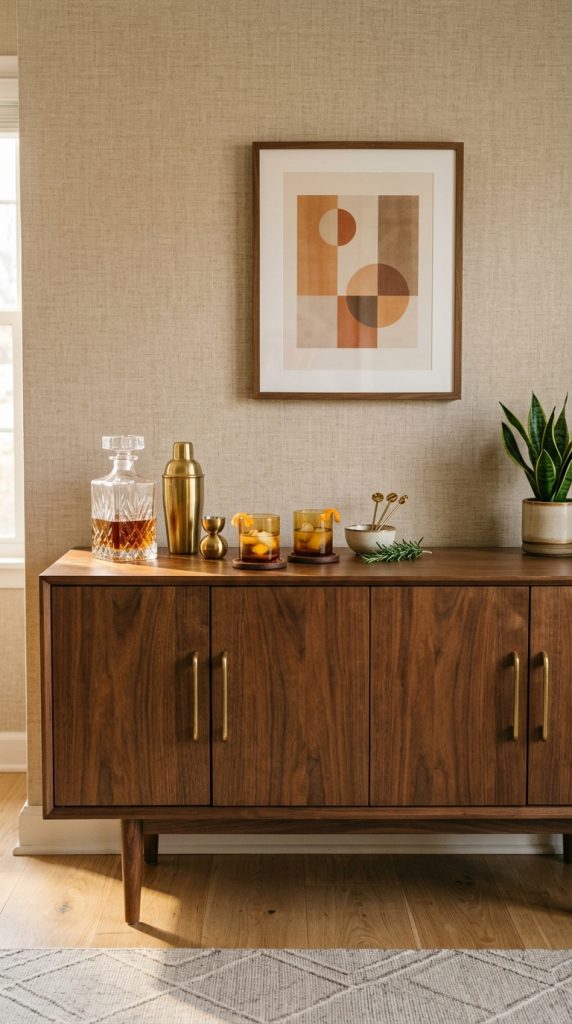
If flexibility and retro charm appeal to you, a freestanding mid-century modern credenza serves as an exceptional dual-purpose station. Characterized by tapered legs, rich wood grains, and clean horizontal lines, this piece brings instant warmth to neutral dining spaces.
Design Elements
Rich Wood Veneers: Look for walnut, teak, or rosewood finishes that showcase natural grain patterns.
The Split-Level Strategy: Use the interior cabinets to house heavy ceramic bowls and plates, while using the flat top surface as a dedicated beverage pouring station.
Statement Backsplash: Position the credenza against a feature wall decorated with understated textured wallpaper or a geometric gallery wall to frame the setup.
3. The Industrial Chic Steel-Framed Glass Enclosure
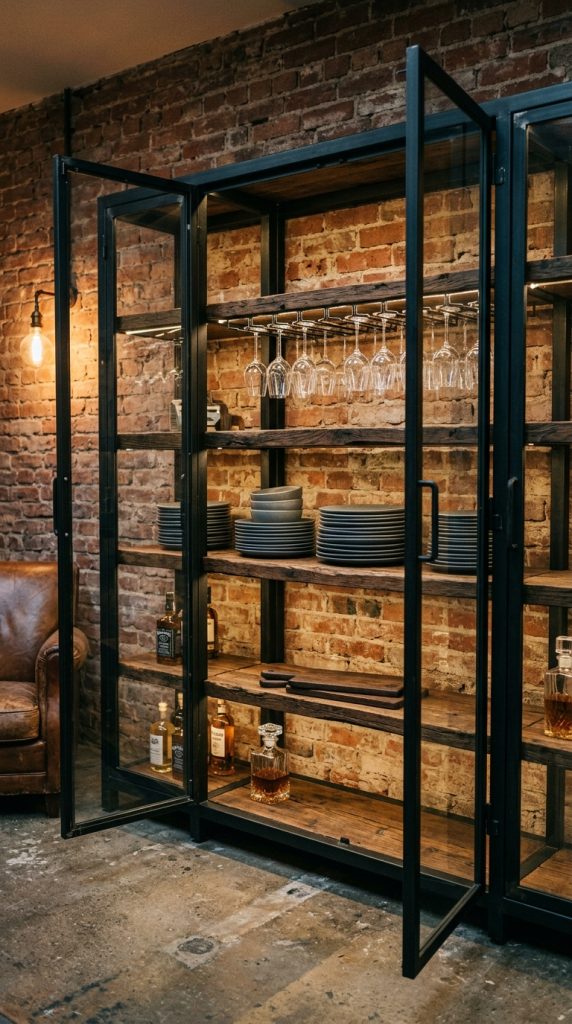
For homes with a loft aesthetic or a contemporary minimalist vibe, an industrial steel-framed unit introduces a striking, graphic element. This style relies on sharp contrasts and raw materials to make a statement.
Design Elements
Matte Black Powder-Coated Frames: Slim profiles keep the look lightweight yet structurally grounded.
Integrated Stemware Racks: Hang delicate crystal wine glasses upside down from the top interior grids to play with vertical space.
Reclaimed Wood Shelving: Balance the coldness of the black metal with thick, rugged wooden shelves that tell a story of their own.
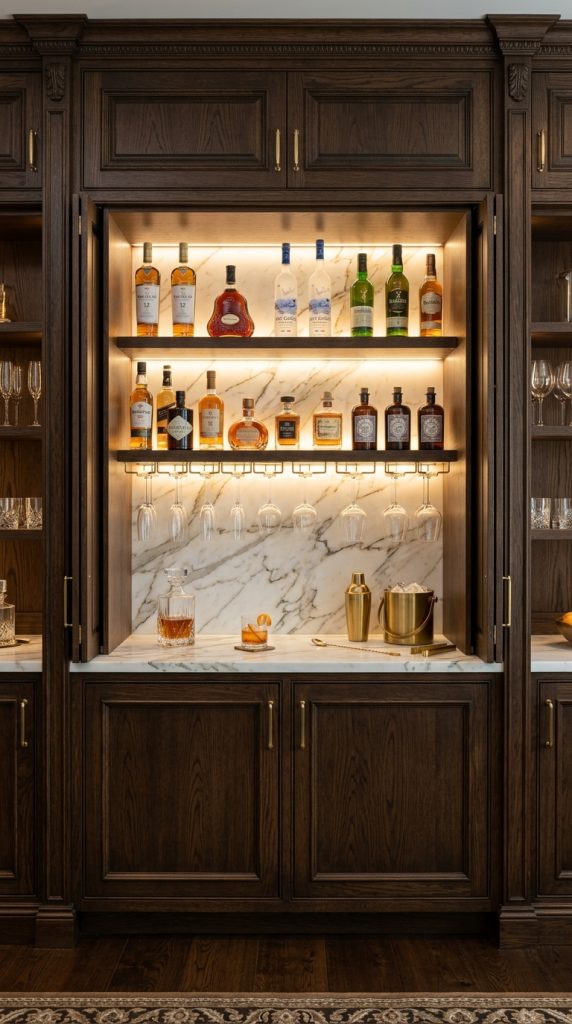
4. The Hidden Bi-Fold Pocket Door Bar
Not everyone wants their bar or extensive dish collection on display 24/7. The hidden pocket-door unit offers the ultimate luxury: a fully functioning entertainment hub that completely disappears when the doors slide shut.
Design Elements
Pocket Door Mechanics: High-quality hardware ensures that the doors smoothly slide back into hidden recesses along the sides of the cabinet, keeping walkways clear.
An Interior Burst of Luxury: While the exterior matches your standard kitchen cabinetry, the interior can feature a contrasting element, such as a rich marble countertop, a mirrored back panel, and metallic gold accents.
Automated Motion Sensor Lighting: Program the internal LED strip lights to illuminate the moment the doors begin to glide open.
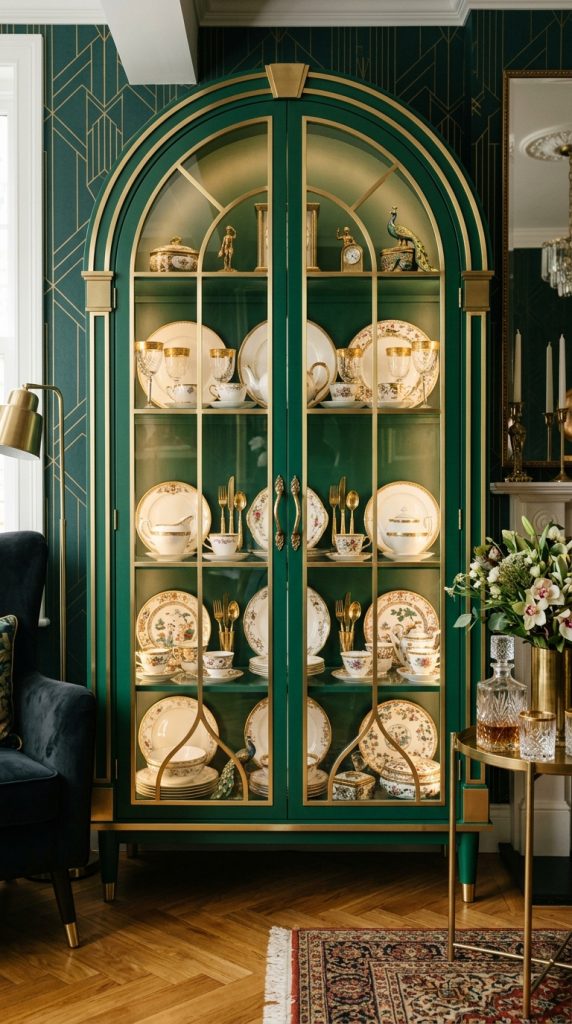
5. The Art Deco Curved Arch Display Cabinet
Curves are dominating modern interior architecture because they soften the harsh, straight lines found in standard residential layouts. An arched alcove or freestanding curved cabinet brings a sense of romance and timeless elegance to your dining space.
Design Elements
Soft Radiused Edges: The rounded top draws the eye upward, making ceilings appear higher than they actually are.
Brass and Metallic Inlays: Incorporate brushed brass trim along the edges or use delicate metallic mesh instead of traditional glass doors.
Jewel-Toned Backdrops: Paint the interior back wall of the cabinet a deep emerald, sapphire, or burgundy to make white porcelain dishes pop with museum-quality contrast.
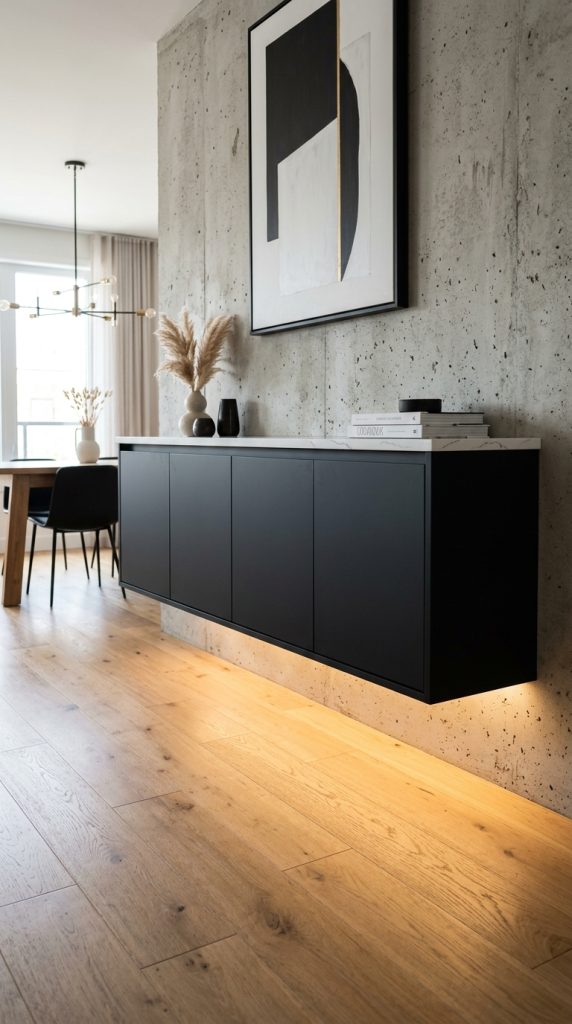
6. The Floating Minimalist Buffet with Under-Cabinet Glow
If you want to maintain an airy, spacious feeling in a compact dining room, a wall-mounted, floating buffet is the perfect solution. By keeping the floor clear, you create the illusion of more square footage while still gaining valuable surface and storage space.
Design Elements
Handleless Cantilevered Design: Heavy-duty wall brackets support a long, low-profile unit that hovers roughly 12 to 18 inches off the ground.
Ambient Ambient Downlighting: Install a concealed LED light strip underneath the unit. This casts a soft, ambient glow across the floor, making the entire piece look weightless at night.
Solid Stone Top: Cap the floating unit with a thin slab of quartz or porcelain for a durable surface that handles spilled drinks or hot serving dishes without staining.
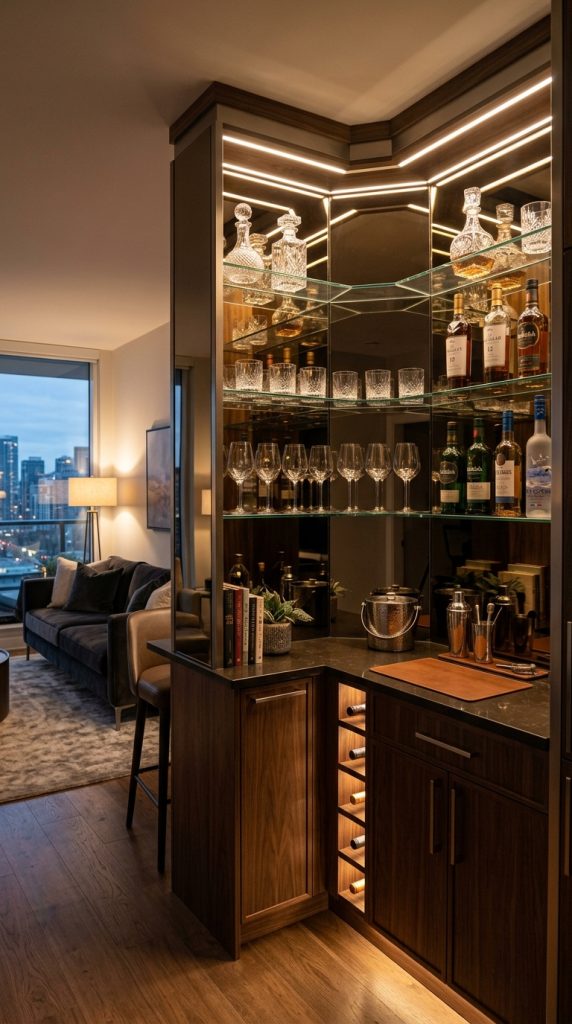
7. The Ultimate Corner Bar with Mirrored Backing
Awkward corners are often neglected, but they represent a goldmine of design potential. A custom corner bar unit turns an unused nook into the most popular destination in your home.
Design Elements
Smoked Mirror Backing: Placing angled mirrors inside a corner unit bounces light around the room, creates depth, and makes your liquor collection look twice as extensive.
Quarter-Circle Glass Shelves: Floating glass shelves allow light to pass through from the very top of the unit down to the bottom tier.
Integrated Prep Sink: If plumbing allows, incorporate a tiny, under-mounted brass prep sink for an ultra-luxurious, hospitality-inspired touch.
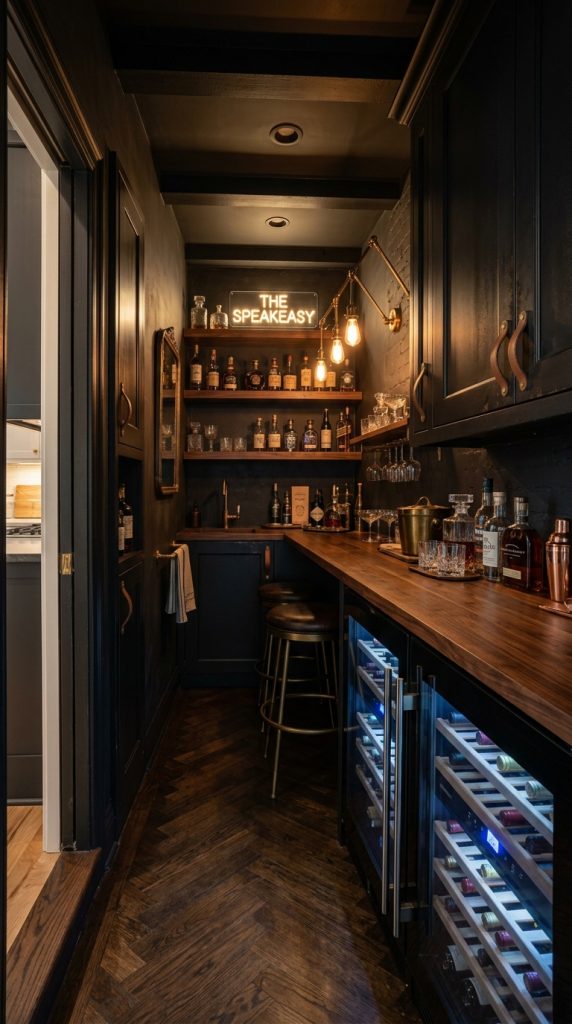
8. The Moody Speakeasy Walk-In Pantry Conversion
If you have a spare closet near your dining area or an underutilized walk-in pantry, transform it into a private, moody speakeasy lounge bar. This concept relies on deep, dramatic tones to evoke an exclusive, late-night atmosphere.
Design Elements
Deep Color Palettes: Think charcoal gray, midnight blue, or matte black cabinetry paired with dark walnut countertops.
Leather-Wrapped Hardware: Introduce tactile luxury with cabinet pulls wrapped in cognac or black leather with exposed stitching.
Dedicated Wine Refrigeration: Dedicate the lower half of the space to dual-zone wine coolers, keeping whites chilled and reds at optimal cellar temperatures.
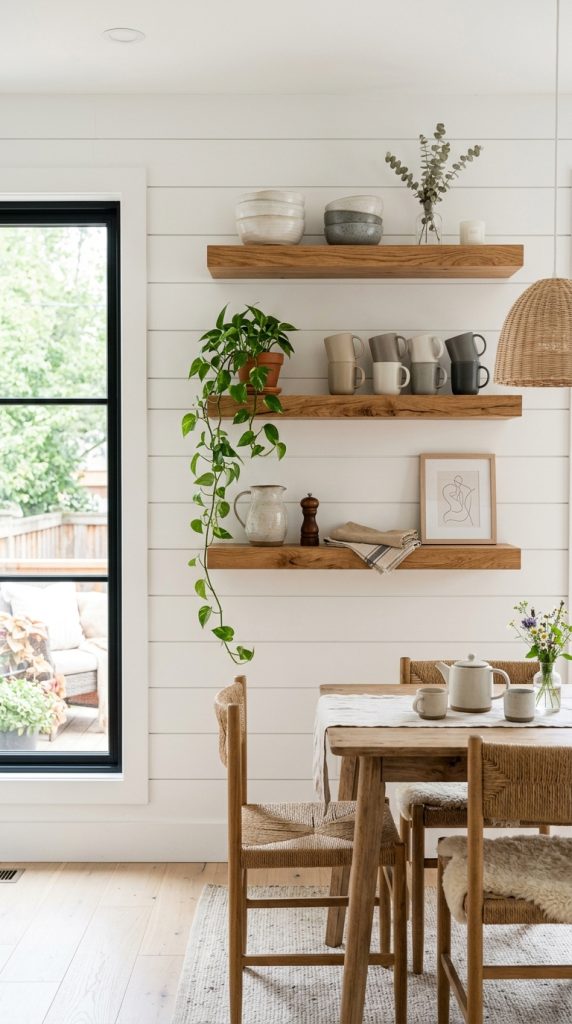
9. The Open-Concept Floating Shelf Gallery
For the true minimalist who views their dinnerware as art, an open-concept floating shelf system replaces bulky cabinetry altogether. This design celebrates casual elegance and easy access.
Design Elements
Thick-Cut Timber or Marble Slabs: Use substantial, high-quality materials for the shelves to avoid a flimsy look.
Perfectly Imperfect Stacking: Group plates by size, stack bowls organically, and intersperse the functional items with small framed oil paintings or trailing green plants.
Monochromatic Palette: To keep open shelving from looking cluttered, stick to a unified color scheme for your crockery—such as all matte white, speckled beige, or earthy terracotta.
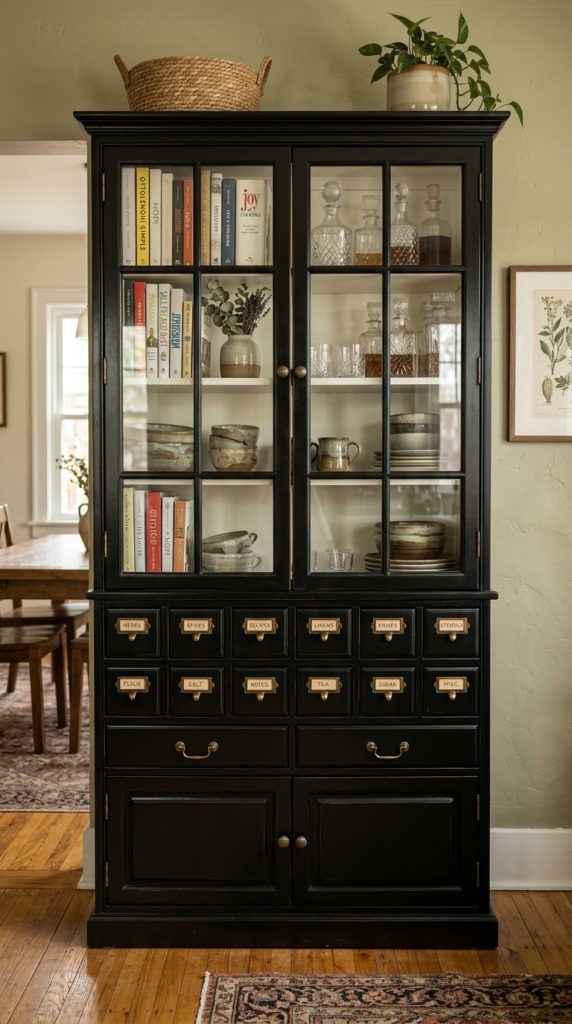
10. The Eclectic Transitional Apothecary Cabinet
A transitional apothecary-style cabinet combines old-world charm with modern styling. Featuring dozens of small drawers mixed with glass-fronted display areas, it adds character and historical depth to newly built homes.
Design Elements
Distressed or Lacquered Finishes: Choose either a weathered, rustic wood finish or go the opposite direction with a high-gloss, lacquer finish for a modern twist.
Label-Holder Pulls: Use vintage brass hardware with built-in label slots on the lower drawers to store linen napkins, cocktail garnishes, and silverware.
Curated Asymmetry: Avoid perfect symmetry when arranging the interior. Mix stacks of plates with leaning cookbooks, decanters, and sculptural bar tools.
Designing for Form and Function: The Golden Rules
When bringing any of these ideas to life, keep these key principles in mind to ensure your unit is as functional as it is beautiful:
Incorporate Layered Lighting: Never rely on a single overhead light. Combine internal cabinet spotlights (pucks), linear LED strips for shelving, and soft ambient room lighting to create dimension.
Declutter by Curation: Only display items that evoke joy or boast beautiful design. Hide mismatched plastic containers, everyday water bottles, and chipped mugs behind solid doors or in lower drawers.
Mix Textures: Balance hard surfaces like glass, stone, and metal with soft elements. Place linen placemats in drawers, display wooden cutting boards alongside crystal decanters, and introduce greenery to soften the look.