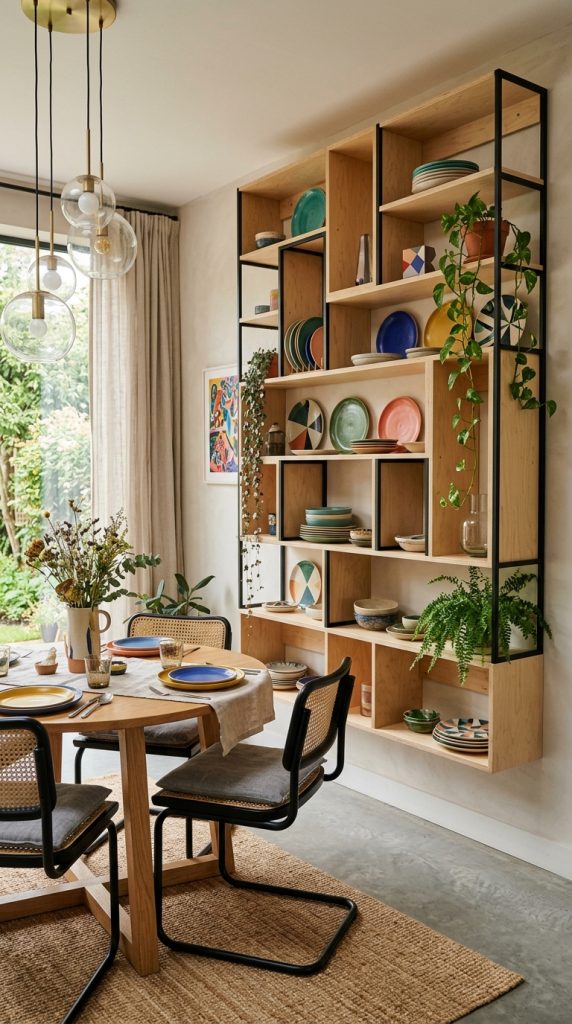
The modern dining room is no longer just a functional space for consuming meals; it is the emotional heart of home hospitality. It is where design narrative meets functional artistry, and where family heirlooms, artisan ceramics, and fine crystal are showcased. At the center of this aesthetic experience sits the crockery unit. Far from being a mere storage cabinet, a beautifully engineered crockery unit serves as an architectural anchor for the dining room, bridging the gap between utilitarian storage and high-end gallery display.
Achieving a professional-grade interior layout requires moving past generic, bulky wooden cabinets. Today’s design movements favor integrated styling, textural juxtaposition, and custom lighting configurations that transform your dining room storage into a striking visual installation.
Whether you are renovating a spacious open-concept villa, styling a chic urban apartment, or designing a cozy, rustic family dining space, this comprehensive guide explores ten sophisticated crockery unit design ideas. Complete with spatial blueprints, material lists, and pro curation tips, these concepts are crafted to optimize your home organization while looking impeccably polished, intentional, and curated.
The Core Elements of High-End Crockery Unit Engineering
Before committing to a specific design theme, it is essential to understand the structural pillars that elevate a basic dining storage cabinet into an architectural masterpiece. Professional interior designers rely on several foundational principles:
- Proportion and Scale: A crockery unit must complement the architectural volume of your dining room. In rooms with high ceilings, tall floor-to-ceiling built-ins provide structural continuity. For more compact dining zones, a low-slung, floating sideboard maintains a sense of spaciousness by leaving wall space open.
- Textural Balance: Avoid a monotonous wall of a single material. Combine contrasting textures—such as fluted wood panels, clear or tinted glass doors, brushed metallic hardware, and natural stone countertops—to add depth and visual complexity.
- Strategic Illumination: Proper lighting is what separates high-end custom joinery from off-the-shelf furniture. Integrating warm, recessed LED strip lights, flush spotlights, or back-lit translucent panels will make your porcelain and glassware sparkle, instantly transforming the unit into an evening focal point.
- The 70/30 Storage Rule: For an organized, curated look, design your unit with a 70/30 split between concealed storage and open display. Use opaque cabinets or deep drawers for 70% of the unit to hide bulky serving trays, linen napkins, and everyday silverware, leaving the remaining 30% open or glass-fronted to showcase your most aesthetic dinnerware.
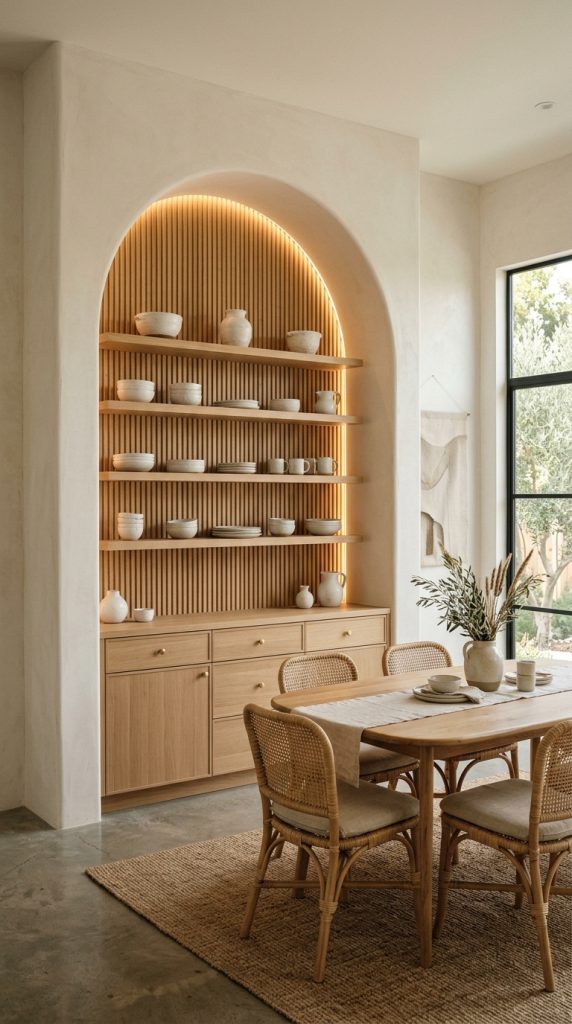
1. The Arch-Niche Inset with Fluted Detailing
This design language leans heavily into softer, organic architectural forms. By recessing the crockery display directly into an arched wall niche, the unit feels like an organic extension of the house itself rather than an afterthought piece of furniture.
Aesthetic Blueprint
- Color Palette: Soft alabaster white, muted sand tones, and natural white oak.
- Key Materials: Gypsum arch-work, vertical fluted wood tambour panels, and warm 2700K recessed LED lighting.
- Vibe: Serene, organic modernism, and architecturally integrated.
Design Execution
Begin by constructing a shallow arched alcove within the dining room wall. Line the inner back wall of the niche with premium vertical fluted timber panels to introduce a beautiful play of texture and shadow. Install custom floating oak shelves that follow the curve of the arch.
To ground the installation, build a floating base cabinet with push-to-open doors clad in the same fluted detailing, completely concealing everyday kitchen clutter.
Styling Tip
Style the open oak shelves with minimalistic, hand-thrown stoneware ceramics in neutral hues, matte terracotta pitchers, and small bundles of dried eucalyptus.
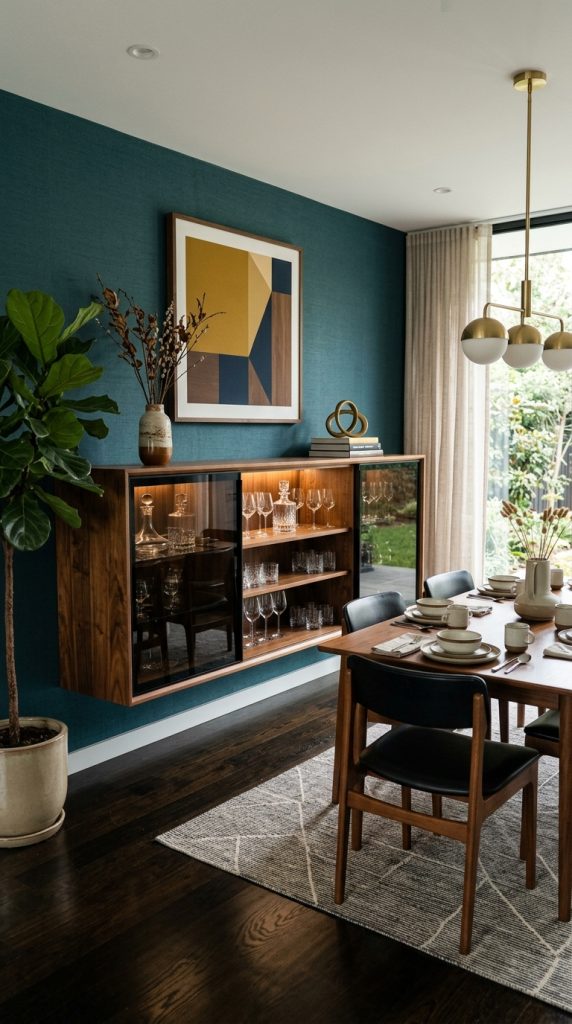
2. The Mid-Century Walnut & Smoked Glass Floating Sideboard
Celebrating the sharp lines, rich woods, and geometric clarity of mid-century Scandinavian design, this low-profile sideboard keeps the dining room feeling incredibly airy and open while offering sophisticated storage.
Aesthetic Blueprint
- Color Palette: Rich walnut, charcoal grey, smoked amber, and matte black accents.
- Key Materials: American walnut veneer, tinted smoked glass panels, black powder-coated aluminum trim, and internal backlighting.
- Vibe: Retro-modern, moody, urban, and understated luxury.
Design Execution
Mount a long, low sideboard directly onto the dining room wall, hovering roughly 12 inches above the floor. Use rich, dark-grained walnut wood for the main structural box. Replace the central solid doors with sleek, black-framed smoked glass panels.
When the internal warm LED lighting is switched on, the smoked glass reveals the faint, elegant silhouettes of crystal wine glasses and fine china inside, casting a moody, sophisticated glow across the dining area.
Styling Tip
Keep the top surface of the sideboard clear and minimal: display a single architectural ceramic vase, a stack of design monographs, and an elegant brass tray holding a crystal decanter.
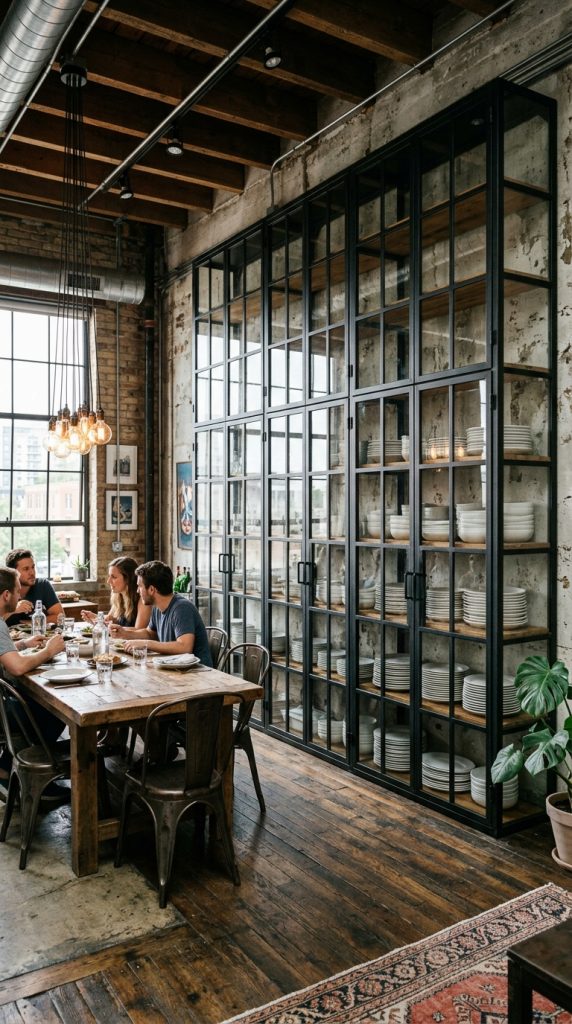
3. The Industrial Iron Framed Walk-In Pantry Display
For homes designed with a loft, industrial, or transitionally modern aesthetic, this design utilizes a bold, black iron framework to create a structural, floor-to-ceiling grid display that feels like a boutique culinary library.
Aesthetic Blueprint
- Color Palette: Matte onyx black, industrial concrete grey, and clear glass windows.
- Key Materials: Wrought iron grids, clear tempered safety glass, raw concrete-rendered backing wall, and exposed brass rivets.
- Vibe: Bold, urban, industrial, and utilitarian-luxe.
Design Execution
Construct a full-height, floor-to-ceiling display unit using a matte black iron grid framework. The upper section features glass-front panes that swing open on heavy-duty industrial hinges, revealing a raw concrete-effect or distressed brick background wall.
The bottom half of the unit transitions into solid matte black metal drawers with exposed brass cup handles, perfect for storing heavy cast-iron serving bowls and table runners.
Styling Tip
Embrace the culinary library look by organizing this unit with rows of matching clear glass apothecary jars filled with artisanal grains, alongside neatly stacked white porcelain dinner plates.
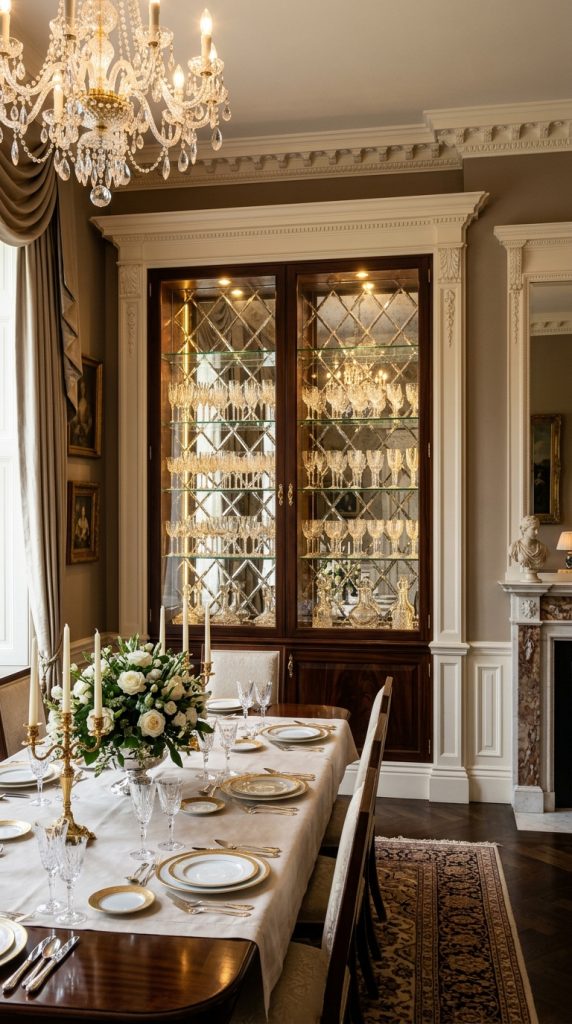
4. The Neo-Classical Inset Mirror-Back Vitrine
Perfect for formal dining rooms that host lavish evening dinner parties, this regal design utilizes reflective mirror panels to bounce light around the room, creating an incredibly grand, bright, and sparkling ambiance.
Aesthetic Blueprint
- Color Palette: Champagne gold leaf, antiqued ivory, and brilliant crystal reflections.
- Key Materials: Beveled antique mirror panels, ornate crown moldings, and ultra-clear tempered glass shelves.
- Vibe: Luxurious, classical, stately, and highly sophisticated.
Design Execution
Incorporate a traditional double-door glass vitrine into your dining room wall, framing it with elegant classical crown moldings painted in a soft, satin-finish ivory. Line the entire back interior wall of the cabinet with antiqued or beveled diamond-cut mirror sheets.
Use ultra-clear glass shelves instead of wood, allowing internal top spotlights to shine down completely through the unit. Every crystal glass placed inside will reflect beautifully against the mirrored back, creating a glittering display.
Styling Tip
This unit is designed for your finest tableware. Showcase your delicate gold-rimmed china sets, fine crystal stemware, and antique silver tea services to maximize the reflective glamour.
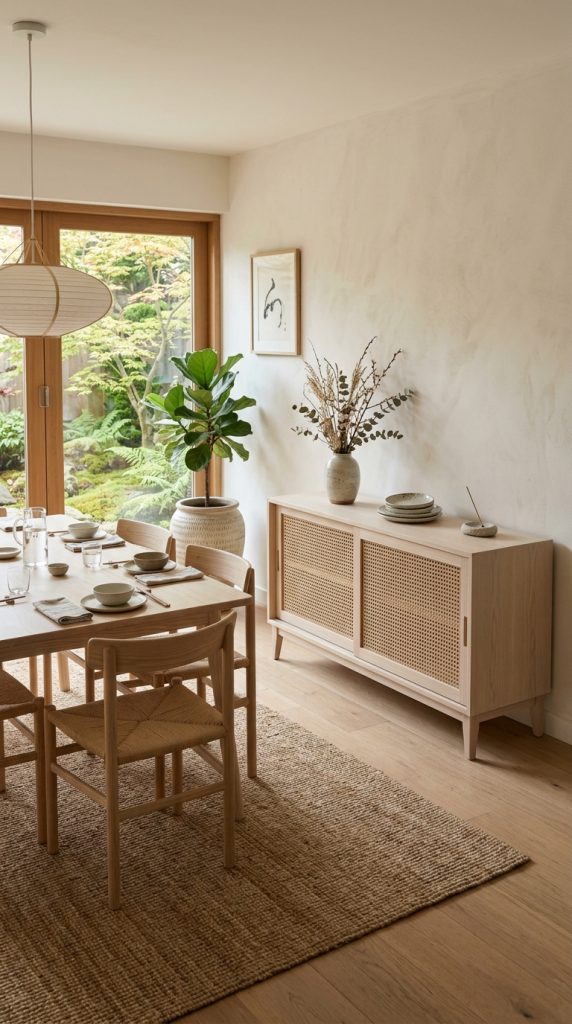
5. The Minimalist Japanese-Nordic (Japandi) Slide Cabinet
Rooted in the serene philosophies of minimalism, natural materials, and functional simplicity, the Japandi crockery unit utilizes clean horizontal lines and sliding screens to create a clutter-free sanctuary.
Aesthetic Blueprint
- Color Palette: Bleached ash wood, soft moss greens, matte white, and natural linen.
- Key Materials: Natural ash or light bamboo timber, woven cane or rattan mesh screens, and hidden track rails.
- Vibe: Calming, minimalist, natural, and highly functional.
Design Execution
Build a clean, rectangular floor-standing cabinet out of light bleached ash wood. Instead of traditional doors that swing outward into the dining space, use wide, horizontal sliding screens. One screen can be crafted from solid wood, while the other features a delicate woven cane or rattan mesh inlay.
This layout lets you slide the mesh screen over to beautifully reveal curated dinnerware while keeping less attractive table linens hidden behind the solid panel.
Styling Tip
Keep the styling highly restrained. Display just a few exceptional pieces: a single textured ceramic teapot, a couple of matte black earthenware bowls, and a branch of fresh cherry blossoms in a clear glass vase.
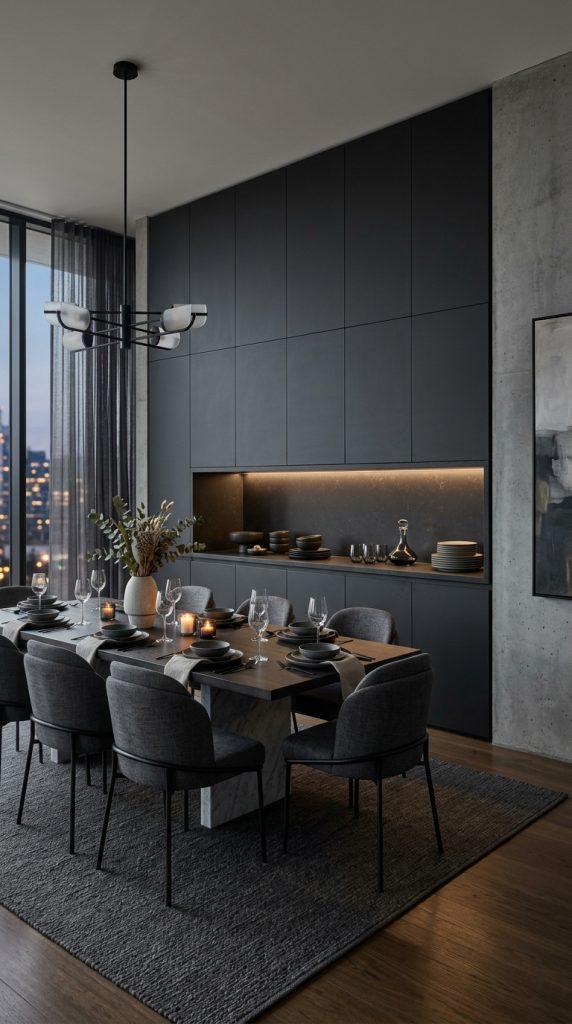
6. The Monochromatic Architectural Block
Designed for ultra-modern homes, this avant-garde concept treats the crockery unit like a seamless, geometric monolith. By using the exact same shade for the walls, cabinets, and internal spaces, the structure looks like a custom sculpture carved directly out of the room.
Aesthetic Blueprint
- Color Palette: Deep graphite charcoal, dark slate blue, or rich forest spruce green.
- Key Materials: Matte anti-fingerprint laminates, color-matched quartz stone countertops, and integrated hidden channel handles.
- Vibe: Futuristic, dramatic, sophisticated, and high-fashion.
Design Execution
Select a single, deep matte color—such as graphite charcoal—and apply it to the entire dining room accent wall. Build a full-wall custom cabinetry system using the exact same matte finish. The middle section features a deep, open horizontal cutout lined with a matching charcoal quartz slab, serving as a functional buffet serving counter during parties.
All handles are completely integrated into the bevels of the doors, maintaining a completely seamless, flat, and monolithic geometric profile.
Styling Tip
Create a high-contrast visual statement by displaying purely stark white contemporary dinnerware or bright metallic brass serving bowls within the dark open quartz niche.
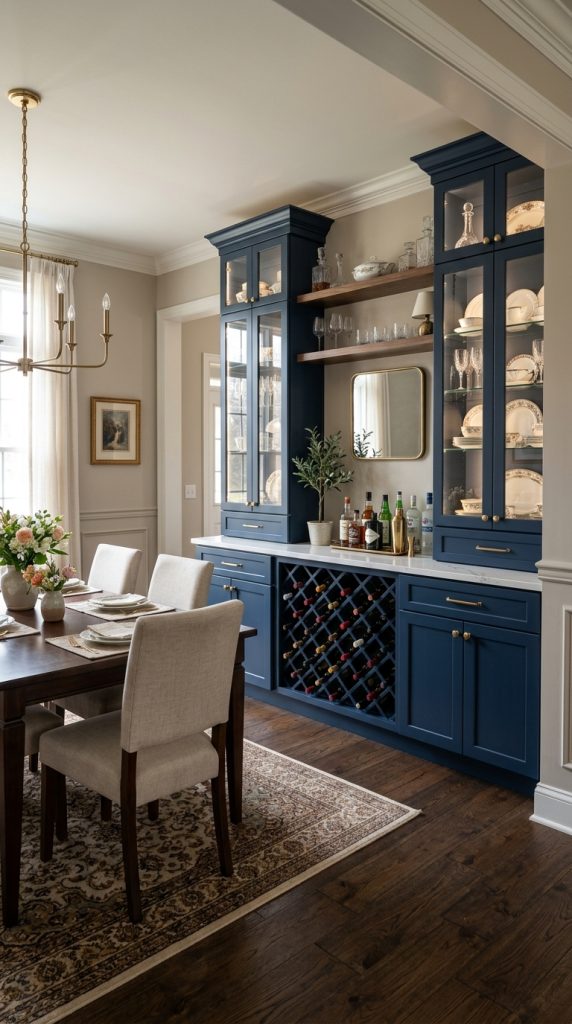
7. The Transitional Shaker-Style Inset Bar and Crockery Combo
This incredibly popular design blends timeless traditional charm with modern multi-functional utility, effortlessly combining a fine china showcase with a fully equipped beverage and coffee bar station.
Aesthetic Blueprint
- Color Palette: Deep navy blue, sage green, off-white, and warm butcher-block walnut tones.
- Key Materials: Classic recessed Shaker-style cabinet doors, white marble or quartz countertops, cross-hatched wood wine racks, and brushed nickel hardware.
- Vibe: Welcoming, classic, functional, and family-oriented.
Design Execution
Construct a symmetrical cabinetry system featuring classic recessed Shaker-style frames painted in a rich, sophisticated navy blue or soft sage green. The left and right top cabinets feature clear glass fronts to exhibit dinner plates and glassware.
The center section is left completely open with a durable white quartz countertop, creating a dedicated beverage bar station. Install a custom diagonal wood lattice wine rack directly above the counter and a small under-counter beverage cooler below.
Styling Tip
Style the central bar countertop with an elegant espresso machine, a beautiful wooden cutting board, a ceramic bowl of fresh citrus fruits, and a set of amber glass coffee mugs.
8. The Ethereal Floating Glass Box (The Museum Vitrine)
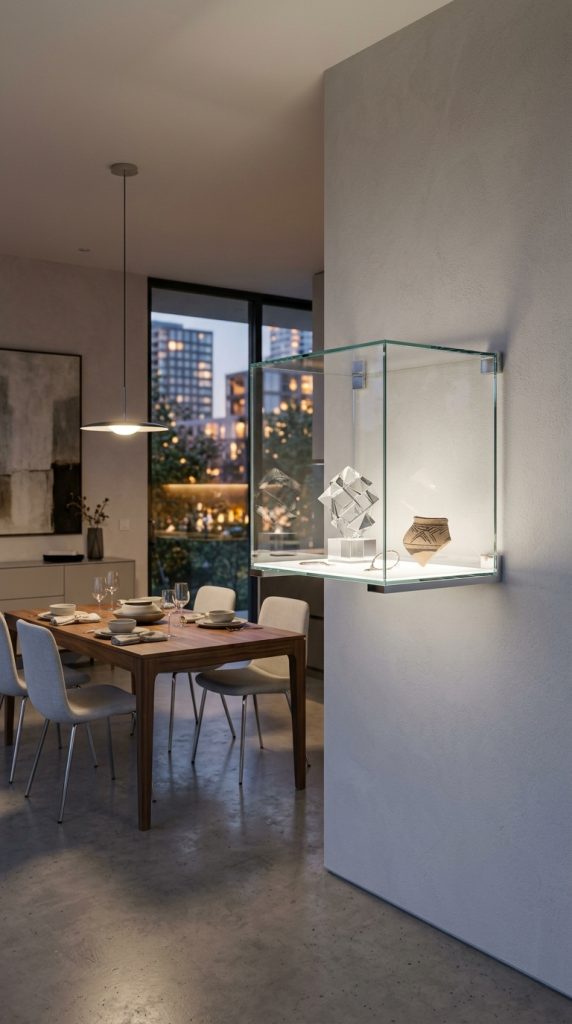
For the connoisseur of rare art glass and high-end modern ceramics, this design treats your tableware like precious museum artifacts. It strips away all heavy wood structures, relying entirely on glass suspended by thin, structural metal lines.
Aesthetic Blueprint
- Color Palette: Ultra-clear glass, polished chrome, and soft internal white light.
- Key Materials: Low-iron glass panels, micro slim chrome frame supports, and frosted glass floor panels with bottom-up LED glow.
- Vibe: Ethereal, high-tech, luminous, and weightless.
Design Execution
This unit is constructed as an ultra-minimalist, floating wall-mounted box made almost entirely of low-iron glass, which eliminates the typical green tint found in standard glass panels. The frame consists of incredibly thin, structural stainless steel or chrome bars.
The bottom floor of the cabinet is made of frosted glass panels with integrated bottom-up LED light strips. This allows a soft, diffused, angelic white light to shine upward through your glassware, making every piece look like it is floating in mid-air.
Styling Tip
Display only transparent crystal stems, delicate hand-blown colored glass vases, and sculptural porcelain bowls that allow the ethereal light to pass through.
9. The Country-Luxe Weathered Oak & Chicken-Wire Cabinet
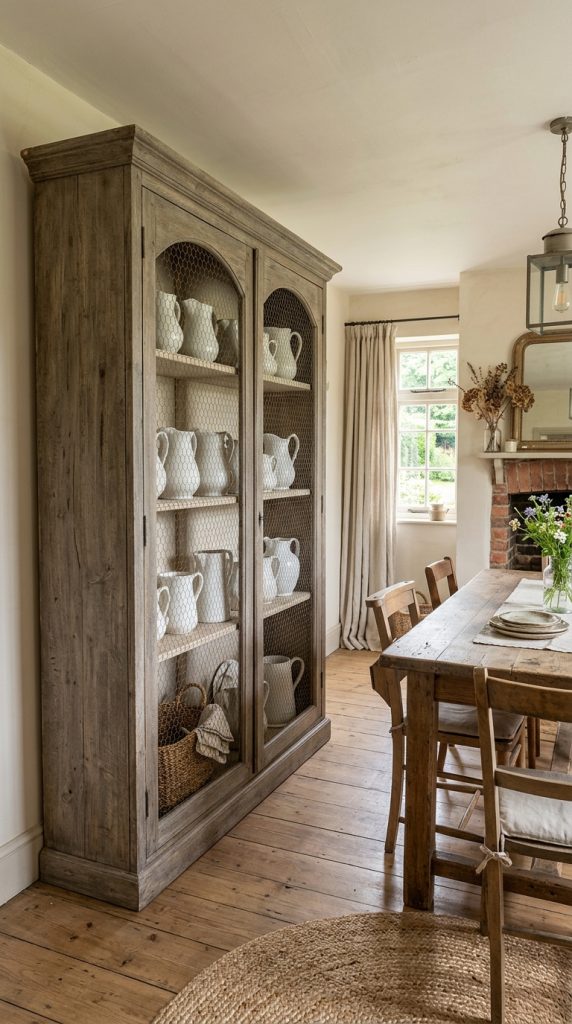
Perfect for farmhouse, cottage-core, or French country style dining spaces, this design infuses the dining room with warm, rustic nostalgia and rich, tactile textures.
Aesthetic Blueprint
- Color Palette: Weathered grey-oak, distressed cream, and antique pewter accents.
- Key Materials: Wire-brushed natural oak wood, traditional metal chicken-wire mesh inserts, linen fabric backing, and forged iron handles.
- Vibe: Cozy, nostalgic, charming, and rich with rustic character.
Design Execution
Construct a free-standing, double-door tall cabinet out of natural oak timber that has been wire-brushed to highlight the natural beauty of the wood grain. Instead of glass panes, insert traditional metal chicken-wire mesh into the door frames.
Line the inner back wall of the cabinet with a soft, neutral cream linen fabric. This elements blend beautifully together, softening the look of the unit while giving it a timeless, lived-in country-luxe charm.
Styling Tip
Fill this rustic cabinet with classic white ironstone pitchers, scalloped-edge ceramic plates, woven wicker bread baskets, and vintage linen napkins tied with jute twine.
10. The Geometric Asymmetric Open-Shelf Display
For the homeowner who loves avant-garde design and contemporary art, this crockery unit breaks away from traditional symmetry, using varying shelf heights and geometric cutouts to create an incredibly dynamic wall installation.
Aesthetic Blueprint
- Color Palette: Matte black, light birchwood, and soft warm terracotta accents.
- Key Materials: Premium birch plywood edges, matte black metal framing, and colorful painted geometric backing panels.
- Vibe: Artistic, dynamic, youthful, and contemporary.
Design Execution
Design a wall-spanning open shelving unit characterized by intentional asymmetry. Combine shelves of totally different heights, widths, and depths into a modern, grid-like composition. Some sections are kept completely open, while others are backed by painted wooden panels in warm terracotta or soft olive.
Incorporate a few small, square drop-down cabinets within the grid to provide a few concealed storage zones amidst the open display.
| Design Feature | Traditional Crockery Unit | Asymmetric Open Unit |
| Symmetry | Strict balance, mirrored layouts | Playful asymmetry, varied shapes |
| Accessibility | Fully enclosed behind doors | Open-concept, easy-access layout |
| Visual Weight | Solid, anchoring, heavy | Light, dynamic, artistic grid |
Styling Tip
Treat this unit like a curated art shelf: alternate stacks of colorful contemporary dinnerware with small indoor potted plants (like trailing ivy or pothos), modern art sculptures, and framed abstract sketches.