Every artist, designer, and maker knows that the quality of a project depends directly on the foundational materials used. Building an inspiring, versatile, and high-performing craft studio requires selecting supplies that offer flexibility, durability, and rich aesthetic qualities. Whether you specialize in paper crafts, fiber arts, home decor upcycling, or fine art painting, having the right core craft supplies transforms creative ideas into beautifully executed handmade pieces.
Choosing elevated craft supplies involves understanding material grades, safety certifications, pigment densities, and structural properties. Equipping your workspace with top-tier raw materials streamlines production, prevents common crafting failures, and elevates the finished look of every handmade creation.
Here is a comprehensive material science, application technique, and studio integration guide to 10 essential craft supplies ideas, complete with technical specs, safety protocols, and project workflows.
Technical Fundamentals, Material Science & Safety Standards
Before stocking your creative space, understanding non-toxic certifications, archival properties, and material compatibility ensures your creative process is both safe and long-lasting.
          [ Step 1: Select Certified Non-Toxic & Archival Materials ]
                                      │
          [ Step 2: Establish Proper Ventilation & Safety Protocols ]
                                      │
          [ Step 3: Match Material Densities & Adhesive Compatibility ]
                                      │
          [ Step 4: Organize Inventory by Curing & Drying Timelines ]
1. Archival & Non-Toxic Certification Metrics
- AP (Approved Product) Seal: Always verify that wet mediums, clays, glues, and paints carry the AP non-toxic certification seal, guaranteeing they are safe for artists of all ages and free from hazardous chemicals.
- Acid-Free & Lignin-Free: For paper crafts, photo albums, and fiber arts, select papers and adhesives labeled acid-free. Acid degrades organic fibers over time, leading to yellowing, brittle surfaces, and color shifting.
2. Adhesive Mechanics & Surface Compatibility
- PVA (Polyvinyl Acetate) Glues: Water-based, clear-drying adhesives ideal for porous materials like paper, cardboard, wood, and raw fabrics. Flexible after drying to prevent paper warping.
- Cyanoacrylate & Epoxy Resins: Heavy-duty chemical-curing adhesives suitable for non-porous surfaces like glass, ceramics, metal, and heavy plastics. Require well-ventilated workspaces and safety gloves during application.

1. Archival Mulberry & Handmade Textured Papers
Renowned for their visible natural fibers, feather-light translucency, and exceptional tensile strength, handmade mulberry and textured papers bring tactile elegance to art installations, bookbinding, and paper lamps.
[ Raw Mulberry Bark Fibers ] ── Sheet Pressing ── [ Natural Botanical Inclusion ] ── Archival Drying
Technical Specs & Application Workflow
- Material Properties: Weights range from $30\text{ to }90\text{ gsm}$. Crafted using natural kozo (mulberry) bark fibers, often embedded with real pressed flower petals, gold leaf flakes, or linen strands.
- Primary Uses: Perfect for decoupage, luxury gift wrapping, custom lampshade covers, journal covers, and delicate collage art.
- Handling Technique: Use a wet paintbrush to trace a line across the paper before gently tearing by hand. This preserves deckled, soft fiber edges rather than creating harsh, machine-cut lines.

2. Professional-Grade Ultra-Washable Acrylic Paint Sets
A fundamental staple for any creative space, heavy-body and fluid acrylic paints provide rich color payoff, rapid drying times, and permanent water-resistant finishes across dozens of surfaces.
Technical Specs & Application Workflow
- Material Properties: High pigment load suspended in an acrylic polymer emulsion. Available in soft-body (fluid/pouring), heavy-body (textured knife work), and acrylic gouache (matte opaque) formulas.
- Primary Uses: Canvas painting, wood sign customization, clay detailing, terracotta pot painting, and upcycled home accents.
- Studio Best Practices: Pair with synthetic nylon brushes for smooth application. Mix with specialized acrylic mediums (matte, gloss, or retarder) to adjust drying times and surface shine without diluting color vibrancy.

3. Two-Part Clear Epoxy & UV Casting Resins
Forming ultra-clear, glass-like hard finishes, synthetic casting resins allow makers to create durable jewelry, wood-and-resin river coasters, embedded botanical art, and protective glossy coats.
Technical Specs & Application Workflow
- Material Properties: $1:1\text{ or }2:1$ mixing ratio by volume. Cures via exothermic reaction within 24 to 48 hours for epoxy resin, or within 2 to 5 minutes under a $36\text{W}$ UV lamp for UV resin formulas.
- Primary Uses: Resin coaster sets, botanical paperweights, preserved flower pendants, custom dice, and wood tabletop coatings.
- Safety & Execution: Always work in a well-ventilated workspace wearing nitrile gloves and an organic vapor respirator mask. Use a silicone mixing cup and heat gun to pops surface air bubbles before curing.

4. Soft Polymer & Air-Dry Sculpting Clays
Flexible, user-friendly sculpting mediums that require zero kiln firing, allowing artists to model intricate figurines, custom jewelry, vessel bowls, and architectural details right at home.
Technical Specs & Application Workflow
- Material Properties: Oven-bake polymer clay (cures at $275^\circ\text{F} / 135^\circ\text{C}$ in a standard home oven) or mineral-based white air-dry clay (air cures in 24 to 72 hours).
- Primary Uses: Handmade earrings, ring dishes, miniature sculptures, drawer knobs, and textured relief tiles.
- Finishing Techniques: Condition clay thoroughly by rolling and kneading before modeling. Smooth joins with water (for air-dry) or isopropyl alcohol (for polymer clay), then seal dried pieces with waterproof acrylic varnish.

5. Premium Permanent & Removable Adhesive Vinyl Rolls
Essential materials for modern die-cutting machines, vinyl rolls provide precise, clean-cut graphics, custom lettering, and intricate vector designs for indoor and outdoor applications.
Technical Specs & Application Workflow
- Material Properties: Calendered PVC film backed with pressure-sensitive acrylic adhesive. Permanent outdoor vinyl features a 3-to-5-year weather rating, while removable indoor vinyl peels away without leaving residue.
- Primary Uses: Custom glassware, wooden door signs, pantry organization labels, car decals, and wall murals.
- Application Workflow: Cut designs using a digital cutting plotter, weed away excess negative vinyl using a stainless steel hook tool, and transfer graphics cleanly to the target surface using grid-lined transfer tape.

6. Organic Unbleached Cotton Macrame Cord & Fiber Yarns
Bring cozy, tactile, and Scandinavian-inspired textures into living spaces using natural, 100% unbleached cotton cords, roving wool, and woven fiber yarns.
Technical Specs & Application Workflow
- Material Properties: 3-strand twisted or single-strand combed cotton cords ranging from $3\text{mm to }5\text{mm}$ in diameter. Free from synthetic polyester fillers and easily fringeable.
- Primary Uses: Macrame wall hangings, plant hangers, woven tapestries, chunky knit throw blankets, and woven coasters.
- Styling & Care: Use single-strand cord when soft, brushable fringe is desired for feathers or tassels. Apply a light spray of fabric stiffener or hairspray to keep combed fringe lying completely flat.

7. Heavyweight Acid-Free Cold-Press Watercolor Paper
Engineered to absorb heavy water washes without buckling, tearing, or pilling, quality cold-press paper is the ultimate foundation for watercoloring, gouache, and wet mixed media.
Technical Specs & Application Workflow
- Material Properties: $140\text{ lb} / 300\text{ gsm}$ weight with a slightly textured “cold-press” surface. Made from 100% cotton rag fibers for maximum water retention and color brilliance.
- Primary Uses: Watercolor landscapes, botanical illustrations, calligraphy prints, handmade greeting cards, and fluid ink art.
- Prep & Stretching: Secure paper edges flat to a rigid drawing board using low-tack painter’s tape before applying heavy water washes to ensure the sheet dries perfectly flat.

8. Multi-Surface Posca Acrylic Paint Markers
Combining the rich coverage of acrylic paint with the effortless control of a fine-point pen, acrylic paint markers let makers draw crisp lines and detailed patterns on almost any surface.
Technical Specs & Application Workflow
- Material Properties: Water-based, opaque, lightfast acrylic pigment ink. Available in tip sizes ranging from $0.7\text{mm}$ ultra-fine tips to $15\text{mm}$ broad chisel nibs.
- Primary Uses: Custom painted shoes, rock painting, denim jacket art, ceramic mug detailing, doodle art, and chalkboard lettering.
- Fixing & Curing: Shake vigorously and pump nibs on scrap paper before use. Seal rock or ceramic art with a clear acrylic spray coat, or heat-cure painted ceramics in an oven to make designs water-resistant.

9. Natural Unfinished Pine & Birch Wood Blanks
Versatile, smooth-sanded wood substrates serve as clean canvases for woodworking, wood burning (pyrography), staining, painting, and laser engraving.
Technical Specs & Application Workflow
- Material Properties: Kiln-dried, knot-free Baltic birch plywood panels or raw pine wood slices with intact bark edges. Smoothly sanded to a 220-grit finish.
- Primary Uses: Rustic door wreaths, pyrography art plaques, painted wood signs, custom clock faces, and laser-cut ornaments.
- Surface Conditioning: Apply a thin coat of clear wood primer or clear gesso before painting with acrylics to prevent raw wood fibers from soaking up paint pigments unevenly.

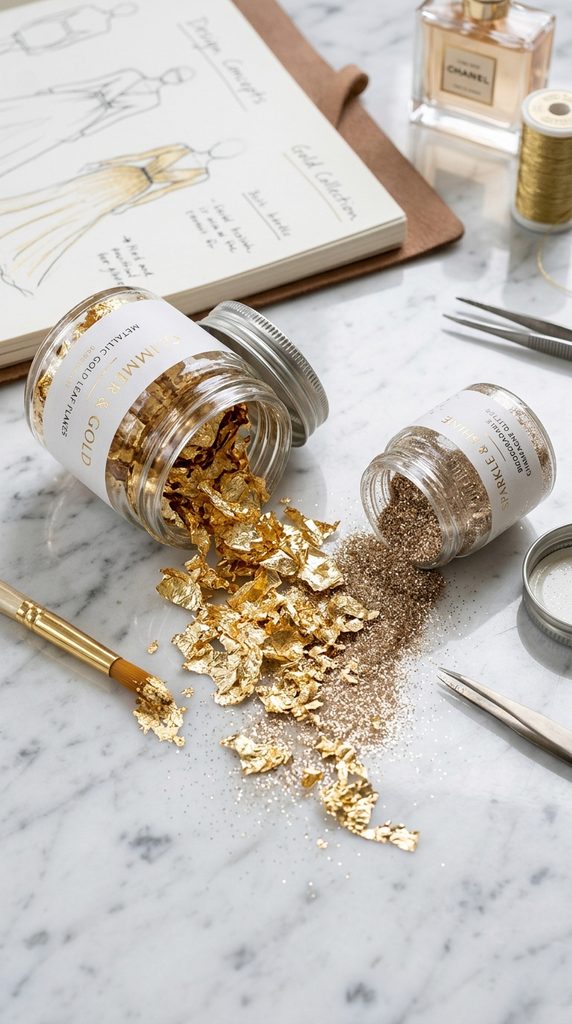
10. Biodegradable Fine Craft Glitter & Foil Flakes
Add radiant shimmer, metallic shine, and eye-catching highlights to handmade creations using eco-friendly cellulose glitters and thin metallic leafing flakes.
Technical Specs & Application Workflow
- Material Properties: Plant-derived cellulose biodegradable glitter or ultra-thin metallic leafing foil flakes (gold, silver, rose gold, and copper).
- Primary Uses: Resin art accents, handmade greeting card borders, candle decoration, clay embellishments, and festive ornament detailing.
- Application Method: Apply a thin layer of specialized gilding size adhesive or clear gilding glue over the target area. Allow the glue to become tacky for 2 minutes, press metallic foil flakes down gently with a soft dry mop brush, and sweep away excess flakes.