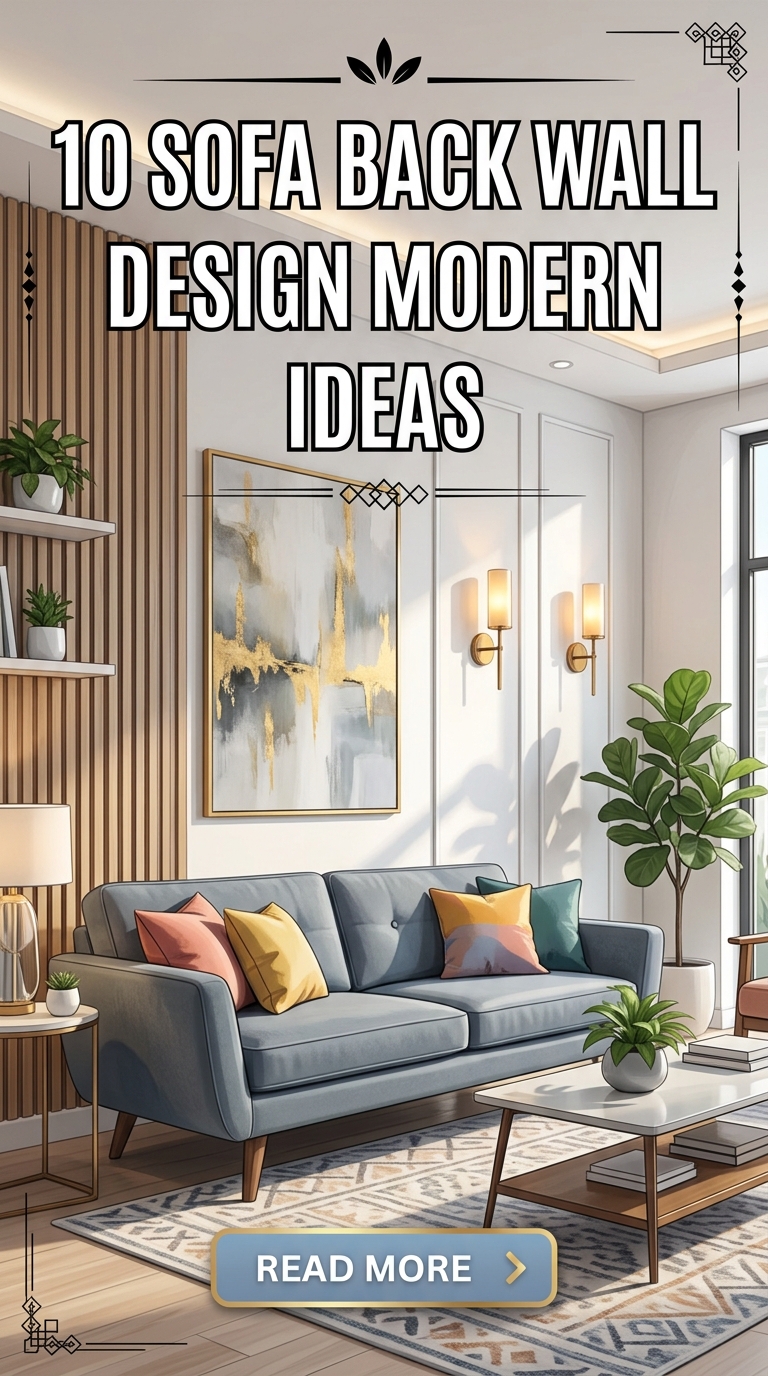
In interior design, the wall anchored behind the primary seating area is one of the most critical visual zones in the home. Because the sofa naturally serves as the center of gravity in a living room, the backdrop directly above and surrounding it establishes the entire room’s mood, spatial proportion, and architectural depth.
Leaving this expansive vertical surface completely bare can make a living room feel uninviting, cold, or visually top-heavy. On the other hand, random decor choices can quickly clutter the visual field. Modern sofa back wall design is about striking the ideal balance among scale, material texture, lighting integration, and architectural form.
Here is a comprehensive, design-forward guide to ten modern sofa back wall concepts designed to transform your living room into an elevated, gallery-worthy retreat.
1. The Architectural Acoustic Wood Slat Feature Wall
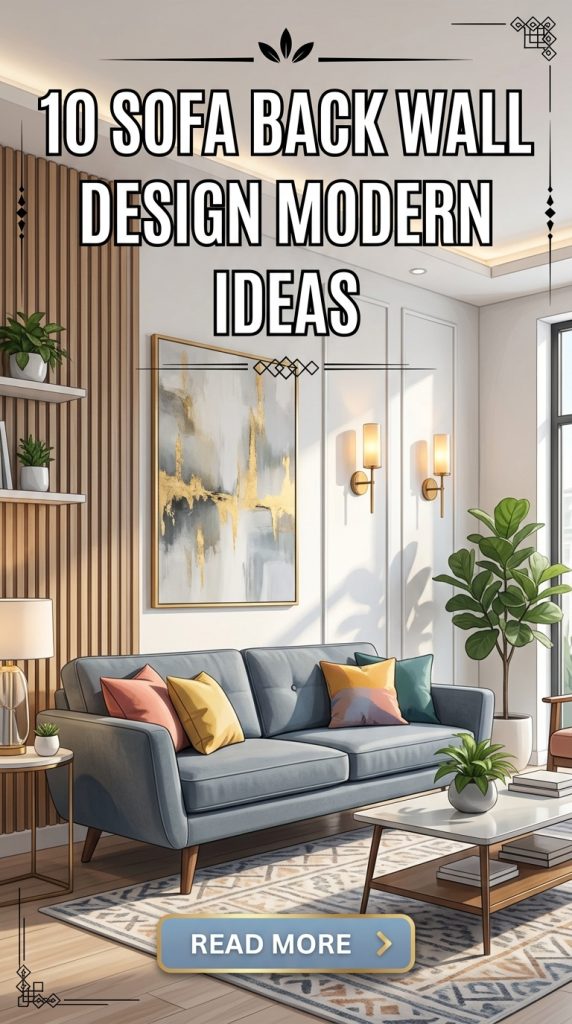
Vertical timber slat wall paneling—frequently styled as acoustic wood paneling—has become a hallmark of modern Scandinavian and Japandi interior architecture. Running narrow wooden slats continuously across the wall behind a couch introduces rich tactile depth, clean geometric lines, and natural warmth.
Architectural Principles & Design Strategy
- Spatial Rhythm: The repetition of vertical wood slats creates strong visual height, drawing the eye upward and making standard residential ceilings feel taller.
- Acoustic Function: Behind the wooden slats, high-density felt backing absorbs sound waves, dampening echoes in open-concept spaces and creating a quiet, intimate seating environment.
- Material Palette: Opt for natural oak, dark walnut, or smoked ash paired with a matte black felt backing. Keep the surrounding walls neutral to let the wood grain stand out as the primary focal texture.
Design Tip: Integrate low-glare, warm LED aluminum channels at the ceiling line above the slat wall. The downward grazing light highlights the natural wood grain and casts subtle architectural shadow gaps across the paneling.

2. The Monolithic Oversized Canvas & Asymmetric Frame Layout
In modern interior styling, scaling up is key. Instead of arranging several small, scattered picture frames that break up the visual field, an oversized architectural abstract canvas creates a striking, gallery-level focal point.
Architectural Principles & Design Strategy
- The Rule of Scale: To maintain proportional balance, the total width of your main artwork should measure between 60% and 75% of the total length of the sofa.
- Hanging Height: Position the lower edge of the frame approximately 8 to 12 inches (20 to 30 cm) above the top of the sofa backrest. Mounting art too high creates a visual disconnect between the furniture and the wall.
- Composition & Frame: Choose abstract art featuring sweeping brushstrokes, geometric color blocks, or dimensional plaster work. Frame it in a slender float frame (such as matte black, brushed brass, or light oak) for a polished, museum-quality finish.

3. The Textured Lime-Wash & Micro-Cement Plaster Backdrop
For modern homes that lean toward minimalist, Wabi-Sabi, or organic contemporary design, relying solely on flat latex paint can sometimes feel flat or sterile. A lime-wash or micro-cement plaster finish adds soft, tactile warmth and organic character to the wall without requiring hanging decor.
Architectural Principles & Design Strategy
- Subtle Visual Depth: Applied using specialized troweling techniques, micro-cement and lime-wash finishes create soft, cloud-like tonal shifts that react dynamically to natural daylight throughout the day.
- Color Palette: Stick to soothing, grounded earth tones—such as warm alabaster, soft greige, muted terracotta, sage green, or warm taupe.
- Styling Synergy: Complement a textured plaster backdrop with clean-lined furniture: a low-profile linen modular sofa, raw stone side tables, and matte ceramic vessels.

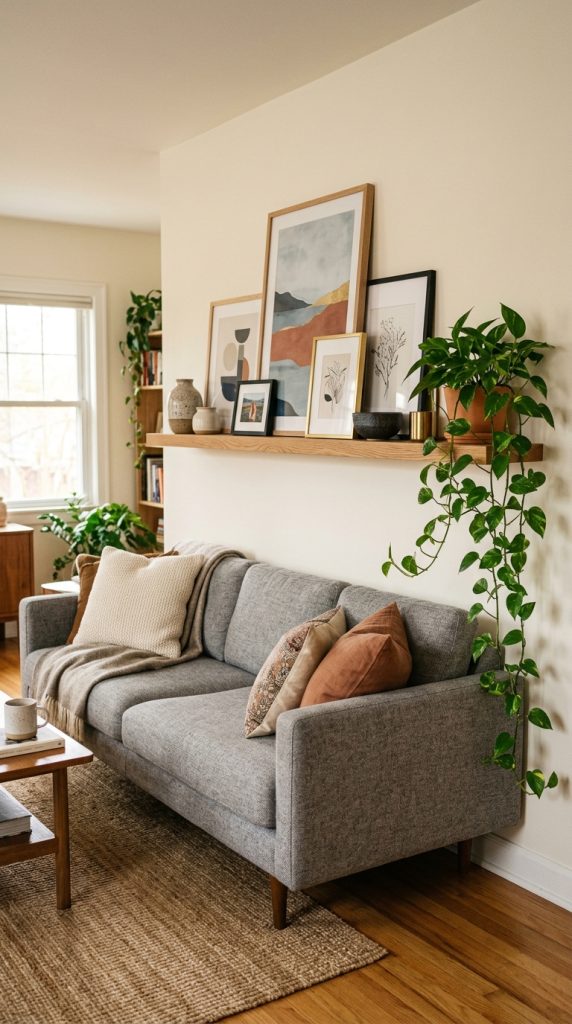
4. The Integrated Modern Picture Ledge with Layered Art
For homeowners and interior enthusiasts who enjoy updating their decor with the seasons, a custom floating picture ledge offers complete flexibility. Installed horizontally across the sofa wall, it creates a dedicated platform for rotating artwork, ceramics, and personal photography without repeatedly drilling holes into the wall.
Architectural Principles & Design Strategy
- Layering Technique: Overlap framed pieces of varying sizes rather than lining them up side-by-side. Place taller, bolder frames in the background and layer smaller prints, sculptural objects, or small framed sketches in front.
- Depth & Safety: Ensure the ledge depth remains shallow—around 4 to 5 inches (10 to 12 cm)—to keep clearance safe for guests leaning back on the sofa.
- Organic Elements: Incorporate trailing houseplants, such as a potted pothos or string of hearts, along the edge of the shelf to let delicate vines spill down toward the seating area.
5. The Full-Height Fluted & Curved Millwork Accent
Gentle curves and fluted architectural surfaces have redefined contemporary luxury interiors. Installing 3D fluted panels or sweeping drywall curves behind the couch breaks up the rigid rectangular shapes of standard rooms, introducing soft, elegant geometry.
Architectural Principles & Design Strategy
- Tactile Geometry: Fluted or scalloped wall panels introduce a repeating wave pattern that catches ambient room light, creating soft highlights and deep, velvety shadows.
- Monochromatic Color Drenching: Paint the fluted wall panels, surrounding baseboards, and crown moulding in the exact same color using a low-sheen matte or satin finish. Deep charcoal, forest olive, or warm stone tones work exceptionally well for color-drenched feature walls.
- Lighting Integration: Pair fluted surfaces with a pair of sleek, modern wall sconces that cast light vertically to accentuate the panel grooves.

6. The Sculptural Metal & Asymmetric Mirror Accent
Mirrors are time-tested design tools for enlarging a space, but modern interiors swap traditional rectangular gilt frames for asymmetric, oversized, or organic sculptural mirrors.
Architectural Principles & Design Strategy
- Light Amplification: Positioned thoughtfully across from windows or light fixtures, a large mirror bounces natural sunlight deep into the room, instantly brightening darker living spaces.
- Reflected Views: Ensure the mirror reflects visually pleasing elements from a seated position—such as an elegant chandelier, a leafy indoor tree, or a piece of art—rather than a messy TV console or kitchen sink.
- Frame Design: Look for frameless organic shapes, thin brushed brass borders, or black iron silhouettes that read as modern wall sculptures during the day.

7. The Floor-to-Ceiling Built-In Library Nook
Converting the space behind your primary seating into a custom floor-to-ceiling bookcase adds an intellectual, cozy, and highly functional layer to the living room while maximizing vertical storage space.
Architectural Principles & Design Strategy
- Sofa Placement & Clearance: Either pull the sofa forward 12 to 18 inches (30 to 45 cm) to allow comfortable access to lower shelves, or design a custom built-in unit with an integrated sofa alcove cutout.
- Shelf Styling Balance: Avoid overcrowding every shelf with dense rows of hardcovers. Intersperse books vertically and horizontally, interspersed with decorative ceramic bowls, brass bookends, framed miniature photos, and small trailing plants to maintain visual breathing room.
- Task Lighting: Install adjustable brass swing-arm sconces directly onto the bookcase face above the sofa cushions to provide dedicated reading light.

8. Modern Grid Moulding & Board-and-Batten Accent Wall
For transitional, modern farmhouse, or contemporary classic homes, clean board-and-batten millwork or geometric grid moulding brings timeless structural elegance to an ordinary flat wall.
Architectural Principles & Design Strategy
- Grid Proportions: Layout symmetrical square or vertical rectangular boxes across the entire wall width. The repetition of crisp geometric lines grounds the sofa and gives the living room an architecturally custom feel.
- Color Schemes: For a contemporary look, paint the grid wall in a moody tone—like deep navy, dark sage, or warm espresso—to contrast with a light-colored fabric sofa (such as cream bouclé or natural linen).
- Art Integration: Leave the moulding boxes empty for a clean, architectural finish, or mount minimalist line-art prints centered within individual grid frames.

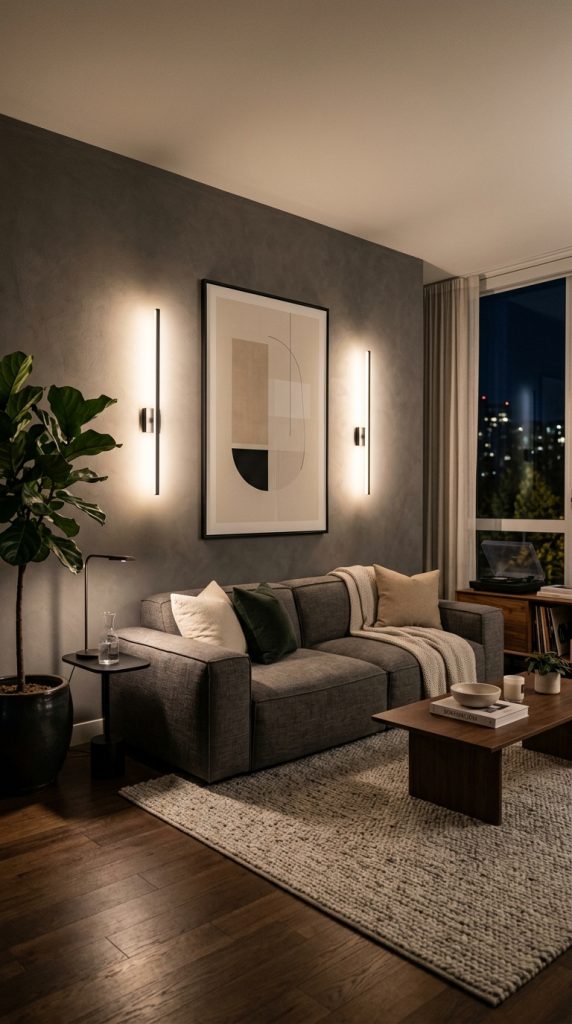
9. The Modern Linear Wall Sconce & Art Combination
Illumination is often overlooked as a primary decorative tool. Integrating architectural wall sconces directly into your sofa back wall layout creates a sophisticated lighting design that functions as functional artwork.
Architectural Principles & Design Strategy
- Symmetrical Flanking: Mount a pair of tall, minimalist linear light bars or globe sconces on either side of a central artwork piece to frame the sofa symmetrically.
- Asymmetric Sculptural Lighting: Alternatively, install a single large, articulated swing-arm lamp mounted off-center above the sofa to create a bold, modern studio feel.
- Color Temperature: Choose warm-white LED fixtures (2700K to 3000K) with dimming capabilities so you can easily transition from bright daylight reading to soft, ambient evening relaxation.
10. The Natural Fiber & Large-Format Tapestry Screen
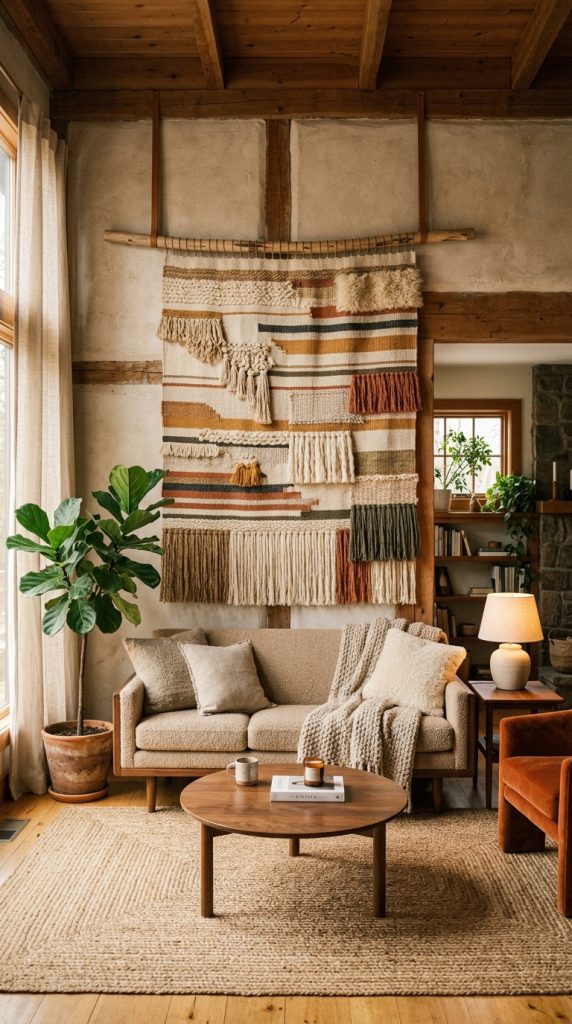
To balance hard surfaces like hardwood flooring, glass coffee tables, and metal fixtures, introducing large-format woven textile wall hangings, macramé panels, or stretched linen canvases adds rich tactile softness and acoustic absorption.
Architectural Principles & Design Strategy
- Material Selection: Look for textiles made from un-dyed wool, raw linen, jute, or natural cotton threads that highlight raw craftsmanship and organic textures.
- Mounting Systems: Hang textiles from clean, solid wood dowels or minimalist brass mounting hardware. Ensure the fabric hangs perfectly straight and hovers comfortably above the top of the sofa.
- Visual Softness: Woven art brings an organic, relaxed element to modern interiors, breaking up hard lines while dampening background sound in open-plan rooms