In interior design, the wall directly behind the sofa serves as the visual anchor of the entire living room. Because the sofa is typically the largest piece of furniture in the space, the wall space above and around it naturally draws the eye. Leaving this expansive surface completely blank can make a room feel unfinished, cold, or lacking in proportion. Conversely, cluttering it with mismatched elements creates visual chaos.
Designing the sofa backdrop requires a balance of scale, texture, lighting, and architectural symmetry. Whether you are aiming for a minimalist modern look, an organic Scandinavian feel, or a dramatic gallery statement, transforming this focal wall elevates the atmosphere of your home.
Here is an architectural guide to ten creative wall decor concepts for the space behind your sofa, curated to inspire your next living room transformation.

1. The Oversized Statement Canvas & Abstract Art Frame
One of the most impactful ways to curate the space behind a couch is through a single, large-scale piece of artwork. Rather than grouping multiple small frames, an oversized abstract canvas creates a sleek, gallery-like focal point that instantly commands attention.
Design Principles & Proportions
- The Rule of Scale: To maintain visual balance, the width of your artwork should measure approximately $60\%\text{ to }75\%$ of the total width of your sofa. A tiny frame floating above a broad three-seater sofa creates an awkward scale imbalance.
- Hanging Height: Position the bottom edge of the frame $8\text{ to }12\text{ inches}$ ($20\text{ to }30\text{ cm}$) above the top of the sofa backrest. Hanging art too high disconnects it from the furniture below.
- Color Integration: Choose an abstract piece that pulls two core accent colors from your living room textiles—such as throw pillows, rugs, or drapes—while introducing a neutral background tone to anchor the room.
Design Tip: Pair a large, dark abstract painting with soft under-frame accent lighting to cast a subtle, museum-quality glow across the seating area in the evening.

2. The Architectural Wood Slat & Acoustic Paneling Wall
Incorporating vertical wooden slats (Acoustic Wood Paneling) behind the sofa adds rich tactile depth, linear structure, and warmth. This modern architectural feature brings an organic, Scandinavian feel to living spaces while serving a functional purpose.
Design Principles & Proportions
- Acoustic Benefits: Beyond visual texture, felt-backed wooden slat panels absorb ambient sound, reducing echoes and creating a quieter, more intimate seating area.
- Height Extension: Running vertical oak, walnut, or black wooden slats from the floor or top of the sofa all the way to the ceiling draws the eye upward, making standard ceilings feel significantly higher.
- Integrated Lighting: Recess warm LED strip channels along the top or sides of the wooden slat wall to highlight the natural wood grain and subtle shadow gaps.

3. The Curated Organic Gallery Wall Grid
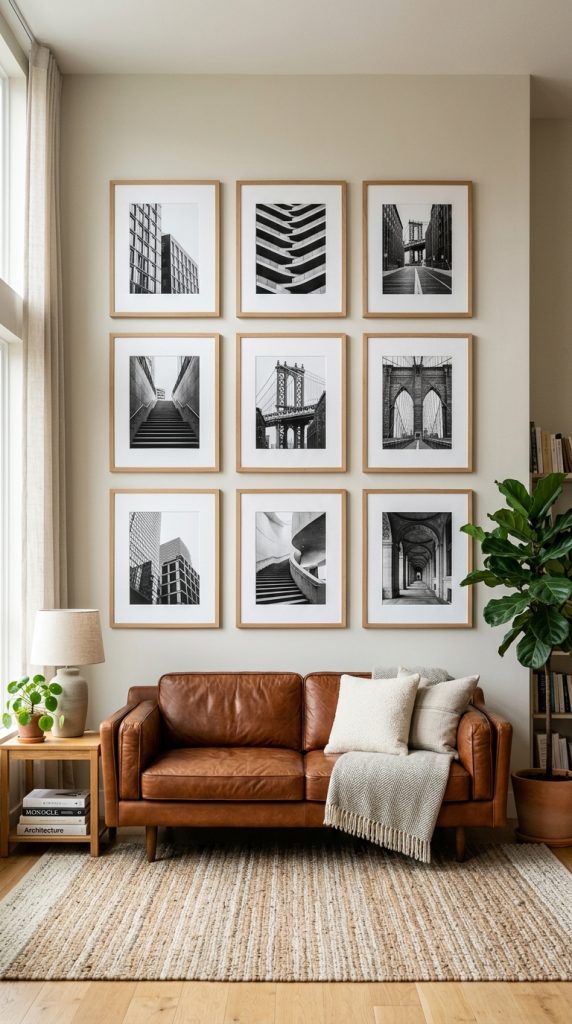
If a single large artwork feels too rigid, a symmetrical or organic gallery wall grid allows you to showcase a personal collection of fine art photography, architectural sketches, and abstract prints.
Design Principles & Proportions
- Symmetrical Grid vs. Organic Layout: For modern, formal spaces, opt for an even $2\times3$ or $3\times3$ grid using identical frames and wide white matting. For relaxed, bohemian, or eclectic interiors, combine varying frame sizes around a central anchor piece.
- Uniform Spacing: Maintain strict, consistent spacing between frames—ideally $2\text{ to }3\text{ inches}$ ($5\text{ to }7.5\text{ cm}$). Inconsistent gaps break the visual cohesion of the display.
- Cohesive Frames: Keep frame materials consistent (e.g., all natural oak, brushed black metal, or thin brass) to unify diverse artwork themes.
4. The Integrated Ledge Shelf & Rotating Display
For design enthusiasts who love changing their home decor seasonally, an oversized picture ledge or floating display shelf installed above the sofa provides complete styling flexibility without repeatedly drilling holes in the wall.
Design Principles & Proportions
- Layering Technique: Overlap framed prints of varying heights, leaning them gently against the wall rather than hanging them flat. Place larger frames in the back and layer smaller accent art and small ceramics in front.
- Depth Safety: Ensure the floating shelf depth does not exceed $4\text{ to }6\text{ inches}$ ($10\text{ to }15\text{ cm}$) to prevent tall guests from bumping their heads when leaning back on the sofa.
- Botanical Accents: Integrate trailing houseplants like pothos or string of hearts along the edge of the shelf to allow greenery to cascade down toward the seating area.

5. The Sculptural Oversized Mirror Accent
Mirrors are powerful design tools for living rooms, particularly in smaller spaces or rooms with limited natural light. Mounting an oversized arched or asymmetric sculptural mirror behind the sofa instantly transforms spatial perception.
Design Principles & Proportions
- Light Amplification: Placing a mirror opposite a window reflects outdoor daylight deep into the interior, brightening dark living room corners naturally.
- Reflected Views: Always consider what the mirror reflects from a seated position. Position it so it reflects an attractive lighting fixture, greenery, or artwork rather than a cluttered TV corner.
- Frame Shapes: An arched or rounded mirror breaks up the rigid, straight lines of rectangular sofas and coffee tables, introducing softer organic geometry.

6. The Textured Lime-Wash or Plaster Feature Wall
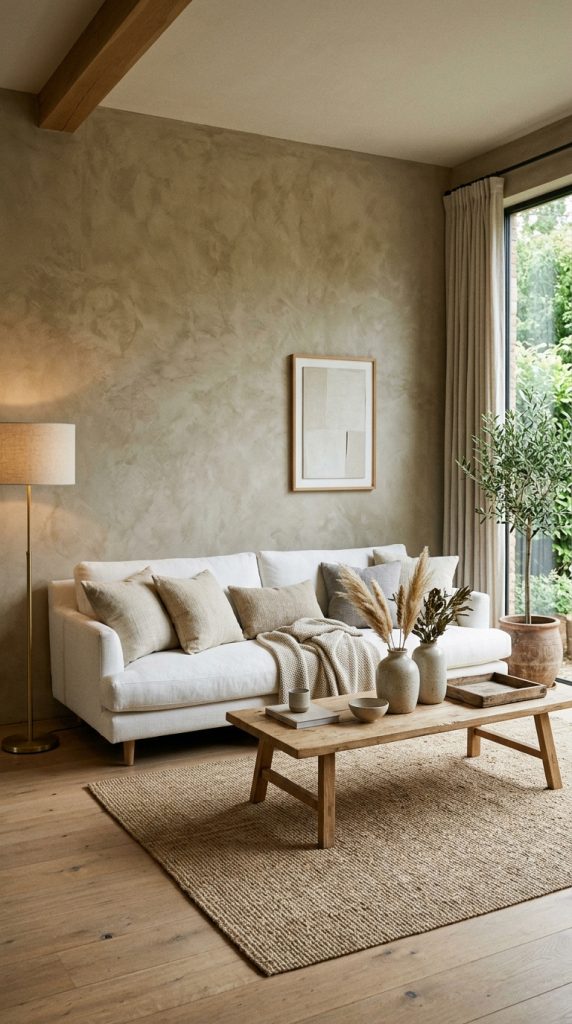
If you prefer clean minimalism without adding hanging objects, applying a textured plaster or lime-wash paint finish to the wall behind the sofa adds subtle, tactile warmth without overwhelming the room.
Design Principles & Proportions
- Tactile Depth: Lime-wash paint creates soft, cloud-like tonal variations and a brushed matte finish that captures natural daylight beautifully.
- Color Selection: Stick to calming, earthy tones such as warm alabaster, warm greige, soft terracotta, sage green, or muted sand.
- Styling Integration: Pair a textured plaster backdrop with minimalist low-profile sofas, linen cushions, and raw ceramic floor vases to complete an organic, modern look.
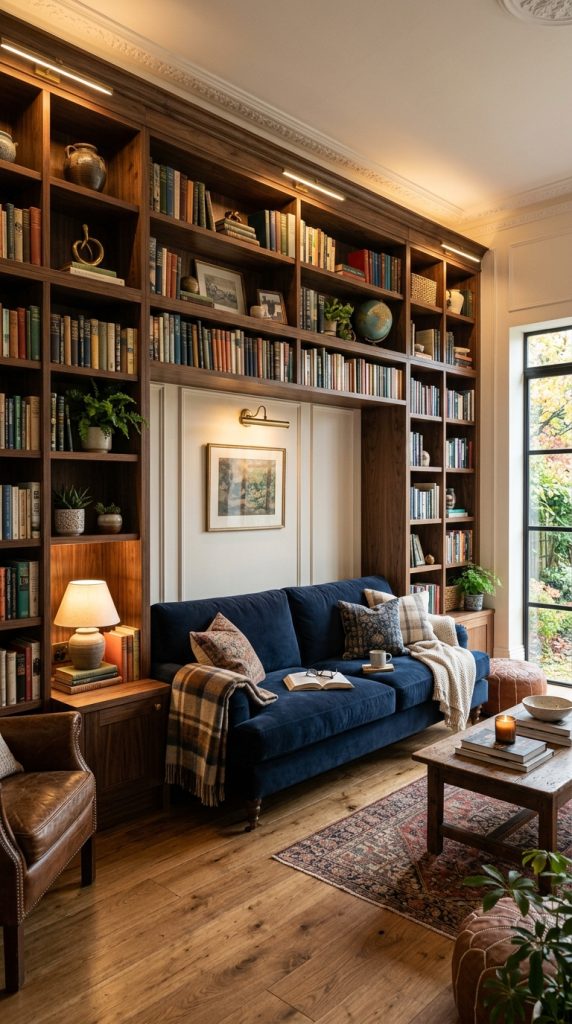
7. The Floor-to-Ceiling Built-In Library Nook
For book lovers and home librarians, converting the empty wall behind the sofa into a custom floor-to-ceiling built-in bookcase creates a cozy, intellectual atmosphere while maximizing storage.
Design Principles & Proportions
- Sofa Placement: Position the sofa slightly forward—leaving a $12\text{-inch}$ ($30\text{ cm}$) clearance gap—or integrate a custom sofa cutout directly within the shelving unit.
- Styling the Shelves: Avoid packing every shelf tightly with books. Balance rows of books with decorative objects, brass bookends, framed miniature photos, and small sculptures to create visual breathing room.
- Reading Lights: Install adjustable swing-arm brass wall sconces directly onto the bookcase face above the sofa for functional reading light.
8. The Modern Symmetrical Wall Sconce Installation
Lighting is often overlooked as a primary decorative wall feature. Installing pair of large, sculptural wall sconces above the sofa creates an elegant, architectural light feature that doubles as artwork during the day.
Design Principles & Proportions
- Symmetry & Balance: Flank a central piece of art with two matching sconces, or install a long, horizontal sculptural light bar that spans two-thirds of the sofa width.
- Ambient Atmosphere: Choose fixtures with dimmable, warm-white LED illumination (2700K) that direct soft light upward and downward against the wall surface.
- Cord Management: For a clean finish, hardwire sconces into the wall during renovations, or use sleek plug-in sconces with decorative fabric-covered cords run neatly alongside the frame.

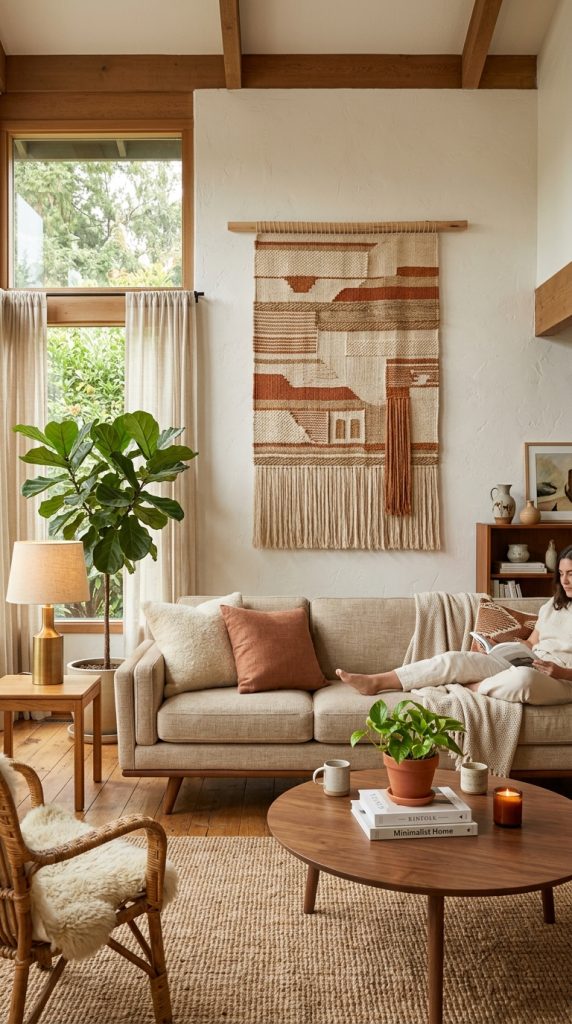
9. The Large-Format Textile & Woven Tapestry Display
Adding fabric elements to walls introduces soft texture, acoustic dampening, and global craftsmanship. A large-format woven textile, macramé wall hanging, or framed linen piece softens structured living spaces.
Design Principles & Proportions
- Tactile Warmth: Textile wall hangings balance hard room surfaces like polished concrete, hardwood floors, and glass coffee tables.
- Hanging Mechanisms: Mount textiles using polished wooden dowels, brass hanging rods, or shadow-box glass frames to keep the fabric flat and clean.
- Maintenance: Dust textiles gently using a soft vacuum brush attachment on low power to maintain fiber freshness over time.
10. The Floor-to-Ceiling Moulding & Picture Rail Accent
For homes with traditional, classic, or transitional interiors, adding wainscoting, picture rail moulding, or board-and-batten millwork behind the sofa adds timeless elegance and structure.
Design Principles & Proportions
- Geometric Framing: Layout rectangular picture frame mouldings symmetrically across the entire wall. Paint the millwork and wall the same color in a soft satin or eggshell finish for a sophisticated look.
- Monochrome Color Drenching: Painting the wall, trim, and baseboards in a rich hue—such as deep navy, olive green, or moody charcoal—creates a cozy backdrop that makes light-colored sofas pop.
- Art Integration: Frame existing artwork naturally within the wall moulding boxes for an elevated finish.
Proportions & Installation Guidelines
To avoid common interior design mistakes when decorating the wall behind your sofa, keep these golden layout principles in mind:
1. The Proportional Balance Rule
- Width: The overall grouping of art, shelves, or mirrors should cover approximately $60\%\text{ to }75\%$ of the sofa’s total width. Decor that is too wide overpowers the sofa; decor that is too narrow looks lost.
- Height Clearance: Maintain a gap of $8\text{ to }12\text{ inches}$ ($20\text{ to }30\text{ cm}$) between the top of the sofa back cushion and the lowest point of your wall decor. This ensures comfortable head clearance when sitting down.
2. Ceiling Height Considerations
- In rooms with standard $8\text{-foot}$ ($2.4\text{-meter}$) ceilings, stick to lower-profile artwork or single horizontal floating shelves to avoid making the ceiling feel low.
- In rooms with high or vaulted ceilings, opt for tall vertical artwork, full-height wooden slat paneling, or floor-to-ceiling moulding to draw the eye upward and fill vertical volume gracefully.