Tattoos have evolved far beyond simple body ornamentation; they are a sophisticated form of wearable art, personal storytelling, and visual identity. Choosing a tattoo aesthetic is an architectural decision for your skin—it requires balancing line weight, placement dynamics, longevity, and how ink interacts with the natural contours of the body.
Whether you are planning your very first piece or designing a cohesive sleeve, selecting a clear visual theme ensures that your ink feels intentional, timeless, and uniquely yours.
Here is an definitive guide to ten aesthetic tattoo styles, complete with design elements, ideal body placement, line weight specifications, and skin longevity rules.
The Core Blueprint of Aesthetic Tattooing
Before booking a session with a tattoo artist, understand these foundational rules of body placement and ink mechanics:
- Respect Body Contours: The human body is dynamic, not a flat canvas. Flowing aesthetics (like fine line flora or Japanese Irezumi) should mirror natural muscle curves, bone structure, and movement lines to avoid distortion.
- Understand Aging & Line Spreading: All tattoo ink spreads slightly underground over time (a natural process called dispersion). Ultra-fine lines placed too close together will merge over a decade. Space out intricate detail to ensure readability years down the line.
- Contrast & Negative Space: High-end aesthetic tattoos rely on negative space—the un-inked skin—to create highlights, depth, and breathing room. Never overcrowd a design; allow the skin to frame the art.
- Sun Protection & Care: Color inks and micro-fine lines fade fastest under ultraviolet exposure. Plan light-exposed placements (forearms, ankles) with longevity in mind, and always apply broad-spectrum sunblock once healed.
1. Fine Line Botanical & Minimalist Flora
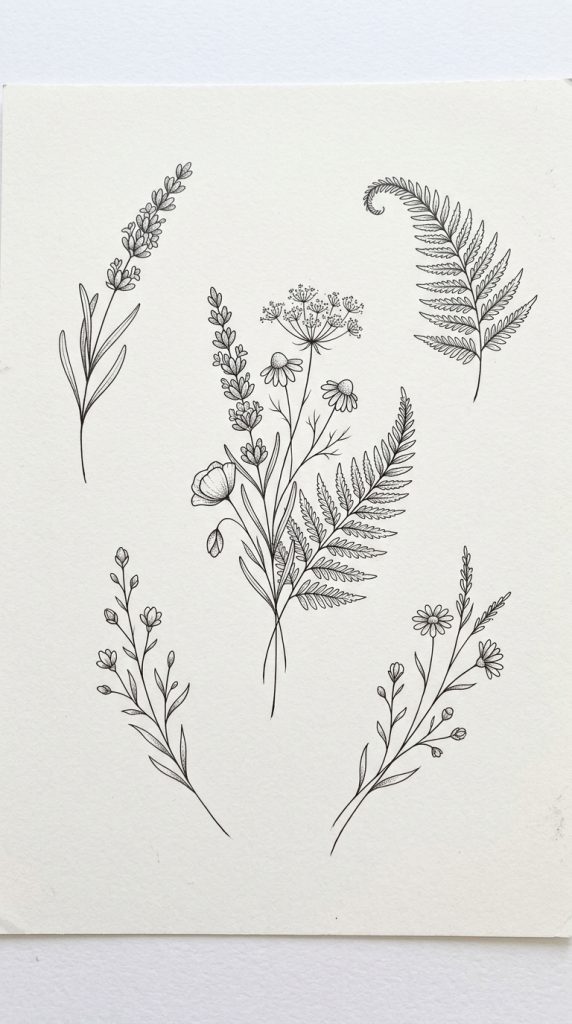
Rooted in delicate organic beauty, fine line botanical tattoos use single-needle precision to capture the fragile elegance of flowers, wild herbs, and leafy stems.
Design Specs & Body Placement
- Line Weight & Style: Micro-fine single needle ($1\text{RL to }3\text{RL}$ needle groupings) with minimal shading and subtle stippling.
- Ideal Placement: Along the inner forearm, running down the spine, wrapped around the collarbone, or placed vertically on the side of the ribs.
- Visual Elements: Wildflowers, olive branches, fern fronds, and delicate eucalyptus sprigs rendered with whisper-thin stems.
- Longevity Tip: Keep flower petals slightly larger than real-life scale so the ultra-fine inner detail doesn’t blur as the ink matures.
Design Tip: Align a botanical stem so it follows the natural curve of your forearm bone—this makes the tattoo move fluidly with your hand’s rotation.
2. Micro-Realism & Miniature Portraits
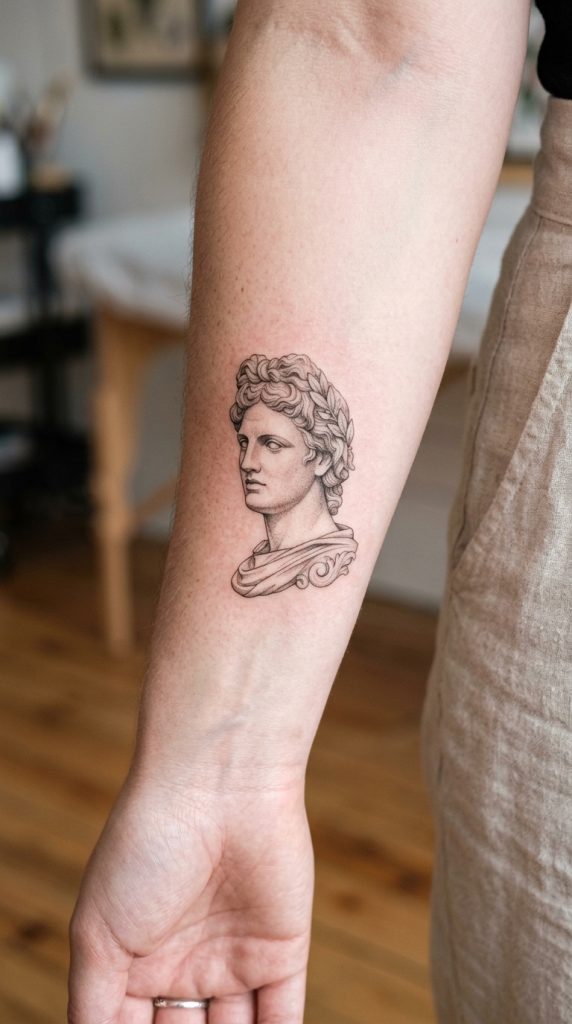
Capturing hyper-detailed subjects within a tiny frame, micro-realism combines precise shading, razor-sharp detail, and soft tonal shifts to create miniature masterpieces on skin.
Design Specs & Body Placement
- Line Weight & Style: Soft grey washes, subtle white ink highlights, and ultra-dense micro-shading.
- Ideal Placement: Inner bicep, outer forearm, upper thigh, or flat upper back.
- Visual Elements: Renaissance sculptures, pet portraits, vintage architecture, or iconic classical paintings scaled down to $2\text{ to }3\text{ inches}$.
- Aging Strategy: High contrast is crucial. Ensure strong dark tones are balanced with clear skin highlights so the micro-portrait retains shape over time.
3. Celestial Geometric & Astro Cartography
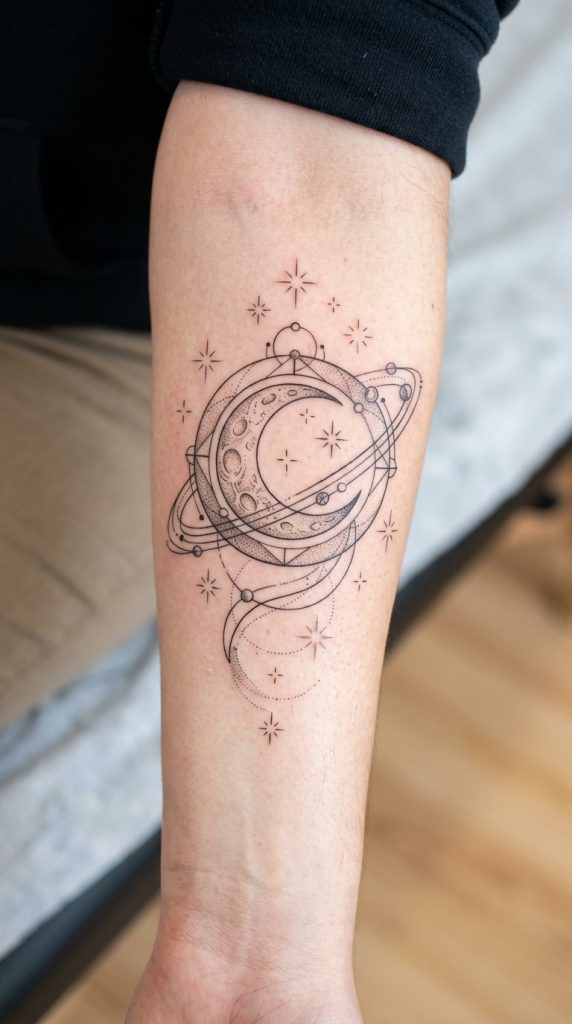
Fusing cosmic wonder with mathematical balance, celestial geometric tattoos feature fine-line stars, lunar cycles, orbital paths, and sacred geometry motifs.
Design Specs & Body Placement
- Line Weight & Style: Crisp geometric line work mixed with fine dot-work (stippling) for celestial shading.
- Ideal Placement: Centered along the spine, running down the center of the forearm, or placed on the back of the shoulder blade.
- Visual Elements: Crescent moons, intricate sunbursts, compass lines, star constellations, and alignment rings.
- Symmetry Check: Precision is non-negotiable. Work with an artist who specializes in straight lines and clean circles, as minor wobbles stand out in geometric work.
4. Vintage Linework & Classical Engraving
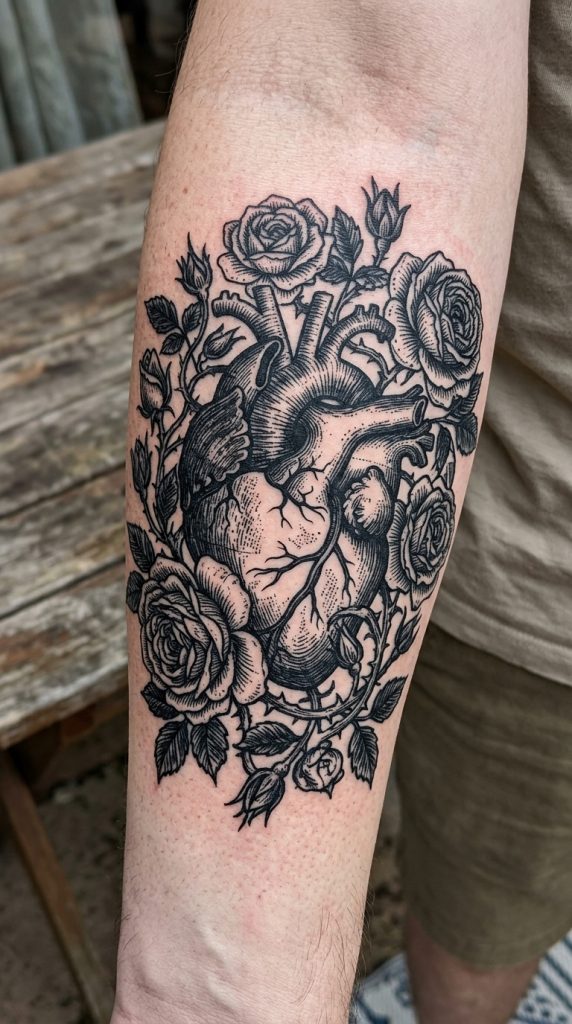
Inspired by 15th-century woodblock prints and antique book illustrations, classical engraving tattoos feature bold cross-hatching, rich black ink, and historic woodcut textures.
Design Specs & Body Placement
- Line Weight & Style: Dark, uniform linework using $5\text{RL or }7\text{RL}$ needles, with parallel hatching lines building depth instead of soft gradients.
- Ideal Placement: Outer thigh, upper arm (half-sleeve), calf, or chest plate.
- Visual Elements: Mythological figures, vintage compasses, anatomical hearts, classical statues, and botanical woodcuts.
- Durability: Exceptionally durable. Because woodcut linework relies on bold black ink without light grey washes, these designs hold up remarkably well over decades.
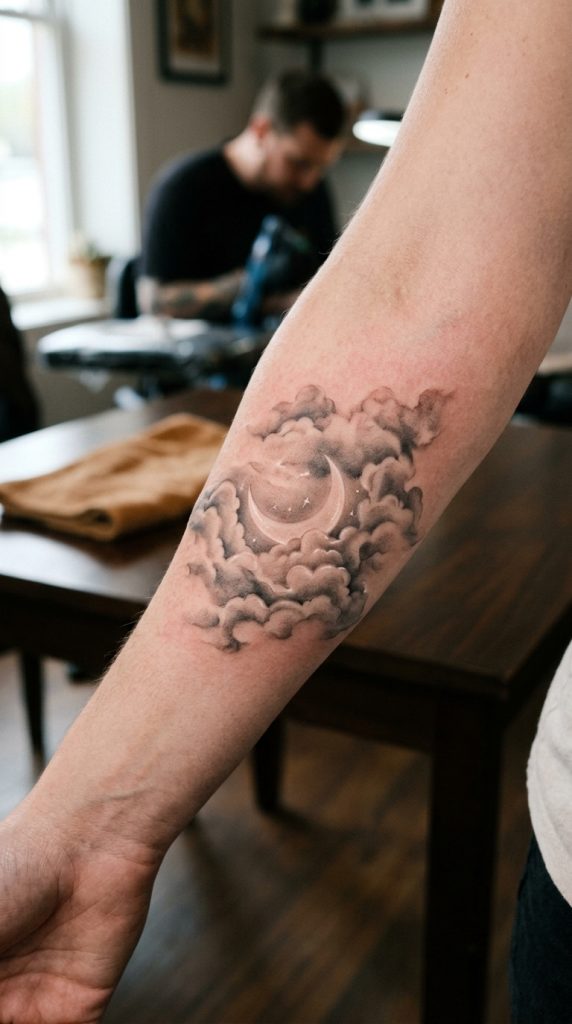
5. Soft Realism & Atmospheric Cloudscapes
Dreamy, airy, and painterly, soft realism cloudscapes use smooth shading transitions to render ethereal sunsets, ocean waves, and cosmic skies without harsh outlines.
Design Specs & Body Placement
- Line Weight & Style: Borderless soft grey shading, watercolor-inspired wash transitions, and subtle linework.
- Ideal Placement: Full upper arm, shoulder cap wrapping onto the collarbone, or outer thigh.
- Visual Elements: Fluffy cumulus clouds, crescent moons peeking through mist, soft ocean swells, and atmospheric rays.
- Skin Interaction: Relies heavily on natural skin tone to serve as mid-tones and highlights, creating a soft, luminous aesthetic.
6. Abstract Continuous Line Art
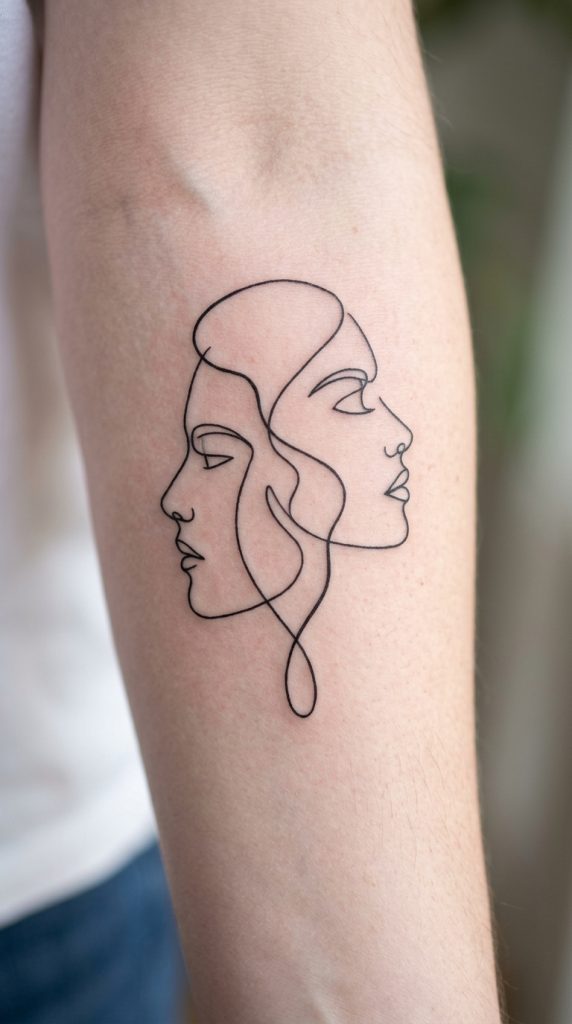
Modern, minimal, and art-forward, continuous line art uses a single unbroken line to trace figures, faces, and abstract shapes across the skin’s canvas.
Design Specs & Body Placement
- Line Weight & Style: Medium-fine uniform line weight ($3\text{RL to }5\text{RL}$) with smooth, sweeping curves and zero shading.
- Ideal Placement: Inner forearm, back of the calf, upper rib cage, or centered behind the neck.
- Visual Elements: Minimalist face profiles, intertwined hands, abstract body contours, and single-line animal silhouettes.
- Execution Key: Requires an artist with a steady hand and flawless needle control, as line breaks or stutter marks disrupt the continuous flow.
7. Heavy Blackwork & Ornamental Geometry
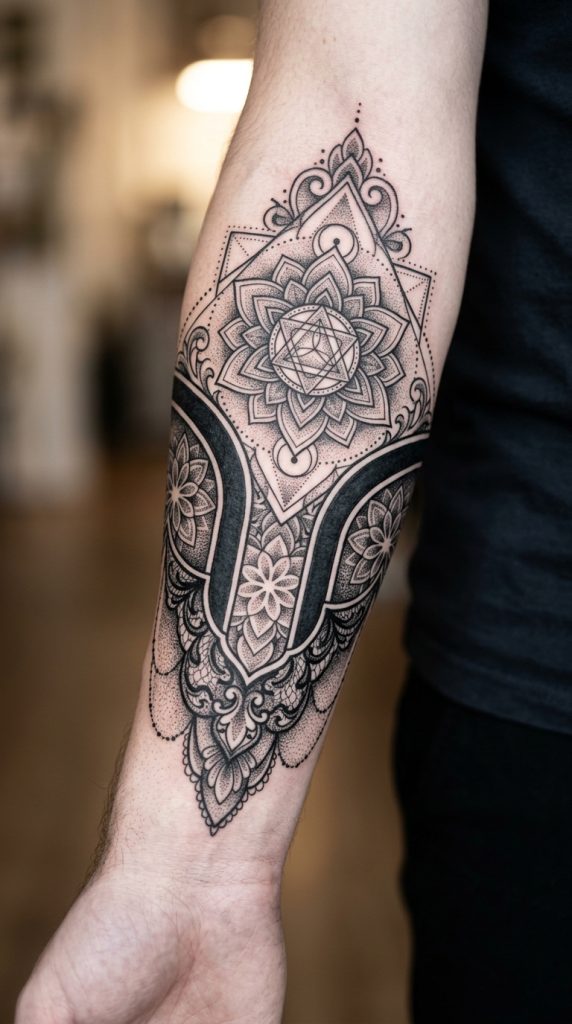
Bold, dramatic, and structural, ornamental blackwork uses solid black ink areas paired with delicate lace-like geometry to adorn the body like permanent armor or jewelry.
Design Specs & Body Placement
- Line Weight & Style: Saturated solid black fills combined with precise geometric dot-work and sharp ornamental line borders.
- Ideal Placement: Full forearm cuffs, sternum wraps, thigh bands, or shoulder-to-neck transitions.
- Visual Elements: Mandalas, architectural archways, lace patterns, chandelier drapes, and bold tribal-inspired bands.
- Visual Impact: Creates high visual contrast against light skin tones, anchoring the body visually with bold structural framing.
8. Cyber-Sigilism & Y2K Chrome Aesthetics
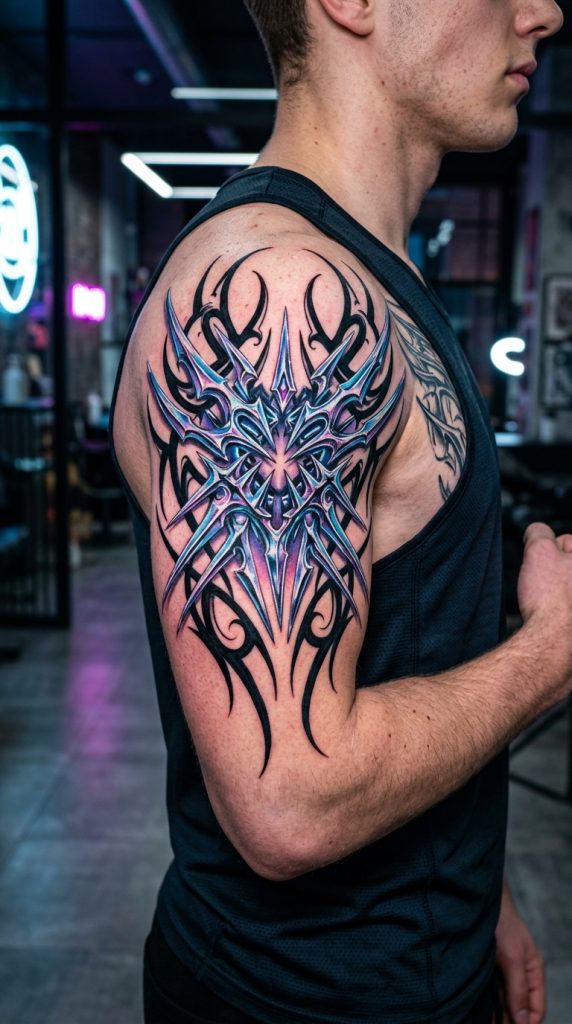
Taking inspiration from early 2000s digital graphics, liquid metal, and futuristic typography, cyber-sigilism features sharp, spike-like tendrils and flowing tribal lines.
Design Specs & Body Placement
- Line Weight & Style: High-contrast sharp points, metallic gradient shading, and razor-like line transitions.
- Ideal Placement: Lower back, across the knuckles, wrapping around the wrist, or centered below the collarbones.
- Visual Elements: Liquid chrome shapes, abstract sigils, sharp metallic webs, and Y2K star motifs.
- Trend & Longevity: Keep line spacing open in intricate sigil centers to ensure dark intersections don’t bleed into solid spots over time.
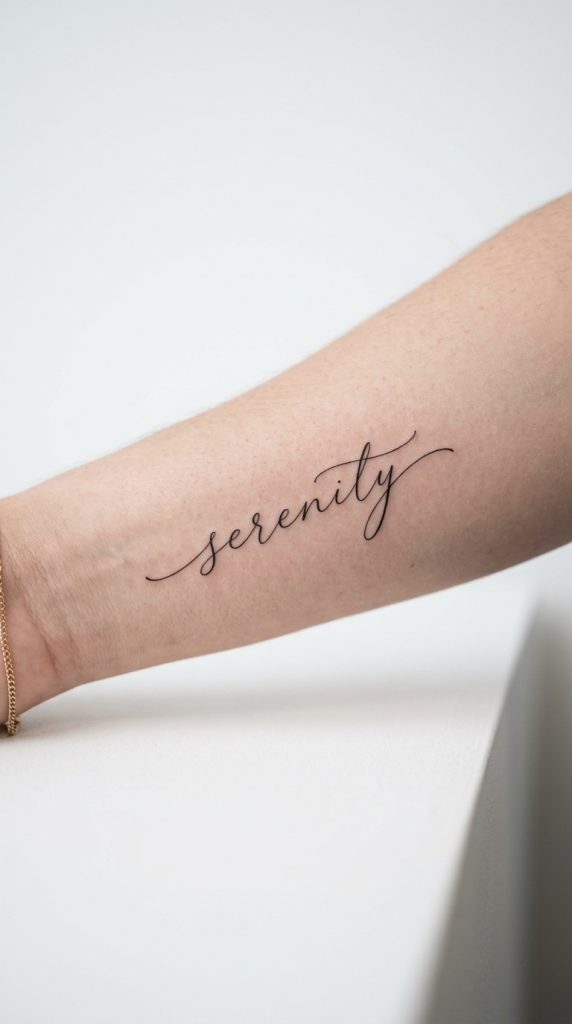
9. Calligraphy & Minimalist Typography
Elegantly written words, literary quotes, or meaningful dates turned into body art rely on custom typography and calligraphic flourishes for a timeless look.
Design Specs & Body Placement
- Line Weight & Style: Single-needle script, typewriter font, vintage typewriter print, or sweeping calligraphic ink strokes.
- Ideal Placement: Along the inner wrist, side of the finger, rib cage, or running along the tricep line.
- Visual Elements: Script lettering, typewriter text, single-word mantras, or latitude coordinates.
- Legibility Rule: Avoid tiny script sizes. Letters like ‘e’, ‘a’, and ‘o’ will fill in if written under $0.25\text{ inches}$ in height. Keep script spacious and legible.
10. Neo-Traditional Illustrative Storytelling
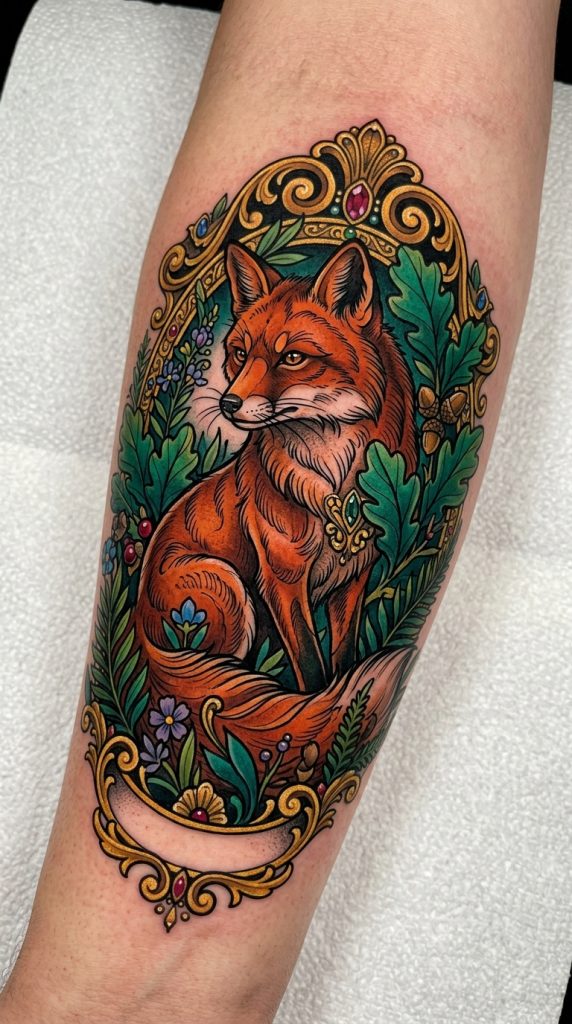
Blending the bold outlines of classic traditional tattooing with modern color palettes and organic motifs, neo-traditional ink offers vibrant, illustrative narrative pieces.
Design Specs & Body Placement
- Line Weight & Style: Varied line weights—bold outer boundary lines paired with fine inner details—and rich color shading.
- Ideal Placement: Full thigh, forearm sleeve, upper back, or calf.
- Visual Elements: Mystical portraits, elaborate animals (foxes, owls, panthers), vintage pocket watches, and ornate framing filigree.
- Color Depth: Uses jewel tones—emerald green, deep mustard, rich burgundy, and navy blue—to create depth without fading quickly.