The union of natural organic timber and liquid resin represents one of the most compelling revolutions in modern furniture design and interior architecture. By fusing live-edge slabs of walnut, oak, maple, or olive wood with crystal-clear or pigmented epoxy polymers, artisans can create functional sculptures that preserve the raw, unrefined beauty of trees while offering sleek, durable surfaces.
Whether designed as a sprawling 10-seater dining centerpiece, an elegant coffee table, or a sleek executive office desk, an epoxy resin and wood table balances natural warmth with contemporary craftsmanship. Achieving lasting quality requires a deep understanding of timber drying processes, resin chemistry, color integration, and structural base design.
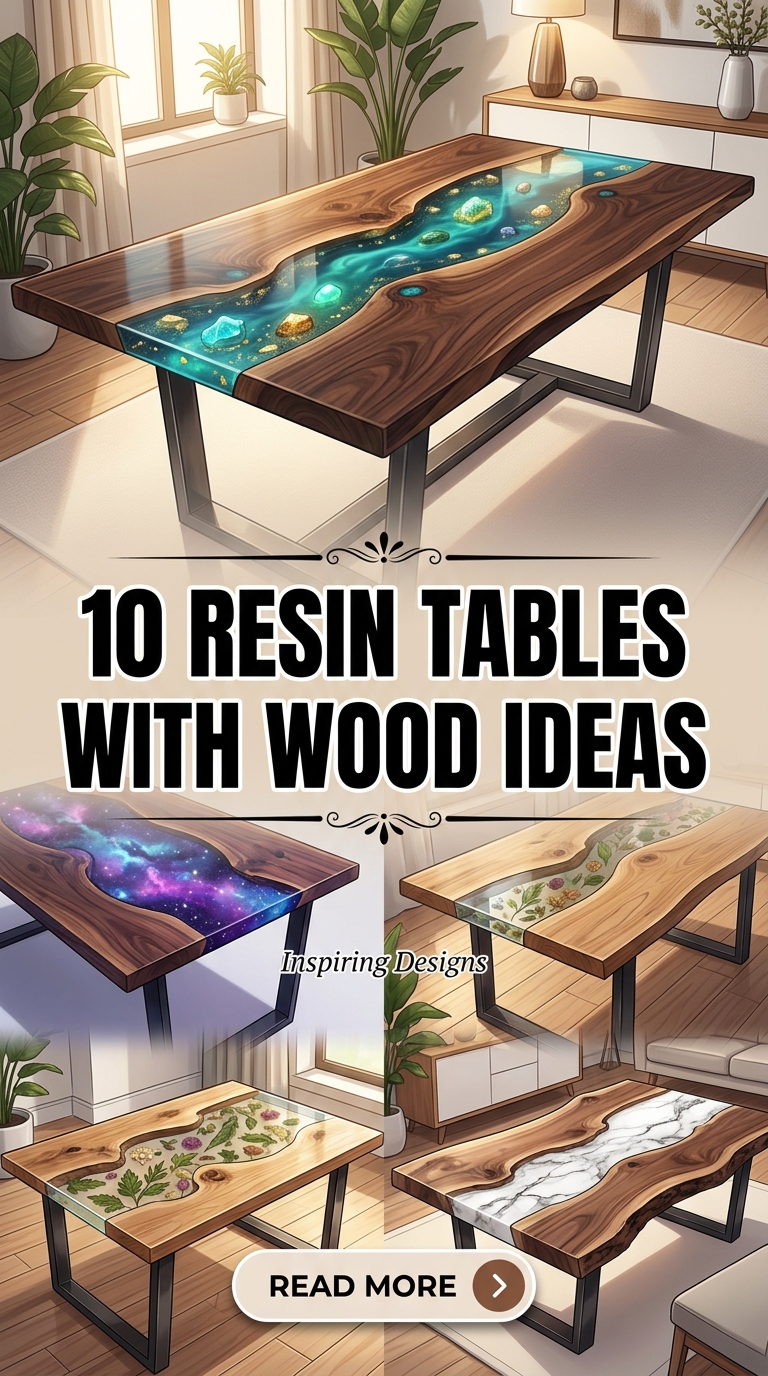
Here is a comprehensive guide to ten inspirational resin and wood table concepts, complete with material specifications, woodworking techniques, color formulations, and structural design principles.
The Engineering & Science Behind Resin-Wood Furniture
Creating a high-performance epoxy table demands precise woodworking and chemical application. Before exploring design concepts, master these foundational engineering principles:
1. Timber Moisture & Kiln Drying
Standard air-dried wood is unsuited for epoxy tables. Timber slabs must be kiln-dried to a strict moisture content between $6\%\text{ and }10\%$. If moisture remains trapped inside the wood when resin cures, it will lead to slab warping, cracking, or catastrophic delamination between the timber edge and the cured epoxy matrix.
2. Live-Edge Preparation & Bark Removal
Never leave natural tree bark intact along the live edge intended to bond with resin. Bark will eventually detach from the sapwood, causing the resin matrix to separate. Always strip the bark completely, sand the live edge down to sound wood, and seal the edge with a thin coat of clear brush-on epoxy to prevent trapped air from off-gassing and creating micro-bubbles during the main pour.
3. Epoxy Chemistry & Pour Thickness
Use a specialized deep-pour casting resin designed for slow exothermic reactions. Rapid-curing resins poured thick ($2\text{ to }3\text{ inches}$) generate extreme heat during cross-linking, resulting in yellowing, thermal cracking, or bubbling. Deep-pour formulations allow heat to dissipate slowly over a $48\text{ to }72\text{ hour}$ curing cycle.
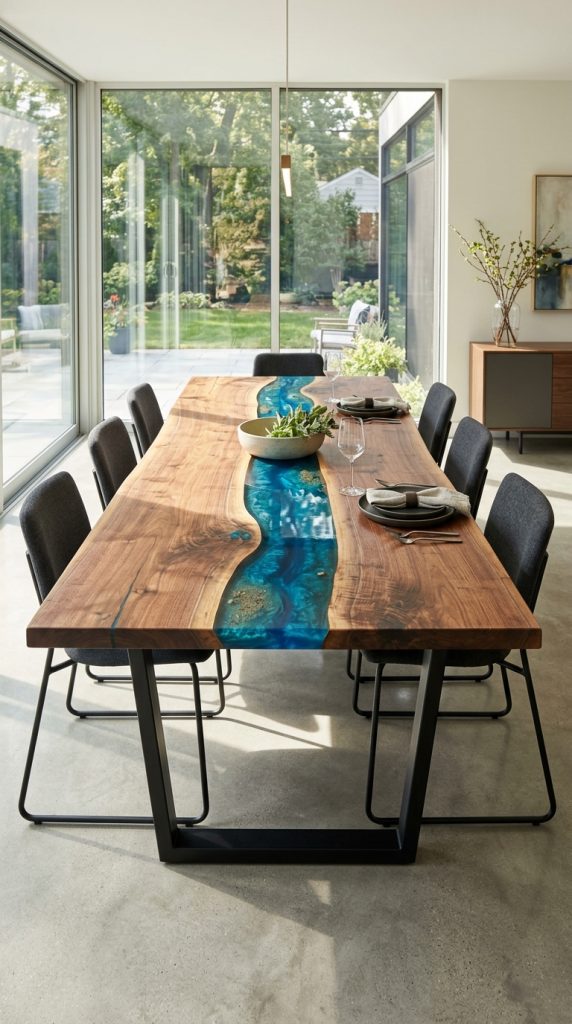
1. The Ocean Blue Live-Edge River Dining Table
The classic design that launched the epoxy movement, the ocean blue river table pairs two book-matched live-edge timber slabs with a translucent blue resin channel, recreating the aerial perspective of a winding river.
Material Specs & Construction Techniques
- Timber Species: Black Walnut, English Oak, or Wild Olive featuring dramatically curved live edges facing inward toward the center channel.
- Resin Pigmentation: Translucent oceanic blue tinted with liquid alcohol ink or micro-metallic mica powders that catch daylight.
- Surface Finish: Matte or satin ceramic coating applied over the sanded timber to maintain a smooth, non-glare surface.
- Base Integration: Matte black steel trestle legs or U-shaped industrial steel frames to anchor the visual weight of the heavy slab.
Craft Technique: To create a realistic “water depth” effect, pour the resin in two distinct layers. Add a slight metallic shimmer to the bottom $1\text{-inch}$ pour, and top it with a crystal-clear coat to yield a luminous three-dimensional depth.
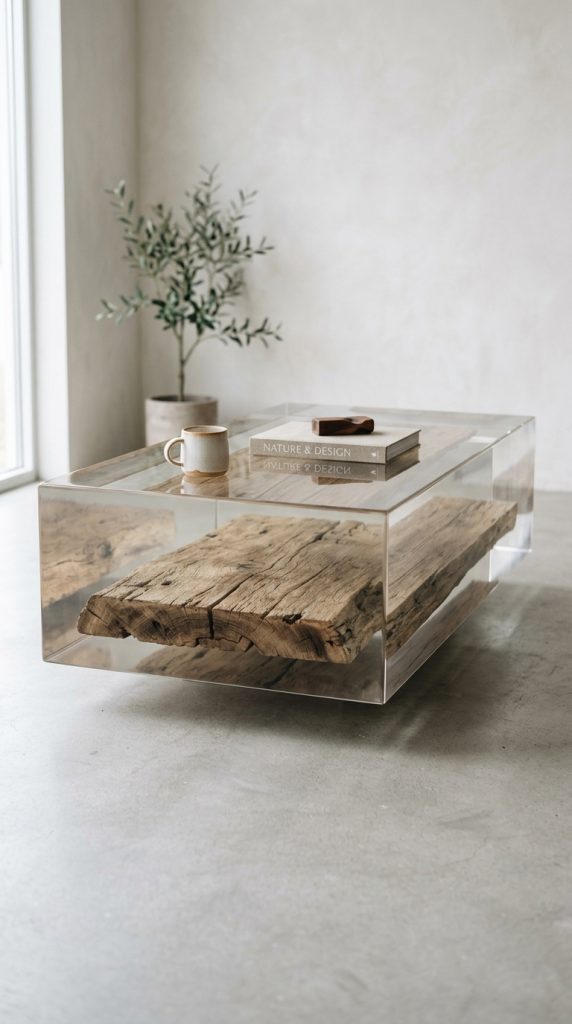
2. The Crystal-Clear Phantom Timber Table
Exuding quiet luxury and modern minimalism, the phantom table uses optically clear resin to encase raw, rustic wood slabs, making the timber appear as if it is floating in mid-air.
Material Specs & Construction Techniques
- Timber Selection: Weathered barn oak, distressed cedar, or spalted maple showcasing dramatic natural knots, voids, and cracks.
- Resin Matrix: Water-clear, UV-resistant epoxy cast with zero added pigment or dyes.
- Formwork Precision: Requires meticulous leak-proof formwork and degassing techniques (or torching micro-bubbles at the surface) during pouring.
- Visual Appeal: The crystal-clear epoxy seals decay and bark voids permanently, turning distressed wood defects into preserved architectural features.
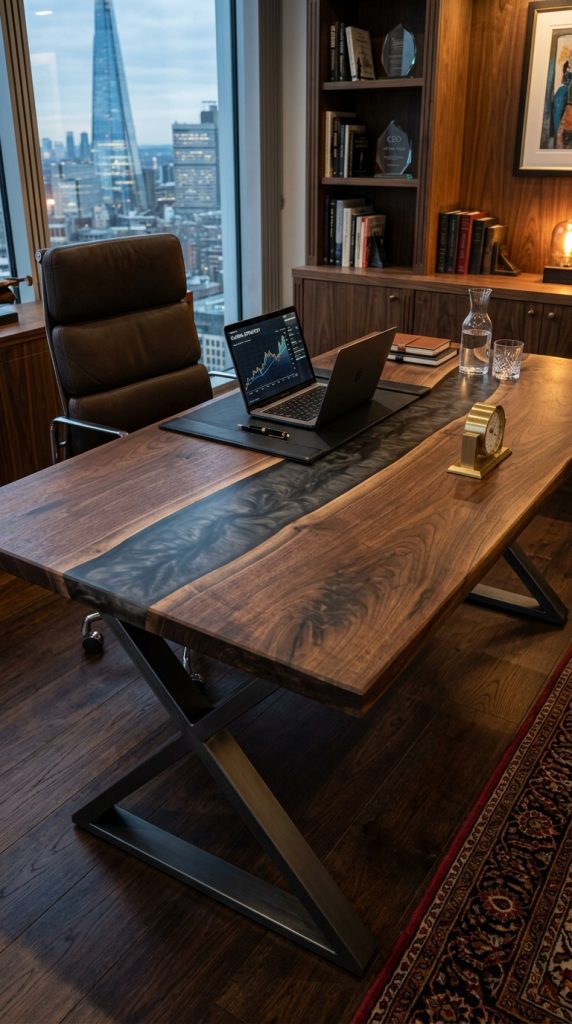
3. The Moody Charcoal Smoke & Black Walnut Executive Desk
Designed for sophisticated home offices and executive boardrooms, this concept pairs rich chocolate-toned walnut with a semi-opaque charcoal smoke resin river.
Material Specs & Construction Techniques
- Timber Selection: Dark American Black Walnut featuring rich heartwood color and golden sapwood borders.
- Resin Tinting: Translucent smoke black achieved by mixing a few drops of black liquid dye into deep-pour epoxy, keeping it transparent enough for light to pass through.
- Edge Geometry: Clean, square-cut outer table edges paired with an organic, wavy central resin canal.
- Base Coupling: Brushed brass or dark gunmetal legs arranged in a minimalist spider-leg configuration.
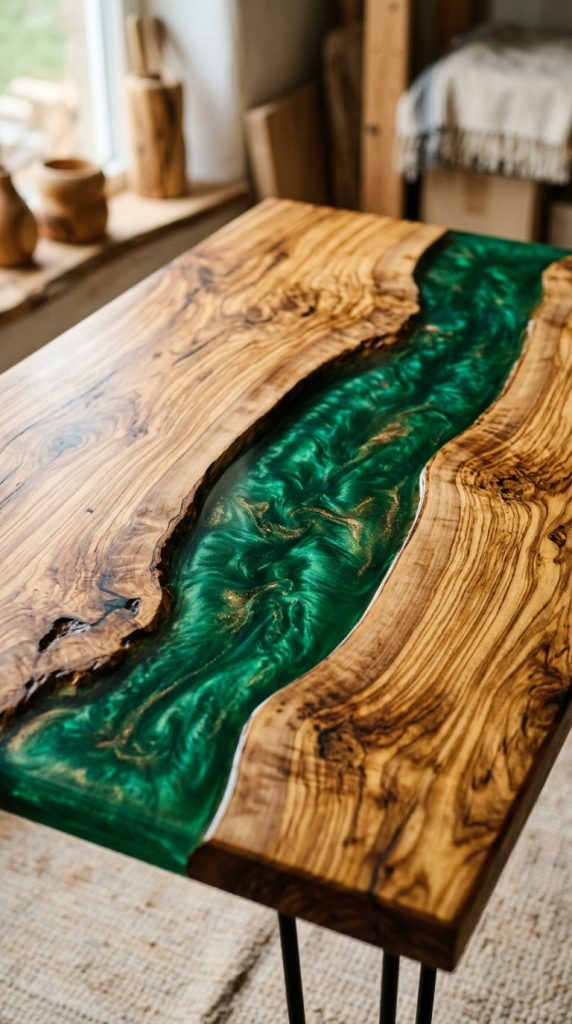
4. The Emerald Forest Moss & Live-Edge Slab Table
Drawing inspiration from dense forest canopies, this biophilic design pairs olive or oak slabs with translucent emerald green resin, sometimes embedding preserved forest moss, ferns, or copper leaf flakes along the riverbank.
Material Specs & Construction Techniques
- Timber Species: Italian Olive Wood or Spalted Beech exhibiting complex grain swirls and knot figures.
- Resin Pigmentation: Deep emerald green dye blended with metallic pearl powders that shift under direct sunlight.
- Botanical Inclusions: Preserved, kiln-dried lichen or dried fern fronds fully encapsulated in a clear base layer before pouring the green top coat.
- Ideal Space: Sunlit breakfast nooks, garden dining rooms, or biophilic office spaces.
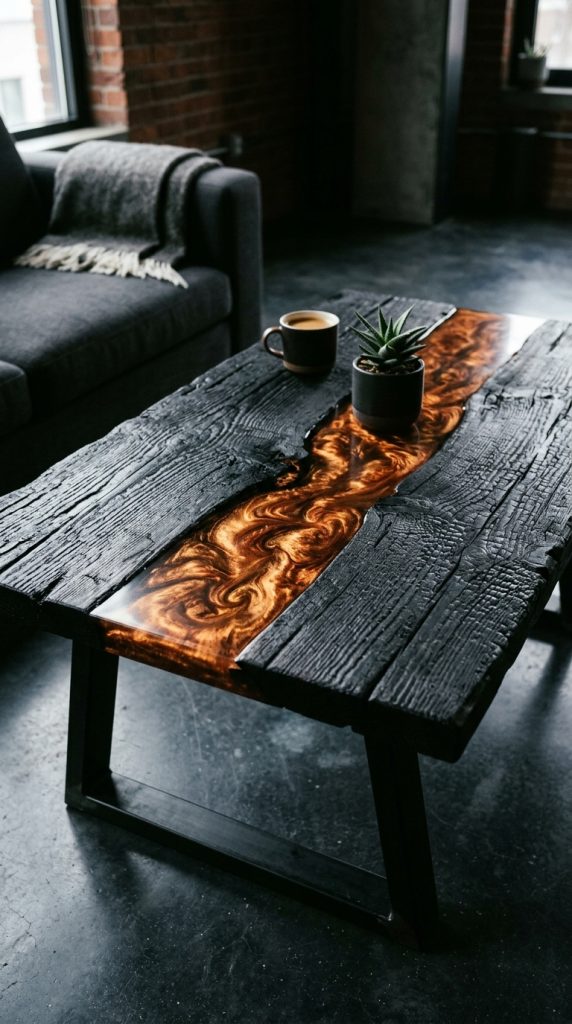
5. The Lava Fire Metallic Bronze & Burnt Wood Table
Dramatic, bold, and high-contrast, the lava fire table utilizes charred Japanese Shou Sugi Ban timber paired with a swirling, metallic copper and bronze resin matrix.
Material Specs & Construction Techniques
- Wood Treatment: Softwood (like Pine or Cedar) charred heavily using a blowtorch (Shou Sugi Ban method), wire-brushed to reveal rich raised grain textures, and sealed thoroughly.
- Resin Formulation: High-density bronze, copper, and amber metallic mica pigments stirred continuously during the gel phase to lock in swirling wave patterns.
- Visual Contrast: The jet-black charred timber frames the glowing metallic resin channel, creating the visual impression of molten lava flowing through dark basalt rock.
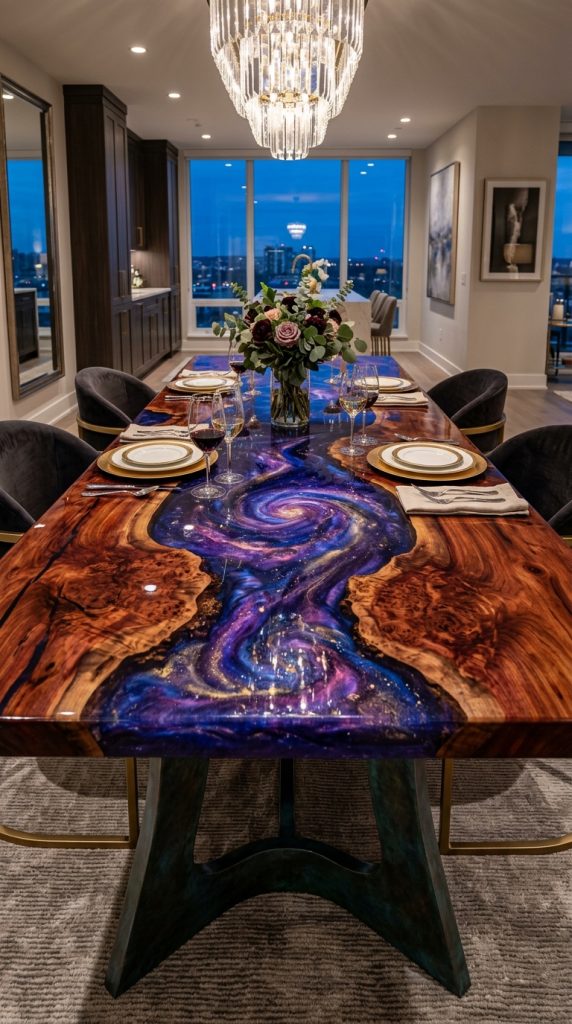
6. The Galaxy Nebula Obsidian & Hybrid Burl Table
A show-stopping centerpiece, the galaxy nebula table encapsulates complex maple or redwood burls within deep indigo, violet, and shimmering silver epoxy pools.
Material Specs & Construction Techniques
- Timber Selection: Australian Jarrah burl, Maple burl, or Redwood burl featuring intricate, lace-like natural edge contours.
- Color Alchemy: Multi-stage resin pour combining midnight blue, deep violet, and cosmic magenta metallic pigments stirred by hand to simulate celestial gas clouds.
- Surface Finishes: High-gloss polyurethane top coat buffed to a mirror finish, amplifying the depth of the cosmic swirls and wood burl eyes.
- Base Style: Minimalist pedestal base in polished chrome or matte black steel.
7. The White Marble Quartz & Blonde Maple Hybrid Table
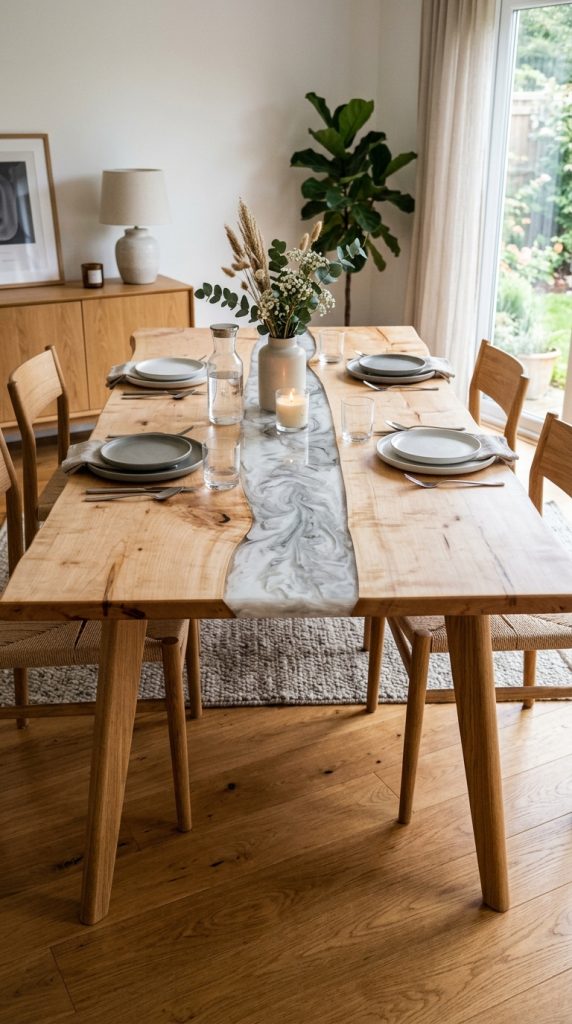
For light, airy interiors, Scandinavian dining rooms, or modern coastal homes, this concept combines light-toned blonde timber with a milk-white marble-style resin river.
Material Specs & Construction Techniques
- Timber Species: Hard Rock Maple, White Ash, or Bleached Oak featuring straight, clean grain lines.
- Resin Pigmentation: Opaque white resin base swirled with subtle grey and metallic silver liquid veins to mimic natural Calacatta marble.
- Architectural Style: Bright, clean, and refreshing—offers the visual elegance of stone without the cold temperature or high weight of genuine marble.
- Base Coupling: Natural light oak wooden legs or white powder-coated steel geometric legs.
8. The Geometric Terrazzo Fragment & Wood Chip Table
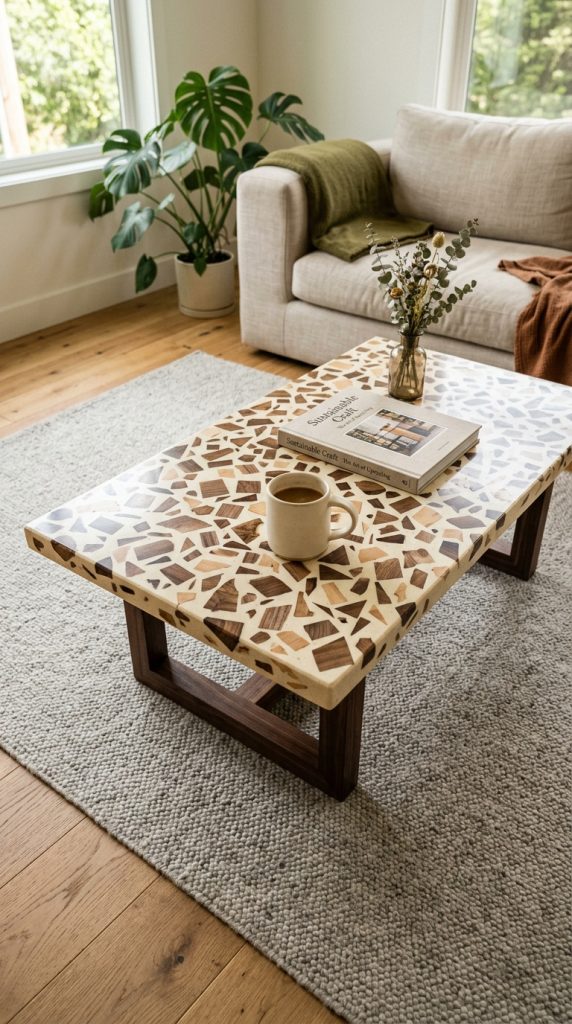
Fusing terrazzo art with woodworking, this eco-conscious concept embeds salvaged timber cutoffs, wood shavings, and brass shavings inside a solid colored or clear resin matrix.
Material Specs & Construction Techniques
- Upcycled Material: Offcuts of various wood species (walnut, cherry, maple, teak) cut into geometric blocks or random chips.
- Resin Base: Opaque terracotta, sage green, or soft cream epoxy poured over arranged wood blocks inside a mold.
- Finishing Process: Heavy surface grinding and flattening using a CNC router or slab grinder, followed by progressive sanding up to 2000-grit to expose smooth geometric wood cross-sections.
- Unique Trait: Every table is a one-of-a-kind mosaic that reclaims timber waste into durable luxury furniture.
9. The Island Archipelago Floating Timber Table
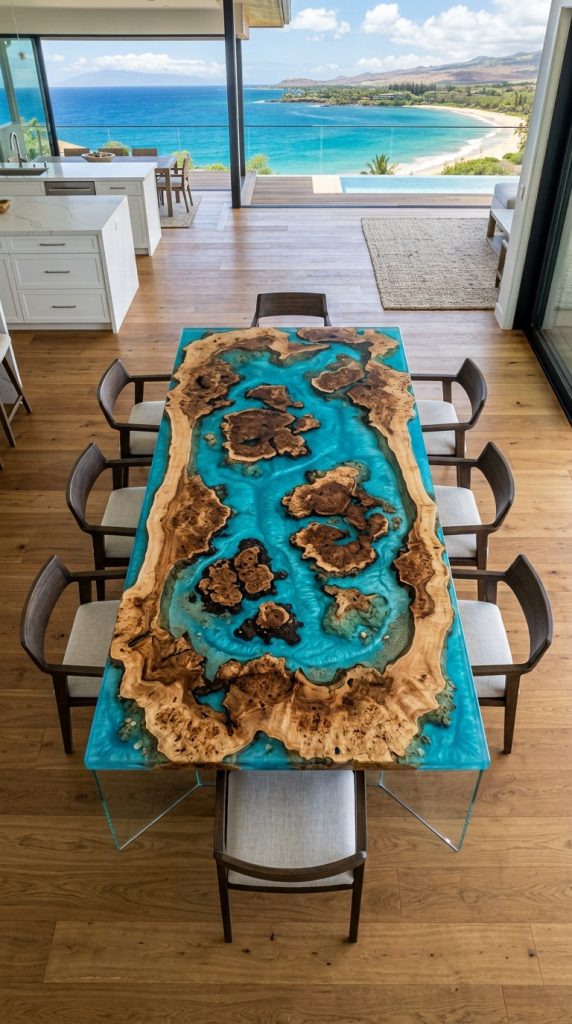
Recreating the visual beauty of ocean islands seen from above, this design features isolated clusters of live-edge burl “islands” surrounded by a continuous turquoise resin sea.
Material Specs & Construction Techniques
- Timber Layout: Multiple small burl slabs or cross-cut log slices arranged strategically across a rectangular mold rather than two parallel slabs.
- Resin Pigmentation: Gradient blue-green turquoise with high clarity, allowing viewing of the submerged, angled wood sides.
- Edge Profile: Beveled or chamfered resin edges that soften the perimeter of the tabletop.
- Base Coupling: Clear acrylic or glass slab legs, enhancing the illusion that the island tabletop is floating freely in space.
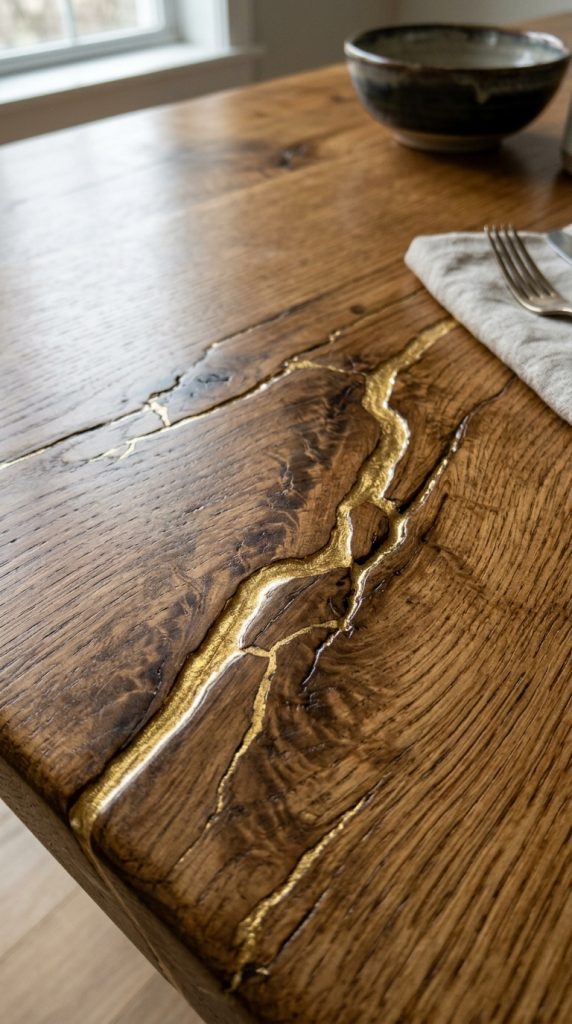
10. The Micro-Resin Crack & Gold Kintsugi Slab Table
Drawing inspiration from the Japanese art of Kintsugi (repairing broken ceramics with gold), this concept preserves fractured timber slabs by filling natural splits and cracks with metallic gold resin.
Material Specs & Construction Techniques
- Timber Selection: Highly distressed timber slabs featuring natural lightning cracks, check lines, or open knots (e.g., reclaimed Elm or Chestnut).
- Resin Matrix: Fine-pour clear epoxy saturated with rich metallic gold bronze powder, poured exclusively into narrow timber fractures.
- Design Philosophy: Instead of hiding natural wood defects, this technique highlights fractures as the primary aesthetic feature of the tabletop.
- Base Style: Elegant, slim brass-plated steel frame that matches the metallic gold filler lines.