Creating a flower garden is one of the most rewarding pursuits in landscape architecture and home gardening. A well-designed floral sanctuary brings sensory delight, seasonal interest, and natural energy to your outdoor living space. Beyond visual beauty, flower gardens play a critical role in supporting local ecosystems by providing food and habitat for vital pollinators like bees, butterflies, and hummingbirds.
Curating a dynamic flower garden requires balancing color theory, bloom sequences, height tiers, and foliage textures. Whether you are designing an expansive estate garden, a cozy cottage backyard, or a compact urban courtyard, combining perennials, annuals, flowering shrubs, and bulbs ensures a continuous tapestry of blooms from early spring through late autumn.
Here is an architectural gardening guide to ten captivating flower garden ideas, complete with botanical selections, spatial layouts, color palettes, and seasonal care strategies.
Foundational Planning Principles for Flower Gardens
Before planting your first bulb or seed, master these core landscaping rules to build a thriving floral landscape:
- Understand Sunlight Microclimates: Observe your garden space throughout the day. Full-sun gardens require $6+\text{ hours}$ of direct light, while partial-sun ($3\text{ to }6\text{ hours}$) and shade areas ($<3\text{ hours}$) demand shade-tolerant botanical choices.
- Design in Height Tiers: Structure flower beds in three distinct layers: tall backdrop plants at the rear or center, mid-height fillers in the middle, and low-growing border edges along the front.
- Plan for Consecutive Seasonal Blooms: Choose a mix of early-spring bulbs, summer-blooming perennials, and late-autumn bloomers so your garden never experiences a color drought.
- Prioritize Soil & Drainage: Amend garden soil with rich organic compost before planting to ensure proper aeration, root penetration, and moisture retention.
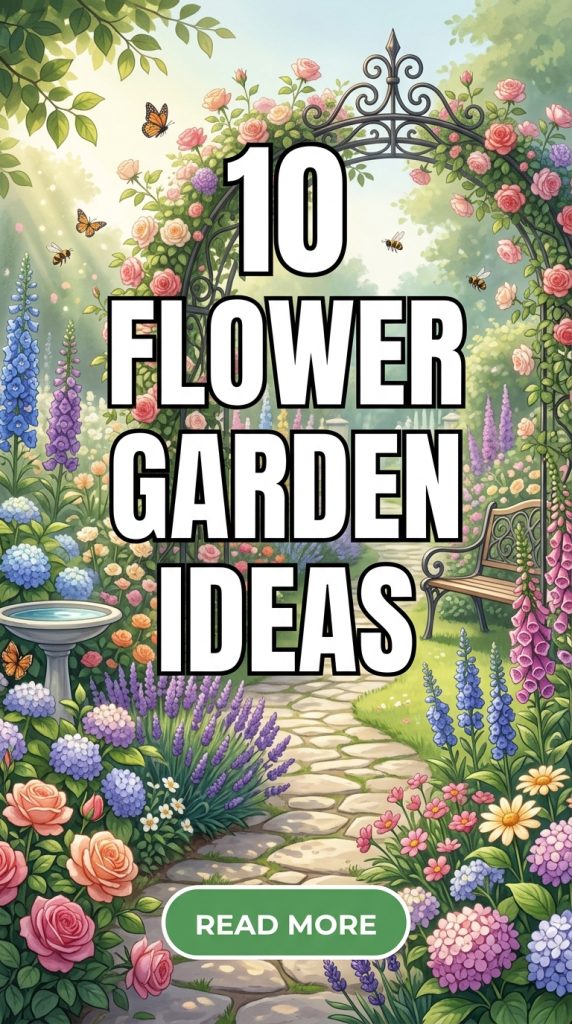
1. The English Cottage Garden with Mixed Perennial Borders
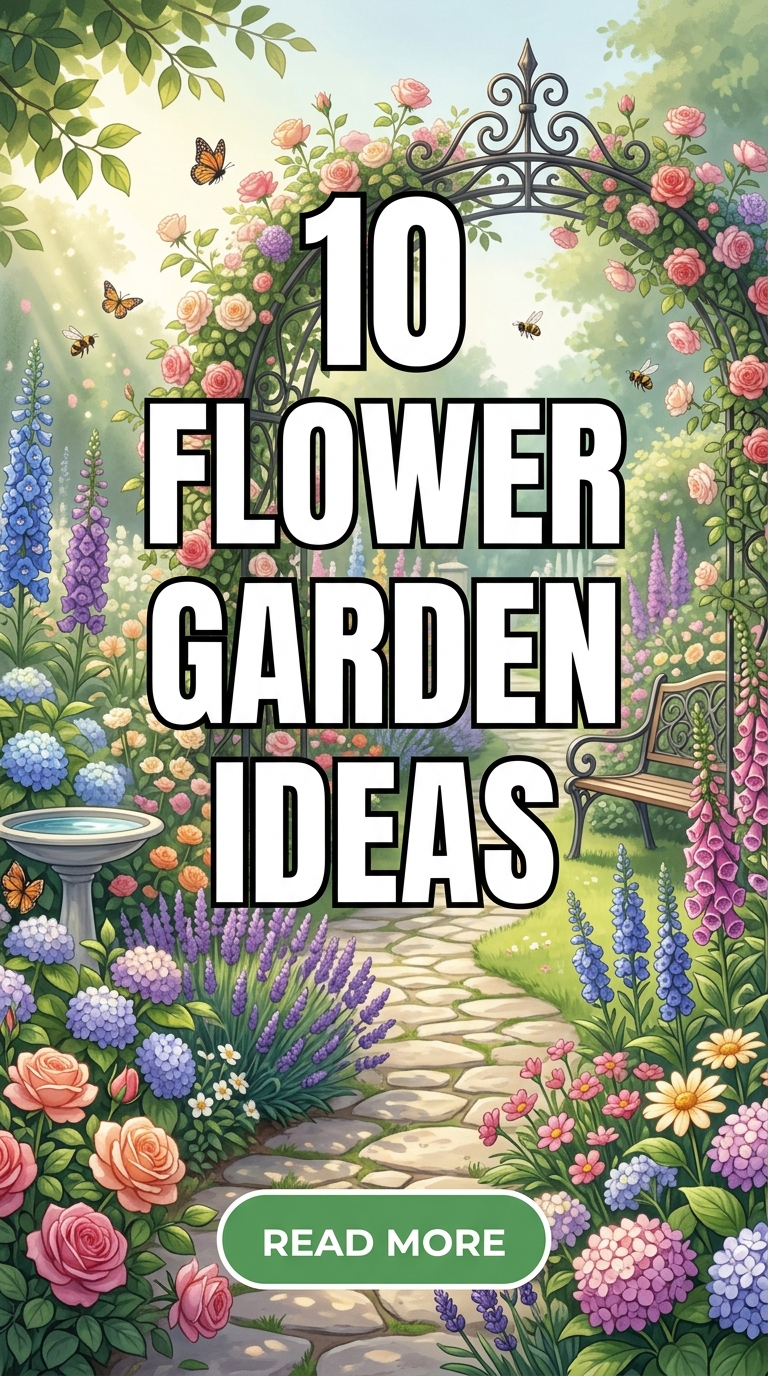
The English cottage garden is the quintessential expression of romantic, abundant gardening. Characterized by dense, informal plantings, charming color blends, and classic hardscape paths, this style celebrates natural floral overflow.
Botanical Selection & Design Structure
- Key Flora: Tall spires of Foxgloves (Digitalis), Delphiniums, Hollyhocks, fragrant English Roses, Lavender, and Peonies.
- Layout Strategy: Avoid straight lines or rigid grid patterns. Plant in sweeping, interwoven drifts that spill softly over stone gravel pathways or brick borders.
- Color Palette: Soft pastel blends—blush pink, pale lavender, creamy ivory, sky blue, and soft apricot.
Gardening Tip: Allow self-seeding perennials like Foxgloves and Hollyhocks to drop seeds naturally, letting the garden evolve organically year after year.

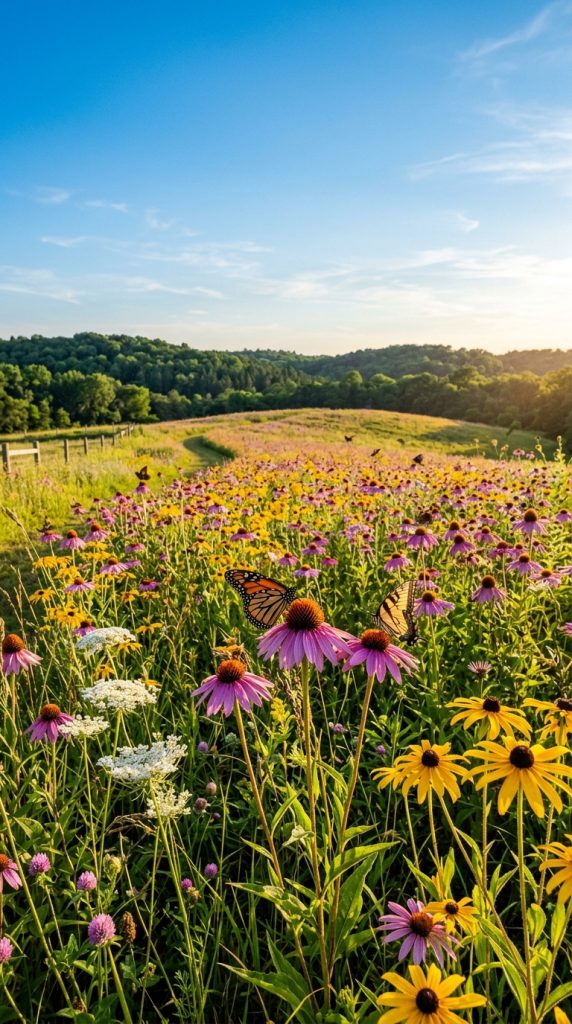
2. The Sun-Drenched Wildflower & Native Pollinator Meadow
For an eco-friendly, low-maintenance landscape, transform open lawn areas into a vibrant native wildflower meadow designed to attract bees, butterflies, and songbirds.
Botanical Selection & Design Structure
- Key Flora: Purple Coneflowers (Echinacea), Black-Eyed Susans (Rudbeckia), Milkweed (Asclepias), Wild Bergamot (Monarda), and Coreopsis.
- Layout Strategy: Scatter seed mixtures across open, well-aerated soil beds to create a natural, unscripted prairie environment intermingled with native clump-forming grasses.
- Color Palette: Saturated golden yellow, vivid magenta, fiery orange, deep purple, and crimson.
3. The Ethereal All-White Moon Garden
A Moon Garden is specifically designed with white blooms, silver foliage, and nocturnal fragrances that catch ambient moonlight, creating a serene, glowing landscape for evening outdoor relaxation.
Botanical Selection & Design Structure
- Key Flora: White Hydrangeas, Moonflowers (Ipomoea alba), White Cosmos, Sweet Alyssum, Night-Blooming Jasmine, and Dusty Miller (Jacobaea maritima).
- Layout Strategy: Position along outdoor patio borders or near seating areas where evening breeze diffuses sweet nocturnal floral scents.
- Color Palette: Pure snow white, ivory, silver, grey-green, and pale cream.

4. The Monochromatic Color-Drenched Flower Border
Creating a monochromatic flower garden—focusing entirely on shades of a single color family—delivers striking visual impact, sophisticated depth, and modern architectural elegance.
Botanical Selection & Design Structure
- The Crimson & Wine Palette: Dark Burgundy Dahlias, Red Velvet Roses, Chocolate Cosmos, Heuchera ‘Obsidian’, and Red Canna Lilies.
- Layout Strategy: Play with contrasting flower forms (spherical dahlias alongside spiky salvias) within the same color spectrum to build rich visual texture.
- Visual Result: Creates a bold, dramatic focal point along long garden walls or property perimeters.

5. The Sculptural Layered Dahlia & Cut-Flower Garden
Dedicated cut-flower gardens combine agricultural function with breathtaking seasonal displays, providing an endless supply of fresh blooms for indoor vase arrangements.
Botanical Selection & Design Structure
- Key Flora: Dinnerplate Dahlias, French Marigolds, Zinnia ‘Benary’s Giant’, Ranunculus, Sweet Peas, and Celosia.
- Layout Strategy: Arrange plants in organized, raised timber beds with grid netting or bamboo stakes to support top-heavy blooms from wind damage.
- Color Palette: High-energy coral, hot pink, sunshine yellow, plum, and peach.

6. The Shaded Woodland Sanctuary with Hydrangeas & Hostas
Shaded areas beneath mature trees can be transformed into cool, serene woodland sanctuaries utilizing shade-loving flowering perennials and lush foliage plants.
Botanical Selection & Design Structure
- Key Flora: Mophead Hydrangeas, Bleeding Hearts (Dicentra), Astilbe with feathery plumes, Hosta varieties, and Foxgloves.
- Layout Strategy: Layer leafy hosta mounds along winding mulch paths, punctuated by tall pink astilbe plumes and broad hydrangea bushes.
- Color Palette: Soft rose pink, lilac, crisp white, deep violet, and emerald green.

7. The Terraced Hillside & Rock Garden Alpine Display
Transform steep slopes or rocky terrain into an alpine rock garden display where cascading low-growing flowers cling gracefully to natural stone terraces.
Botanical Selection & Design Structure
- Key Flora: Creeping Phlox, Aubrieta (Rock Cress), Stonecrop (Sedum), Alpine Dianthus, and Candytuft (Iberis).
- Layout Strategy: Tuck low-growing creeping groundcovers into rock crevices and wall ledges, allowing flowers to spill downward over stone faces.
- Color Palette: Electric purple, vibrant magenta, bright snow white, and bright yellow.

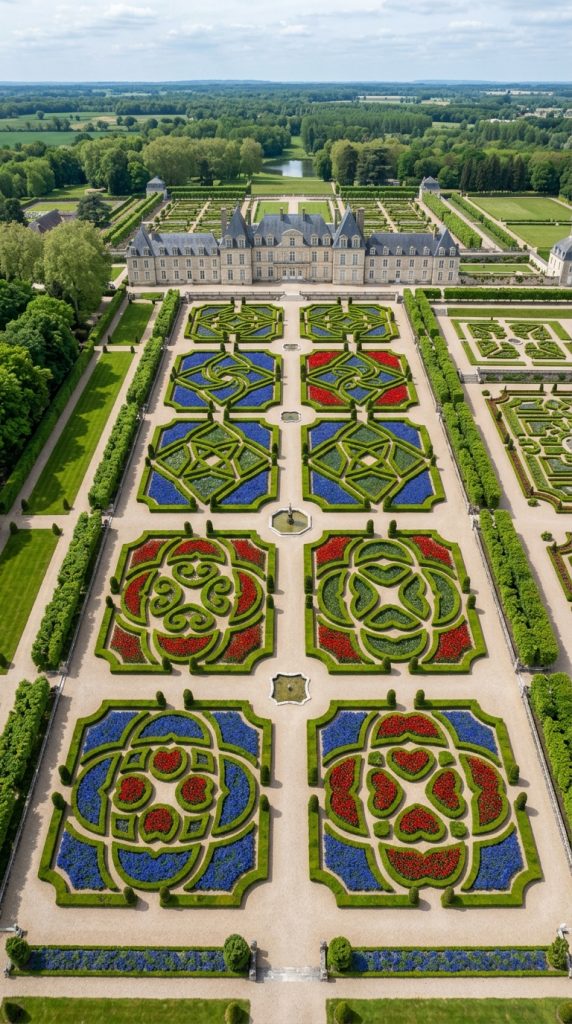
8. The Formal French Parterre & Geometric Boxwood Garden
For classic estates and formal landscapes, a French-inspired parterre garden uses clipped evergreen boxwood hedges to enclose symmetrical beds of colorful annuals and perennials.
Botanical Selection & Design Structure
- Key Flora: Dwarf Boxwood (Buxus) hedging framing internal beds of Lavender, White Tulips, Red Geraniums, or Blue Salvia.
- Layout Strategy: Construct precise geometric patterns (squares, diamonds, or scrollwork knots) centered around a stone fountain or sundial.
- Color Palette: Structured green framing contrasting with bright single-color floral blocks.
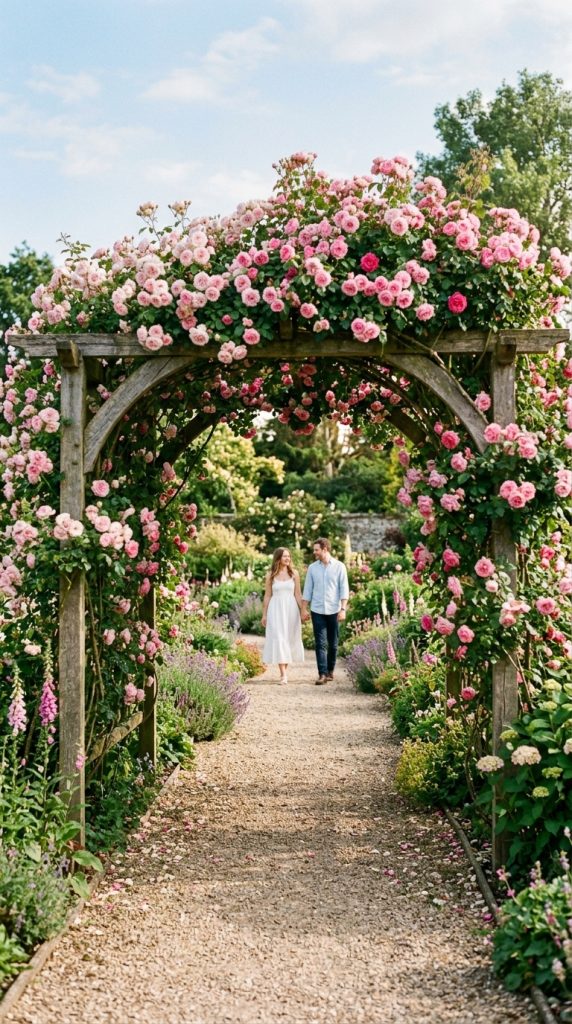
9. The Romantic Arched Rose Arbor Pathway
Guide visitors through your landscape with an arched wooden or iron arbor tunnel wrapped in fragrant rambling climbing roses.
Botanical Selection & Design Structure
- Key Flora: David Austin Climbing Roses (‘Eden’, ‘New Dawn’, or ‘Cecile Brunner’), Clematis, and Underplanted Lavender borders.
- Layout Strategy: Anchor heavy wooden or wrought-iron arbors over stone or gravel walkways, training young rose canes horizontally along the arch framework.
- Color Palette: Romantic soft pinks, creamy whites, rich crimson, and deep lavender.
10. The Mediterranean Terracotta Pot & Patio Garden
If ground space is limited, assemble a sun-drenched Mediterranean patio flower garden using grouped terracotta pots overflowing with heat-loving blooms.
Botanical Selection & Design Structure
- Key Flora: Bougainvillea, Regal Pelargoniums (Geraniums), Lantana, Mediterranean Lavender, and Trailing Petunias.
- Layout Strategy: Group terracotta pots of varying heights in odd-numbered clusters ($3$ or $5$) around sunny patio seating areas or steps.
- Color Palette: Terracotta orange, bright magenta, royal purple, and fiery scarlet.