Mirrors are among the most dynamic elements in interior design. Beyond their obvious functional use, reflective surfaces possess the unique ability to bounce natural light around a room, create the optical illusion of expanded square footage, and serve as captivating focal points. However, high-end designer mirrors often come with staggering price tags that can easily derail a home decorating budget.
Fortunately, transforming a plain, inexpensive mirror into a bespoke statement piece is one of the most accessible and rewarding DIY projects you can undertake. With a few thoughtful materials—ranging from natural fibers and architectural molding to clay and antiquing solutions—you can curate a high-end, tailored look for a fraction of retail costs.
This comprehensive guide breaks down ten sophisticated DIY mirror decor ideas, detailing their construction, material selections, and styling potential to help you elevate your home’s aesthetic.
1. The Sculptural Foam and Plaster Cloud Mirror
Taking inspiration from contemporary avant-garde furniture design, the foam and plaster cloud mirror brings soft, organic curves into modern interiors. This project transforms a basic frameless mirror into a tactile, sculptural artwork that serves as an instant conversation starter.
Project Materials and Build Strategy
- Core Base: A simple, frameless oval or rectangular mirror attached to a sturdy plywood backing board.
- Structural Volume: Expanding polyurethane foam sprayed around the perimeter in overlapping, organic waves.
- Surface Refinement: Once cured and carved, the foam is coated with smooth joint compound or Venetian plaster, then sanded to achieve a chalky, stone-like texture.
Design Tip: Leave the plaster in its natural off-white state for a minimalist Scandinavian look, or coat it in a matte terracotta or sage green paint to add a grounded pop of color to your entryway.

2. The Sunburst Macramé and Wooden Bead Mirror
For homes that embrace a warm, bohemian aesthetic, the sunburst macramé mirror combines rich fiber textures with organic wooden accents. This design acts as a soft, tactile frame that counterbalances the hard, reflective surface of the glass.
Project Materials and Build Strategy
- Core Base: A small circular mirror glued securely to a lightweight wooden craft hoop.
- Fiber Layering: Soft, un-dyed 4mm single-strand cotton cord knotted around the hoop using basic lark’s head knots, then brushed out to create a lush, feathery fringe.
- Accent Details: Geometric wooden beads threaded onto key structural strands before unraveling the fringe to introduce structural variation.

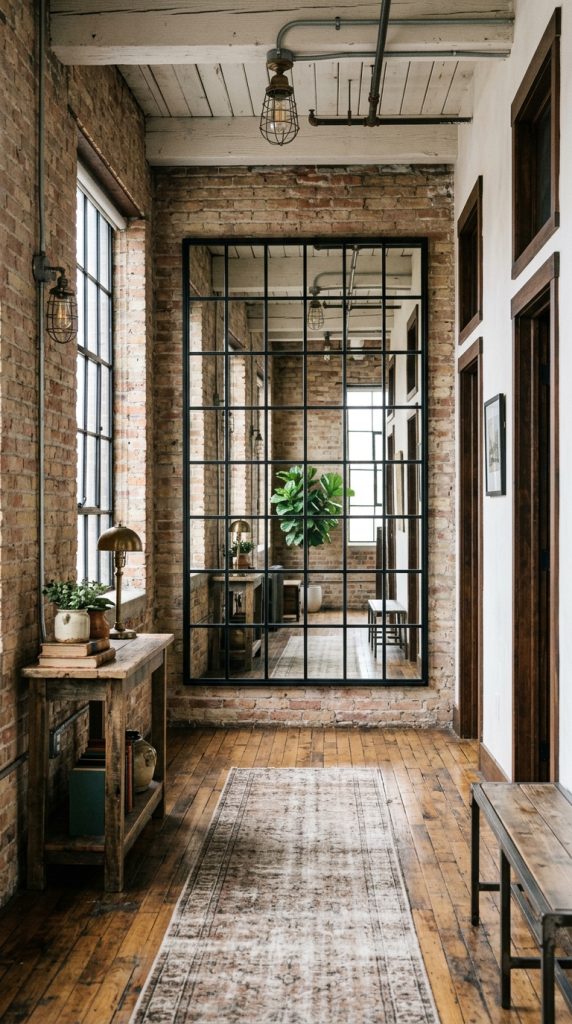
3. The Industrial Steel-Look Windowpane Grid Mirror
Architectural windowpane mirrors add instant structure, depth, and vintage industrial charm to dining rooms and long hallways. By using light materials, you can create the illusion of heavy black ironwork without the structural weight or expense.
Project Materials and Build Strategy
- Core Base: A large, full-length rectangular mirror or a collection of small square mirrors mounted on a single backing sheet.
- Grid Construction: Thin wooden balsa strips or PVC molding strips cut to size, painted in a flat matte black finish.
- Assembly: The painted grid is adhered directly to the face of the glass using clear silicone adhesive, creating clean, geometric mullions.
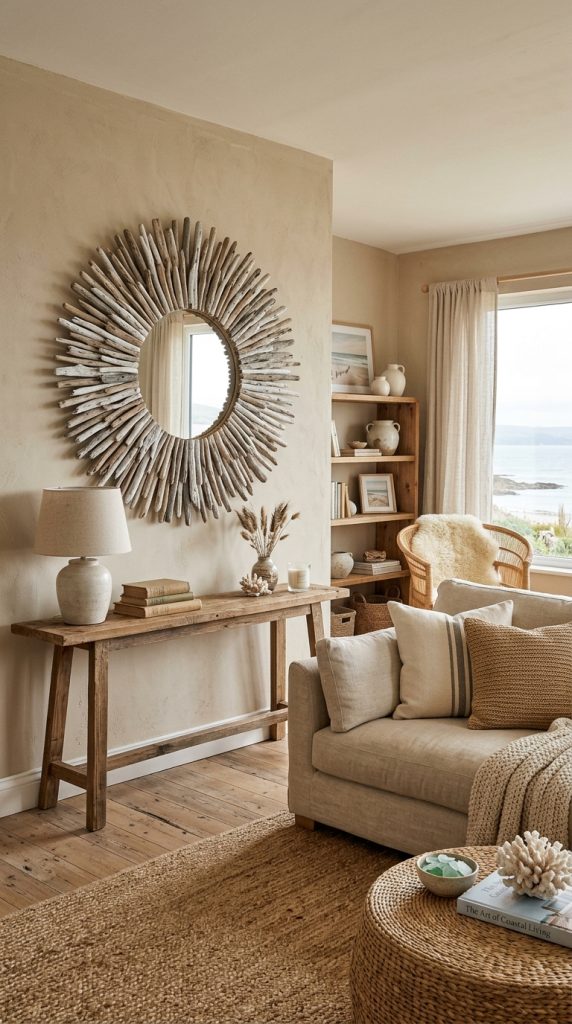
4. The Organic Driftwood and Shell Coastal Mirror
Bring the calming, organic feel of the coast indoors with an organic driftwood mirror. Rather than feeling overly rustic, arranging weathered wood in a layered, radial pattern creates a sophisticated textural focal point suitable for coastal or transitional living spaces.
Project Materials and Build Strategy
- Core Base: A sturdy round mirror glued to a wide wooden ring backing that provides ample surface area for adhesion.
- Material Selection: Uniformly weathered pieces of ocean-bleached driftwood, organized by length and thickness.
- Layering Technique: Hot-gluing the wood in overlapping concentric tiers, starting with the longest pieces at the outer edge and layering shorter pieces inward toward the mirror’s edge.
5. The Elegant Antique Gold Leaf Arch Mirror
Classic vintage floor and mantel mirrors feature ornate, hand-carved detailing and rich patinas that command premium prices in antique shops. Using flexible resin moldings and gold leafing, you can replicate this heritage look on a budget.
Project Materials and Build Strategy
- Core Base: An arched frameless mirror mounted on a cut-to-size plywood frame.
- Ornate Details: Flexible polyurethane or clay corner appliques fixed to the top arch and corners of the frame.
- Surface Finish: Applying red bole primer followed by delicate sheets of imitation gold leaf, which are then lightly distressed with dark wax to simulate centuries of natural aging.

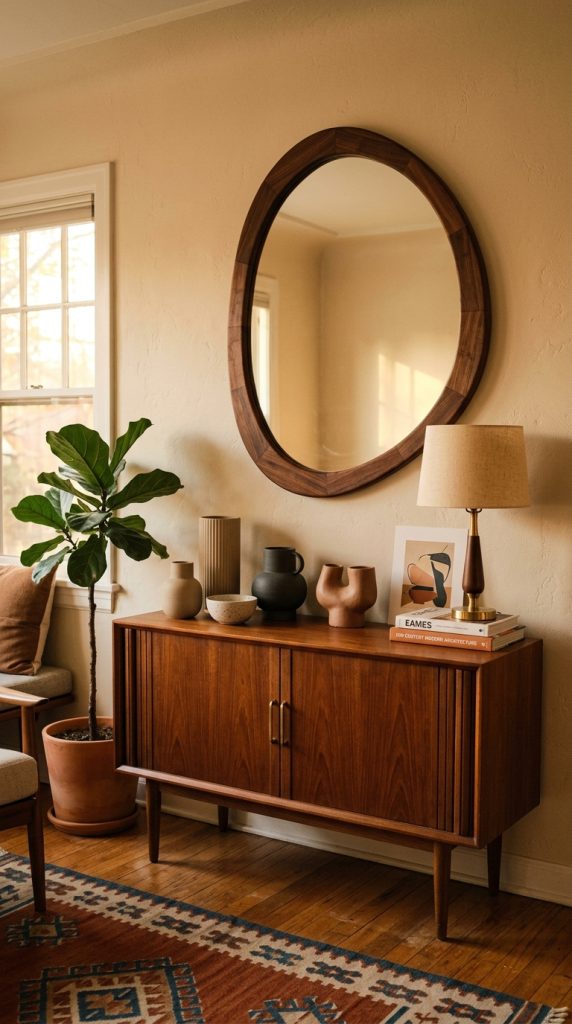
6. The Mid-Century Modern Asymmetrical Wood Segment Mirror
Mid-century modern design celebrates clean lines, geometric experimentation, and rich, natural wood tones. An asymmetrical wood segment mirror uses contrasting timber shapes to frame glass in a way that feels intentional, architectural, and timeless.
Project Materials and Build Strategy
- Core Base: A custom-cut asymmetrical or “pebble-shaped” mirror.
- Wood Selection: Warm walnut, teak, or oak boards cut into varying geometric blocks or smooth curved arcs.
- Finishing Touches: Sanding the wood up to a high grit and finishing with clear satin hard-wax oil to highlight the natural grain patterns.
7. The Minimalist Polymer Clay Wavy Frame Mirror
Playful, squiggles and wavy lines have taken modern interior styling by storm. Creating a custom polymer clay wavy frame allows you to introduce soft pastel tones and artistic curves into smaller spaces like vanities, powder rooms, or gallery walls.
Project Materials and Build Strategy
- Core Base: A small rectangular or square tabletop mirror.
- Clay Construction: Rolling out polymer clay into long, even ropes and snake-like shapes, then hand-forming them into fluid, uniform waves around the mirror boundary.
- Curing and Sealing: Baking the clay frame separately according to manufacturer instructions, then gluing it securely to the glass with industrial epoxy before sealing with a satin varnish.

8. The Ethereal Backlit LED Floating Mirror
Integrated lighting elevates a simple mirror into a high-end spa feature. A backlit LED floating mirror casts a soft, diffuse halo of ambient light against the wall, reducing harsh shadows while adding a sleek, modern touch to bathrooms or bedrooms.
Project Materials and Build Strategy
- Core Base: A frameless glass mirror of any shape (circular works exceptionally well).
- Floating Mechanism: A 2-inch deep wooden frame mounted on the back of the mirror, smaller than the glass perimeter by several inches to hide the mounting hardware.
- Illumination: High-density, warm-white flexible LED strip lights adhered along the outer edge of the hidden wooden frame facing outward toward the wall.

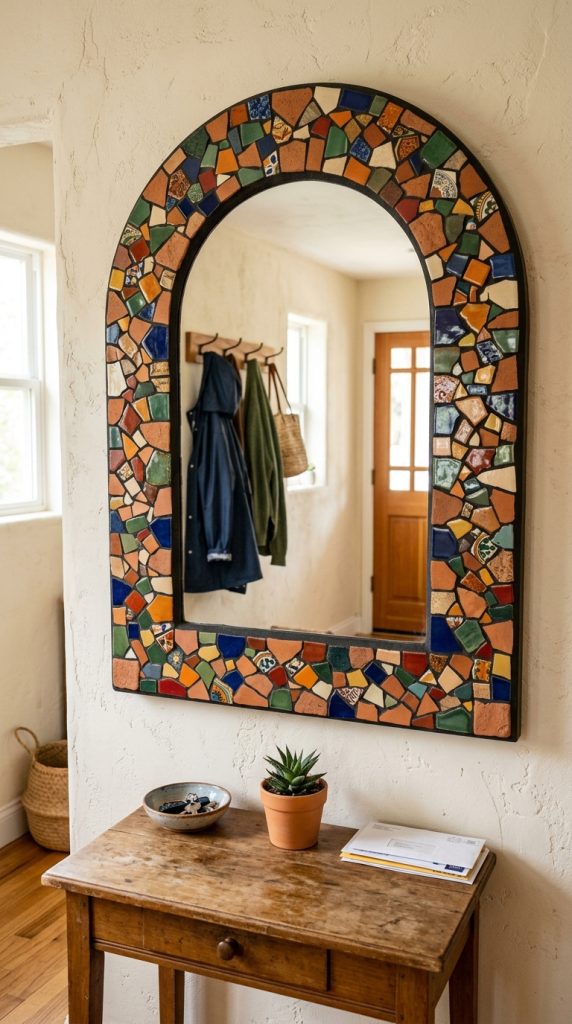
9. The Upcycled Mosaic Cracked Tile Mirror
Mosaic crafting turns leftover renovation materials into dynamic art. An upcycled mosaic mirror uses broken ceramic tiles, stained glass, or terracotta shards to form a rich, tactile border that adds color and texture to entryways or garden rooms.
Project Materials and Build Strategy
- Core Base: A strong, thick MDF base board with a central circular or rectangular cutout for the mirror glass.
- Tile Preparation: Breaking ceramic tiles using a tile nipper to create irregular, organic tesserae pieces.
- Grouting Process: Setting tiles into tile adhesive in a loose geometric layout, then filling the gaps with charcoal or off-white sanded grout before wiping the surface clean.
10. The Pressed Dried Botanical Glass Mirror
For a delicate, nature-inspired look, a pressed botanical mirror sandwiches real dried ferns, wildflowers, and foliage between glass layers, creating a living frame that brings the outdoors inside.
Project Materials and Build Strategy
- Core Base: A frameless glass mirror paired with a matching piece of clear glass cut to the exact same size.
- Botanical Selection: Thin, thoroughly dried and pressed flowers, leaves, and ferns arranged around the border perimeter.
- Border Framing: Encasing the edges of both glass panes together using heavy-duty copper foil tape, then soldering the edges for a sleek, glass-house finish.
Essential DIY Mirror Guidelines: Crafting for Longevity
To ensure your handmade mirror remains safe, functional, and visually striking over time, adhere to these fundamental craft principles during assembly:
1. Prioritize Safe and Secure Adhesion
Glass is heavy and smooth, making it difficult for standard craft glues to bind securely over time. Always use adhesives specifically formulated for glass and mirrors, such as clear mirror silicone or heavy-duty construction adhesive. Avoid hot glue for primary structural mounting, as temperature fluctuations can cause it to lose grip.
2. Choose the Right Mounting Hardware
Never rely on tape or weak string to hang heavy framed mirrors. Install heavy-duty French cleats or metal D-rings directly into the backing board (not the decorative frame) to ensure weight is distributed evenly across wall studs.
3. Clean and Prep Glass Meticulously
Before applying any decorative elements, frames, or gridlines to glass surfaces, thoroughly clean the area with isopropyl alcohol to remove finger oils and dust. This ensures your adhesives cure with maximum strength.