In modern interior design, optimizing living space while incorporating natural elements has become an art form. As living quarters grow more compact and open-concept layouts prioritize uncluttered floor space, vertical gardening offers a transformative solution. Hanging plants introduce organic texture, vibrant color, and fluid movement to eye level, instantly softening sharp architectural lines and filling underutilized vertical zones.
Beyond aesthetic appeal, suspending foliage enhances indoor air quality, improves acoustic dampening, and creates a soothing, biophilic atmosphere that connects indoor spaces with the natural world.
Whether you are looking to create a cascading plant canopy, elevate a sunlit reading nook, or add vertical dimension to a small apartment, here is an in-depth architectural guide to ten hanging plant concepts designed to elevate your living environment.
1. The Cascading String of Pearls in a Floating Ceramic Bowl
Few trailing botanicals capture attention like the Senecio rowleyanus, commonly known as the String of Pearls. Characterized by its delicate, pea-like succulent beads spilling over pot edges, this plant acts like living jewelry for bright, sun-drenched rooms.
Light, Care, & Architectural Placement
- Lighting Requirements: Thrives in bright, indirect sunlight with a few hours of direct morning sun. Avoid low-light corners, which cause the stems to become leggy and sparse.
- Watering Strategy: As a succulent, it stores water in its spherical leaves. Allow the soil to dry out completely between waterings, soaking thoroughly only when the pearls feel slightly soft to the touch.
- Display Concept: Suspend a shallow, matte white or terra-cotta ceramic bowl using minimalist leather cords near a south- or east-facing window. The downward cascade creates a dramatic, clean line against light-colored walls.
Design Tip: Hang the bowl slightly above eye level so the lush, bead-filled top of the plant remains visible while allowing the vines to drape uninterrupted.

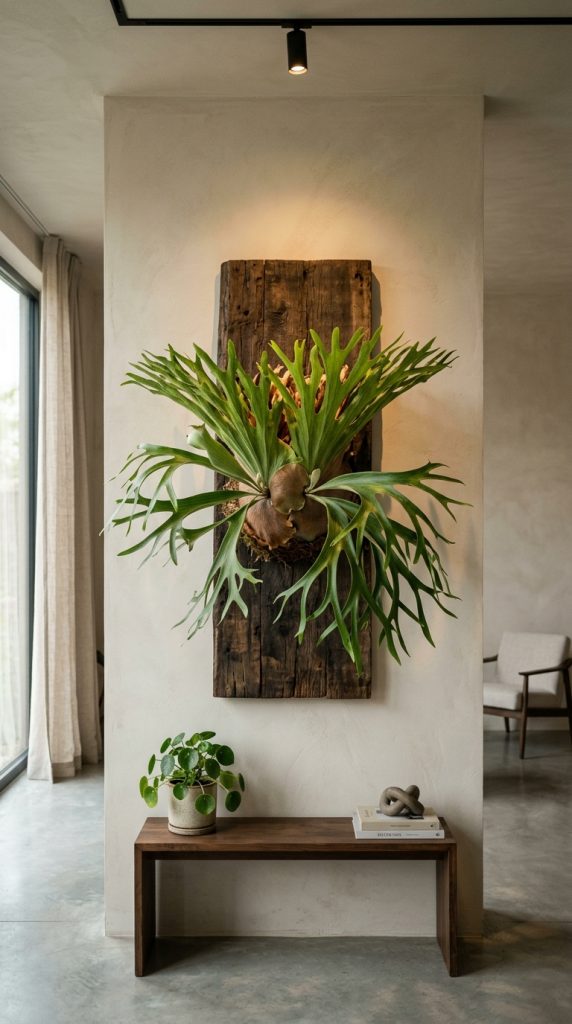
2. The Architectural Staghorn Fern on a Mounted Wooden Slab
For a striking sculptural accent that breaks the mold of traditional potted hanging plants, the Staghorn Fern (Platycerium) offers an extraordinary, antler-like silhouette that functions as living wall art.
Light, Care, & Architectural Placement
- Lighting Requirements: Prefers medium to bright, dappled shade, mimicking its natural habitat on tree trunks in tropical forests.
- Watering Strategy: Rather than traditional soil watering, submerge the entire mounted board in a basin of room-temperature water for 10 to 15 minutes once every 1 to 2 weeks, allowing it to drain fully before rehanging. Mist the fronds regularly to maintain ambient humidity.
- Display Concept: Mount the fern on a cedar or reclaimed hardwood slab using moss and fishing line, hanging it directly on a focal feature wall alongside framed art prints.
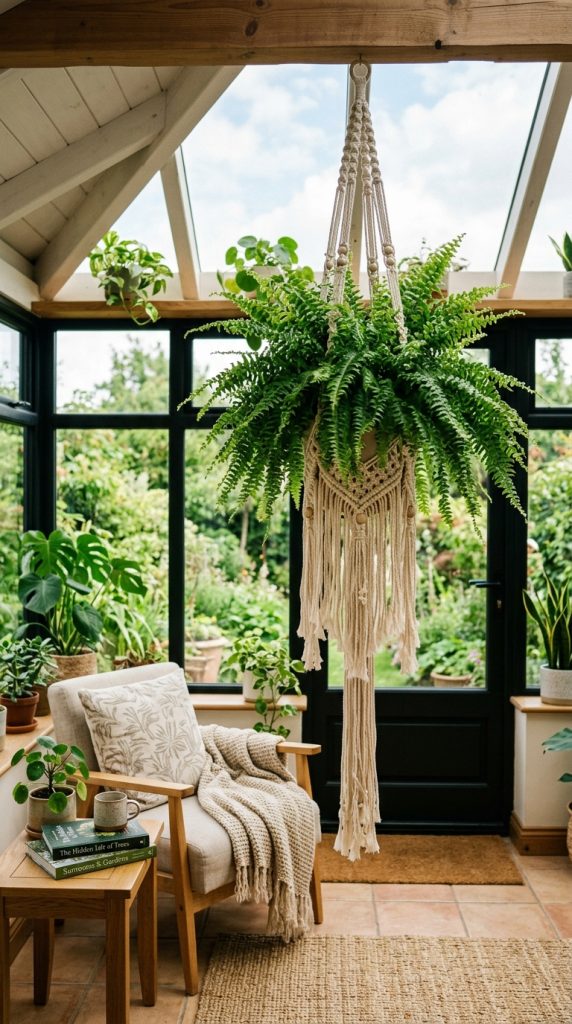
3. The Lush Boston Fern in a Hand-Knotted Macramé Hanger
The Boston Fern (Nephrolepis exaltata) is the quintessential classic of hanging flora, renowned for its dense, feathery fronds that burst outward in a dramatic, voluminous sphere of vibrant green.
Light, Care, & Architectural Placement
- Lighting Requirements: Flourishes in bright, indirect light or filtered morning sun. Keep away from harsh afternoon sun, which can scorch the delicate fronds.
- Watering Strategy: Boston Ferns crave consistent moisture and high humidity. Keep the potting mix evenly damp (but not waterlogged) and mist daily, or position the plant in a bright bathroom where shower steam provides natural humidity.
- Display Concept: Nest the fern inside a cream-colored cotton macramé hanger featuring subtle fringe detailing. Position it in a sunroom corner or near a bathroom window to soften hard tile surfaces.
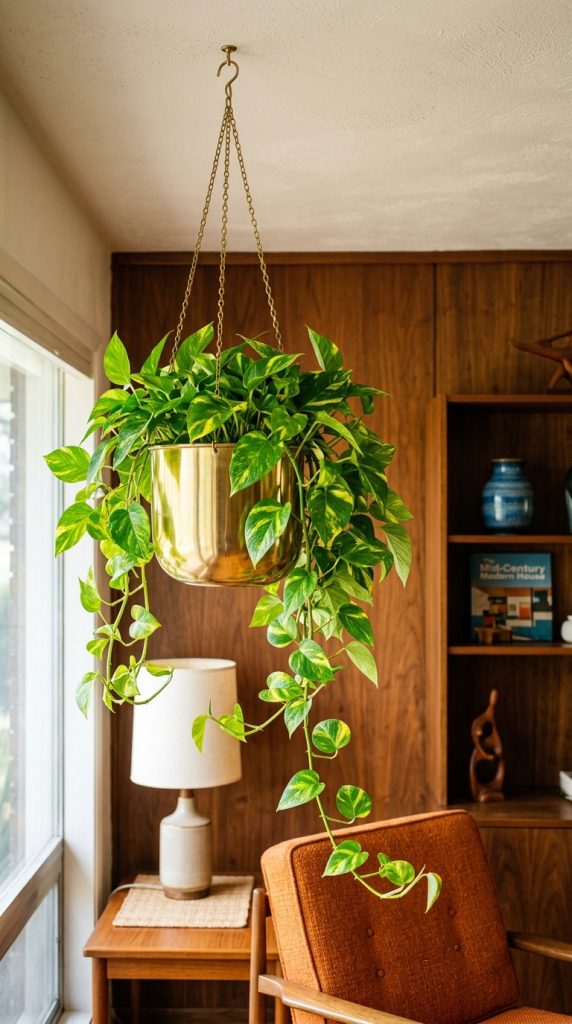
4. The Golden Pothos Trail in a Mid-Century Brass Bullet Planter
Undeniably one of the most resilient and versatile indoor vines, the Golden Pothos (Epipremnum aureum) features heart-shaped leaves splashed with variegated tones of yellow, cream, and green.
Light, Care, & Architectural Placement
- Lighting Requirements: Exceptionally adaptable, thriving in everything from low light to bright, indirect environments. Higher light levels encourage richer leaf variegation.
- Watering Strategy: Allow the top $2\text{ inches}$ of soil to dry out between waterings. The pothos will visibly droop when thirsty, bouncing back quickly after a thorough watering.
- Display Concept: Pair the warm green and gold foliage with a polished or brushed brass mid-century bullet planter. The metallic sheen reflects light, adding a touch of mid-century modern elegance to home offices and living rooms.
5. The Dramatic Swiss Cheese Vine in an Industrial Wire Basket
Featuring distinctive, natural leaf cutouts (fenestrations), the Swiss Cheese Vine (Monstera adansonii) brings a bold, tropical graphic presence to vertical spaces.
Light, Care, & Architectural Placement
- Lighting Requirements: Thrives best in medium to bright indirect sunlight. Direct sunlight can scorch the thin, delicate leaves.
- Watering Strategy: Water when the top half of the soil feels dry. Ensure excellent drainage, as wet soil can lead to root rot.
- Display Concept: Plant in a coconut coir-lined matte black industrial wire basket. The contrast between the dark wire grid and the perforated green leaves enhances modern, loft-style, or industrial interior themes.

6. The Velvet-Leaf Heartleaf Philodendron in a Terracotta Globe
With its touchable, heart-shaped foliage in deep forest green and shimmering bronzed undersides, the Velvet-Leaf Philodendron (Philodendron micans) introduces rich, tactile luxury to hanging plant displays.
Light, Care, & Architectural Placement
- Lighting Requirements: Medium to bright indirect light keeps the leaves rich and velvety. Low light may cause the stems to stretch, while direct sun can fade the velvet sheen.
- Watering Strategy: Allow the top $1\text{ to }2\text{ inches}$ of soil to dry out. It prefers slightly higher humidity, which keeps the leaf margins crisp and healthy.
- Display Concept: Place in a raw, unglazed terracotta globe planter suspended by natural jute twine. The earthy orange clay highlights the deep bronze-green tones of the foliage.

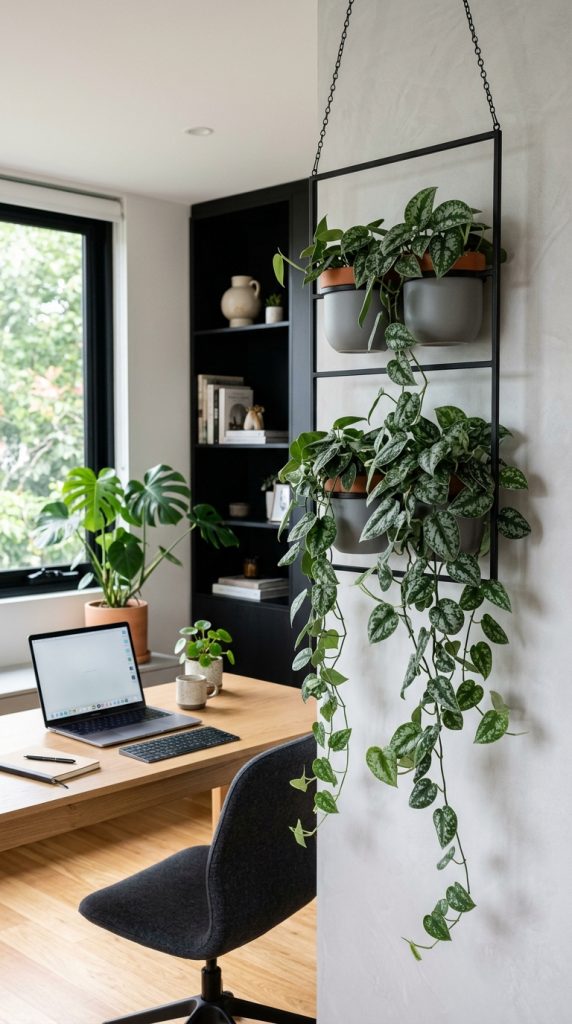
7. The Silver Satin Pothos in a Sleek Minimalist Tiered Hanger
The Silver Satin Pothos (Scindapsus pictus) stands out for its thick, velvety dark green leaves dusted with shimmering metallic silver patches that catch ambient light effortlessly.
Light, Care, & Architectural Placement
- Lighting Requirements: Prefers bright, indirect light to maintain its striking silver leaf patterns.
- Watering Strategy: Water when the leaves begin to curl inward slightly, signaling that the soil has dried out. Avoid overwatering.
- Display Concept: Combine multiple plants using a multi-tiered black steel or wooden hanging frame. A vertical double or triple planter allows foliage to drape seamlessly down a tall wall or window frame, maximizing vertical real estate.
8. The Flowering Hoya Carnosa in an Architectural Glazed Vessel
Known as the Wax Plant, Hoya carnosa features thick, waxy evergreen leaves and produces clusters of sweet-scented, star-shaped porcelain flowers under the right conditions.
Light, Care, & Architectural Placement
- Lighting Requirements: Needs bright, indirect light—and a few hours of gentle direct sun—to encourage blooming.
- Watering Strategy: Hoyas store moisture in their fleshy leaves, requiring a succulent-like watering routine. Allow the potting mixture to dry almost completely before watering thoroughly.
- Display Concept: Suspend the plant in a glazed ceramic pot with a smooth, geometric finish. As the woody vines mature and drape, the combination of waxy foliage and delicate blooms creates a striking contrast against clean, modern walls.

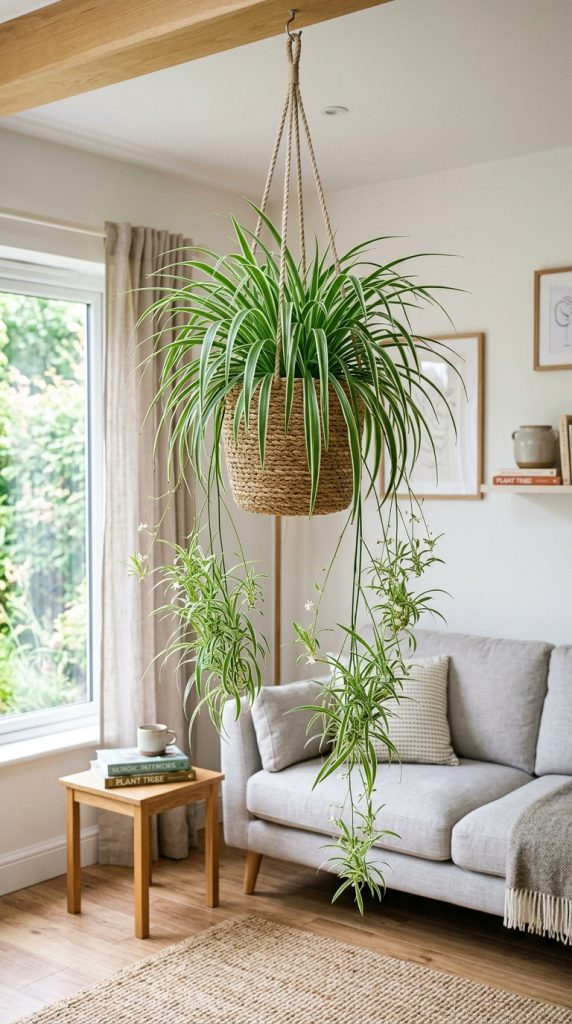
9. The Ribbon-Like Spider Plant in an Upcycled Woven Basket
An evergreen favorite for home indoor air purification, the Spider Plant (Chlorophytum comosum) features arching, ribbon-like leaves and produces dangling “baby” plantlets on long stems that create a playful, fountain-like effect.
Light, Care, & Architectural Placement
- Lighting Requirements: Thrives in bright to medium indirect light. Tolerates lower light levels, though leaf striping may become less pronounced.
- Watering Strategy: Water moderately, keeping the soil slightly moist during spring and summer while allowing it to dry out more between waterings in winter.
- Display Concept: Nest the inner growing pot inside a hand-woven seagrass or rattan basket suspended by thick linen rope. The natural woven textures pair beautifully with the playful, sweeping motion of the arching leaves.
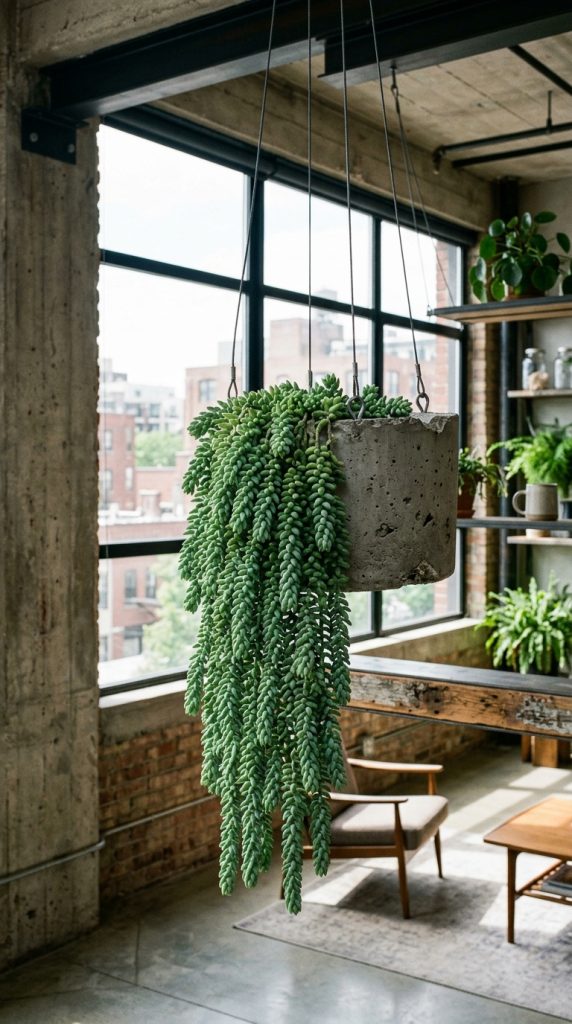
10. The Trailing Burro’s Tail in a Heavy-Duty Modern Concrete Pot
Featuring dense, overlapping, blue-green succulent leaves braided along heavy, trailing stems, the Burro’s Tail (Sedum morganianum) is a visual showstopper that brings unique texture and weight to vertical displays.
Light, Care, & Architectural Placement
- Lighting Requirements: Requires full sun to bright indirect light to keep the trailing stems compact, thick, and healthy.
- Watering Strategy: Water sparingly every 2 to 3 weeks, allowing the soil to dry out fully. The plump leaves store ample water; overwatering will cause the heavy leaves to drop off easily.
- Display Concept: Counterbalance the delicate, plump texture of the plant with a heavy, minimalist cast concrete planter. Hang it securely from ceiling joists using heavy-duty stainless steel cables near a sunlit window.
Architectural Installation & Mounting Guidelines
Suspending living plants overhead requires proper structural planning to ensure safety, optimal plant health, and visual harmony:
1. Structural Anchor Requirements
Never anchor heavy hanging planters directly into standard drywall using basic plastic wall anchors.
- Ceiling Joists: Always locate ceiling joists using a stud finder and anchor heavy-duty steel swag hooks directly into solid wood framing.
- Toggle Bolts: If ceiling joist placement does not align with your design layout, use heavy-duty steel toggle bolts rated for at least twice the total weight of the fully watered planter and plant combined.
2. Managing Drainage Overhead
Water dripping onto hardwood floors, furniture, or rugs is a primary concern with hanging greenery:
- Double-Potting Technique: Keep the plant inside its plastic nursery pot with drainage holes, dropping it directly into a decorative, sealed outer hanging vessel without bottom holes.
- Internal Reservoir: Place a thin $1\text{-inch}$ layer of expanded clay pebbles at the bottom of the outer vessel to catch excess runoff and prevent the inner pot from sitting in standing water.